
Last updated September 19, 2026
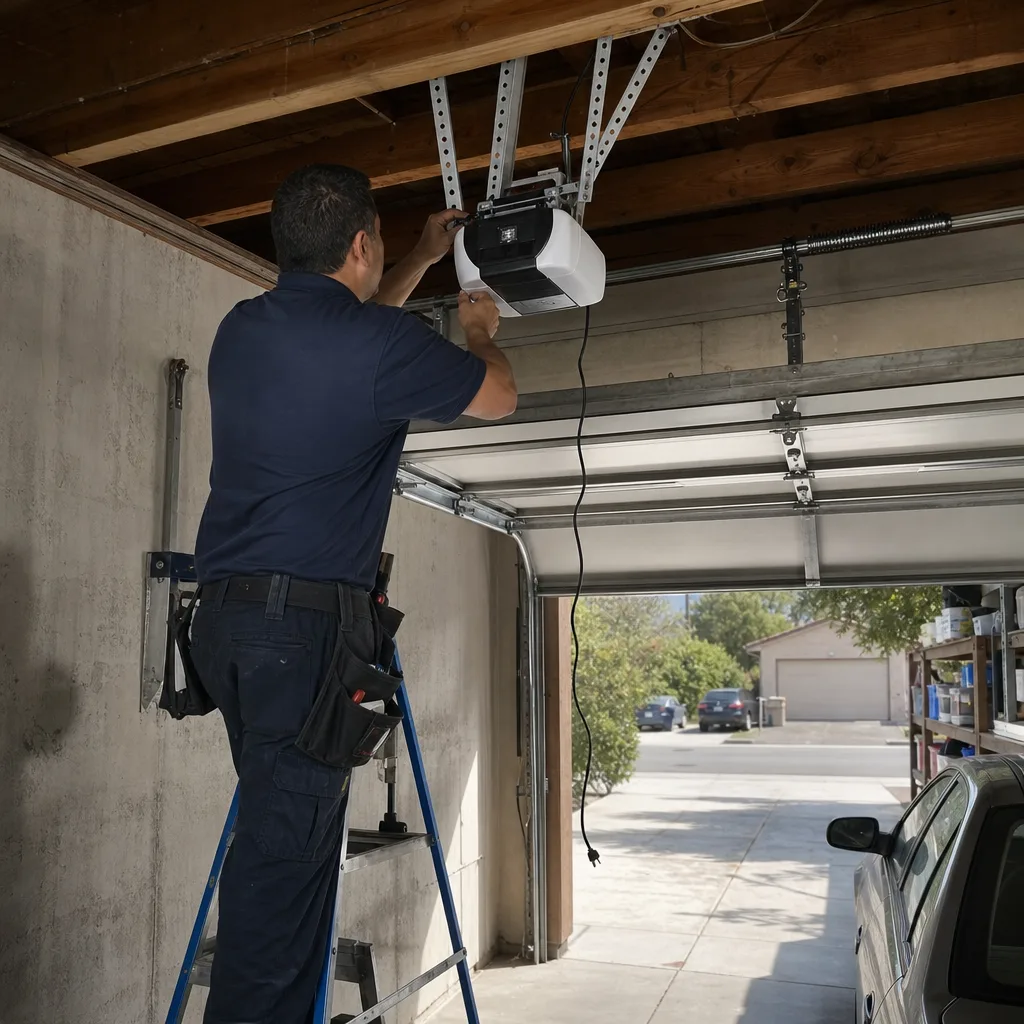
Full 25-point door and opener safety check with every visit - springs, cables, rollers, tracks, and your LiftMaster or Chamberlain opener included
You get a price before we start. It does not change when the truck arrives.
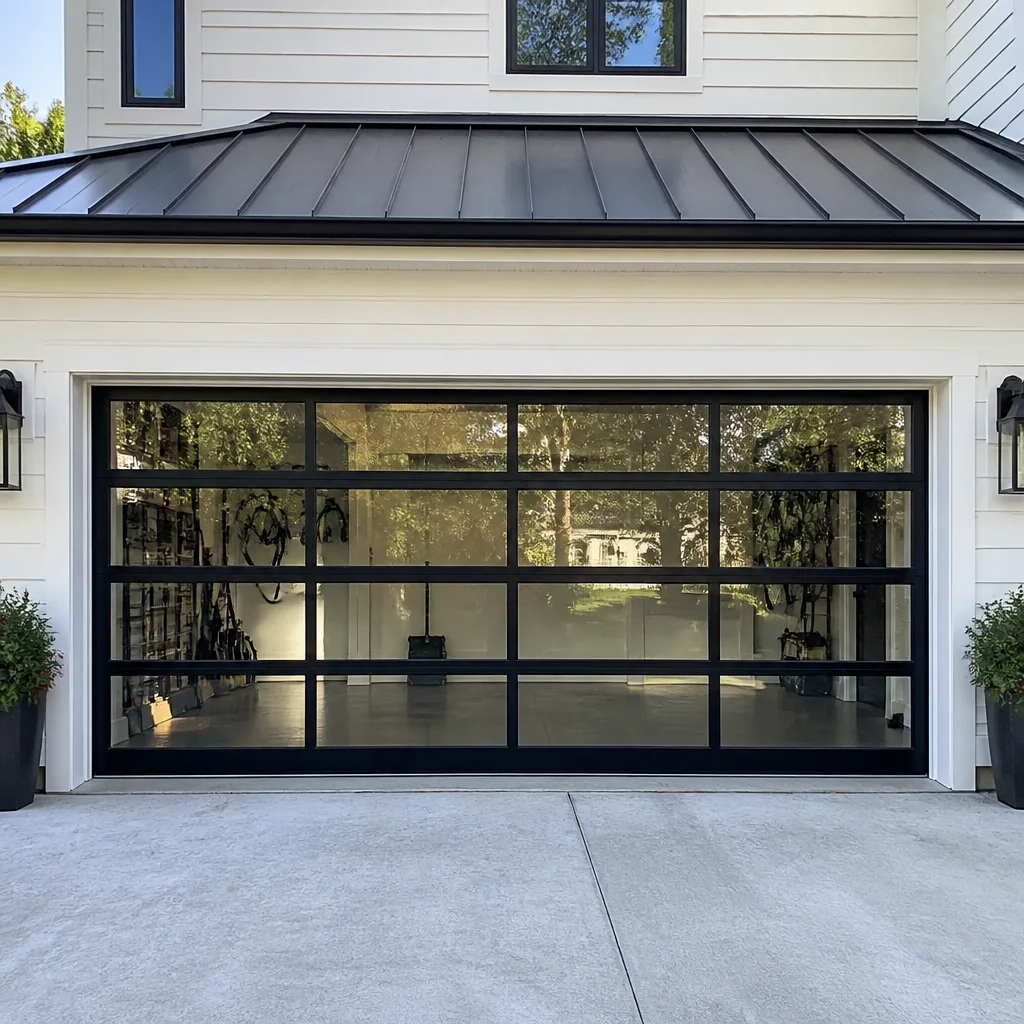
Modern flush
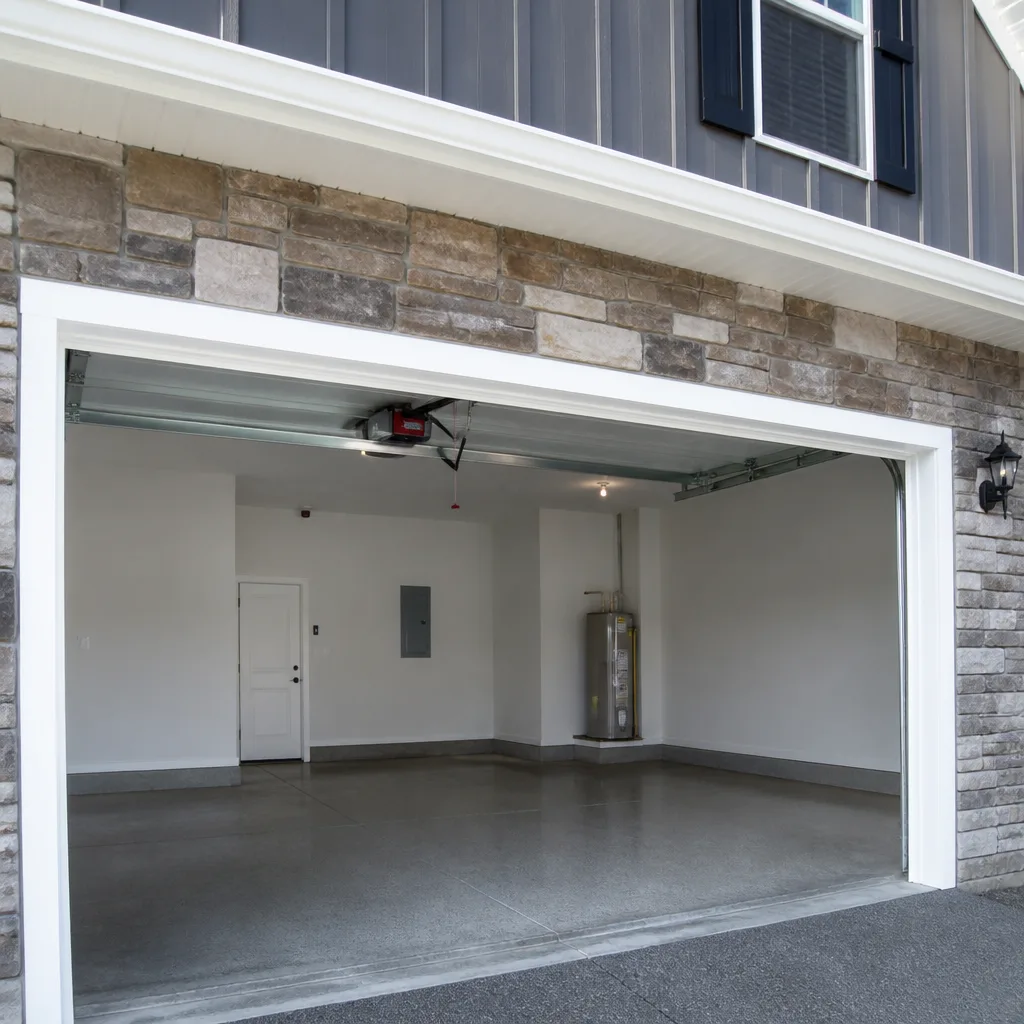
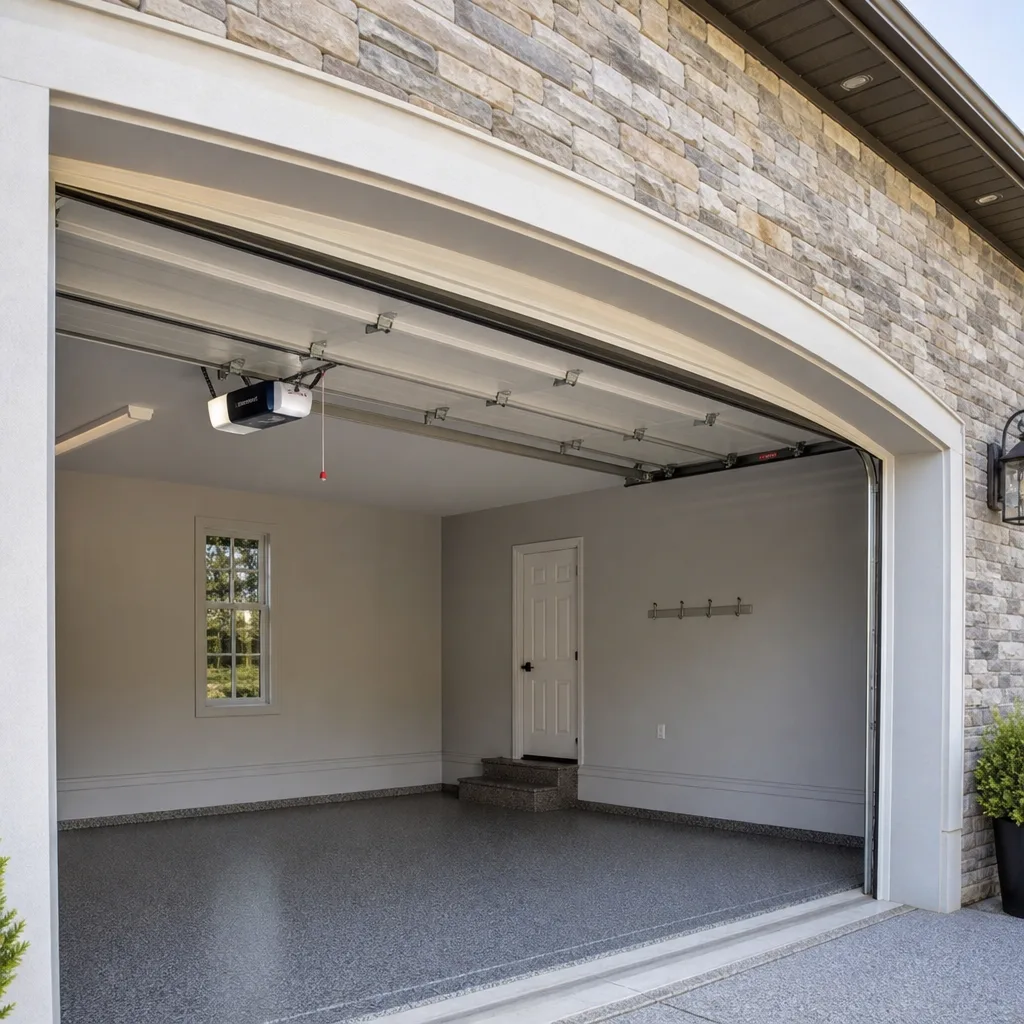
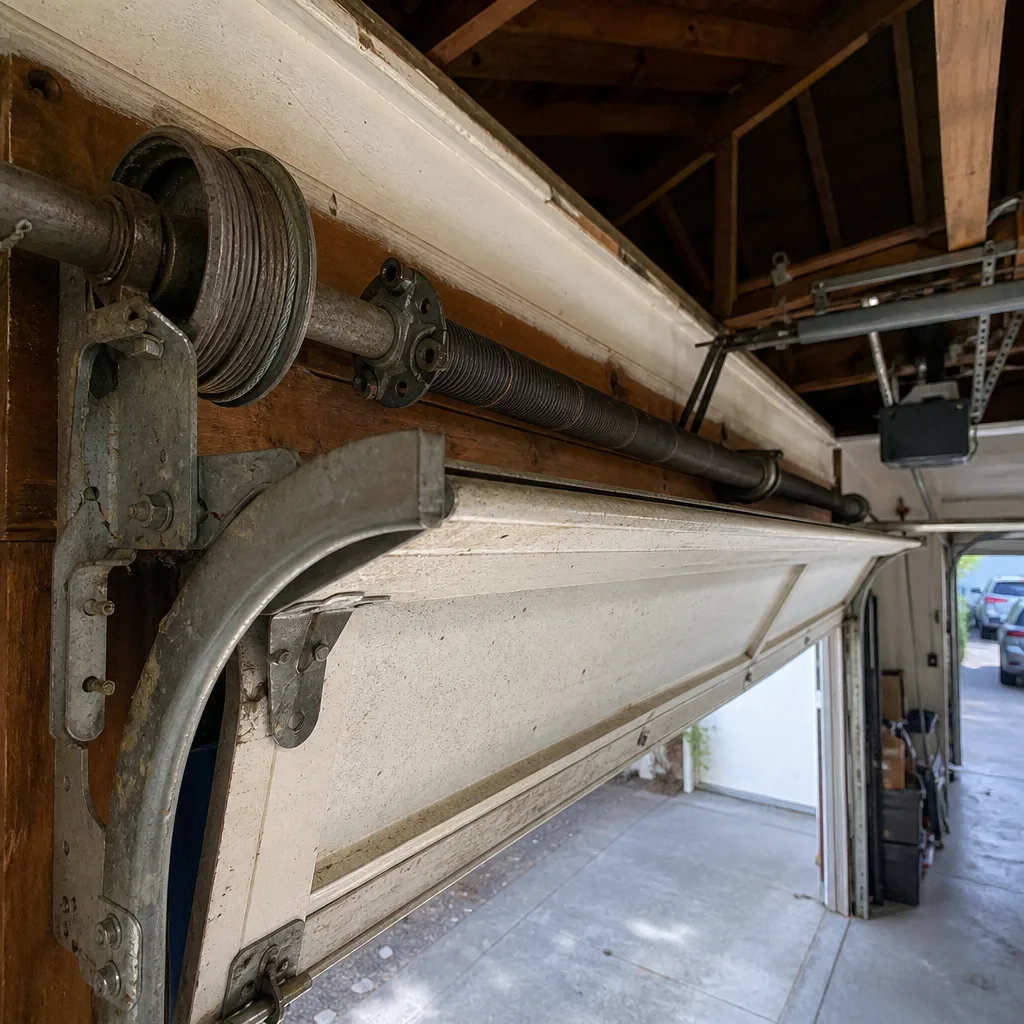 Before
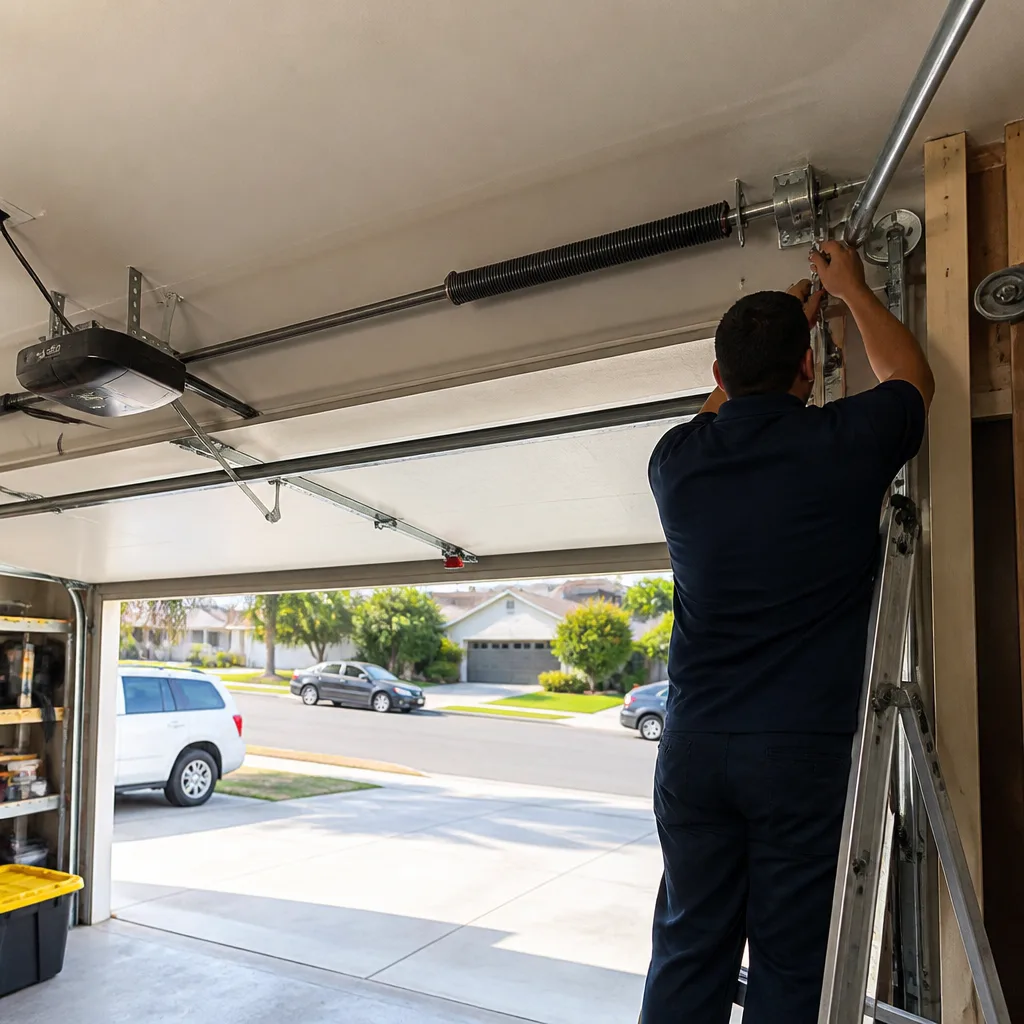 After
After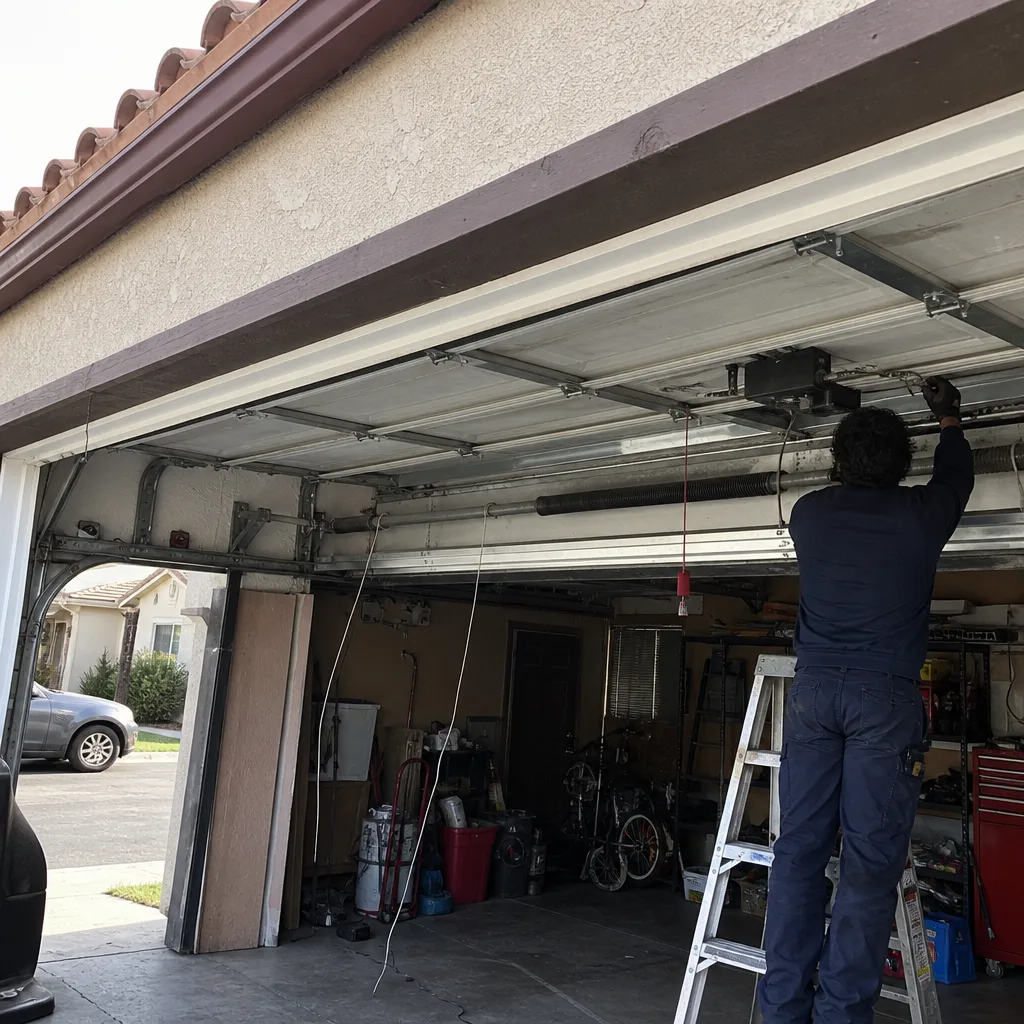 Before
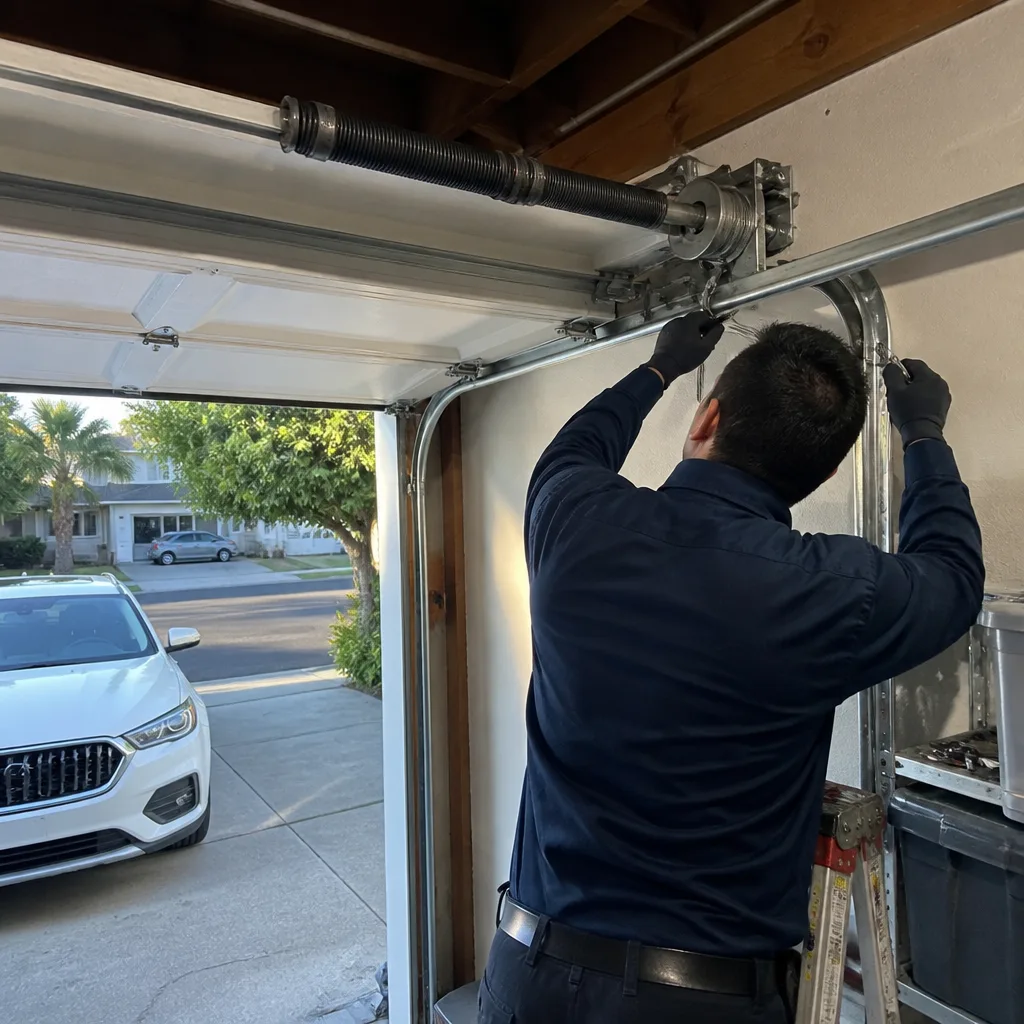 After
After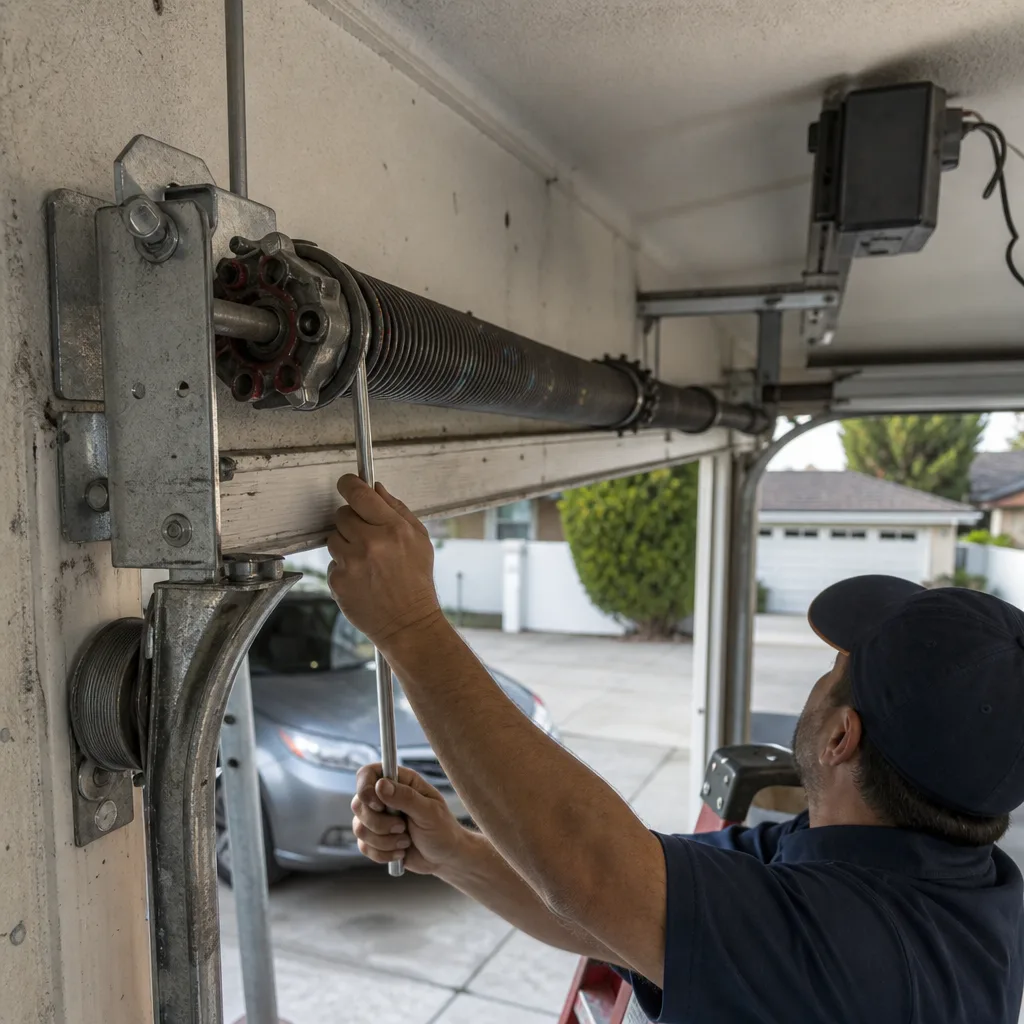 Before
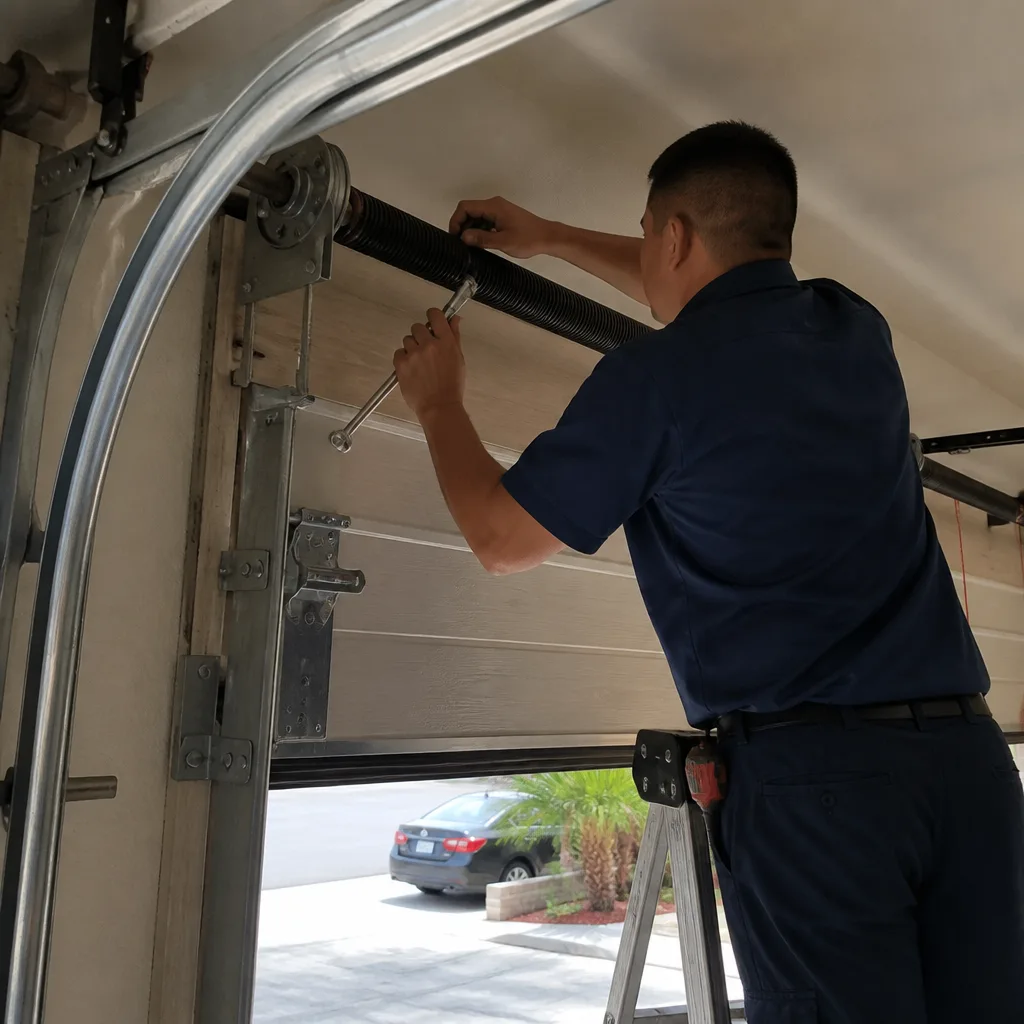 After
AfterHow to Hire a Garage Door Contractor in Santa Ana: A Step-by-Step Guide
A five-star Yelp rating tells you a contractor is polite. It does not tell you whether they quoted a price before opening the door panel, whether they itemized parts versus labor, or whether they left you with a written record of what was replaced and why. Those are the variables that determine whether you were served or upsold. This guide gives you a documentation-first hiring process for Santa Ana homeowners, one that works whether you’re dealing with a snapped torsion spring in Floral Park or a tired opener in West Floral Park that groans every morning at 6:40. For more guides & resources, see our blog.
Quick Answer
The fastest way to filter garage door contractors in Santa Ana is to ask four questions before booking: Can I verify your California contractor license on CSLB.ca.gov? Will you provide a flat, written price before any work starts? Will you photograph the failed component before quoting a replacement? And will you put your warranty terms in writing? A contractor who answers yes to all four, and who shows you the evidence rather than asking you to trust them, is almost certainly safe to hire. Everything else is theater.
Table of Contents
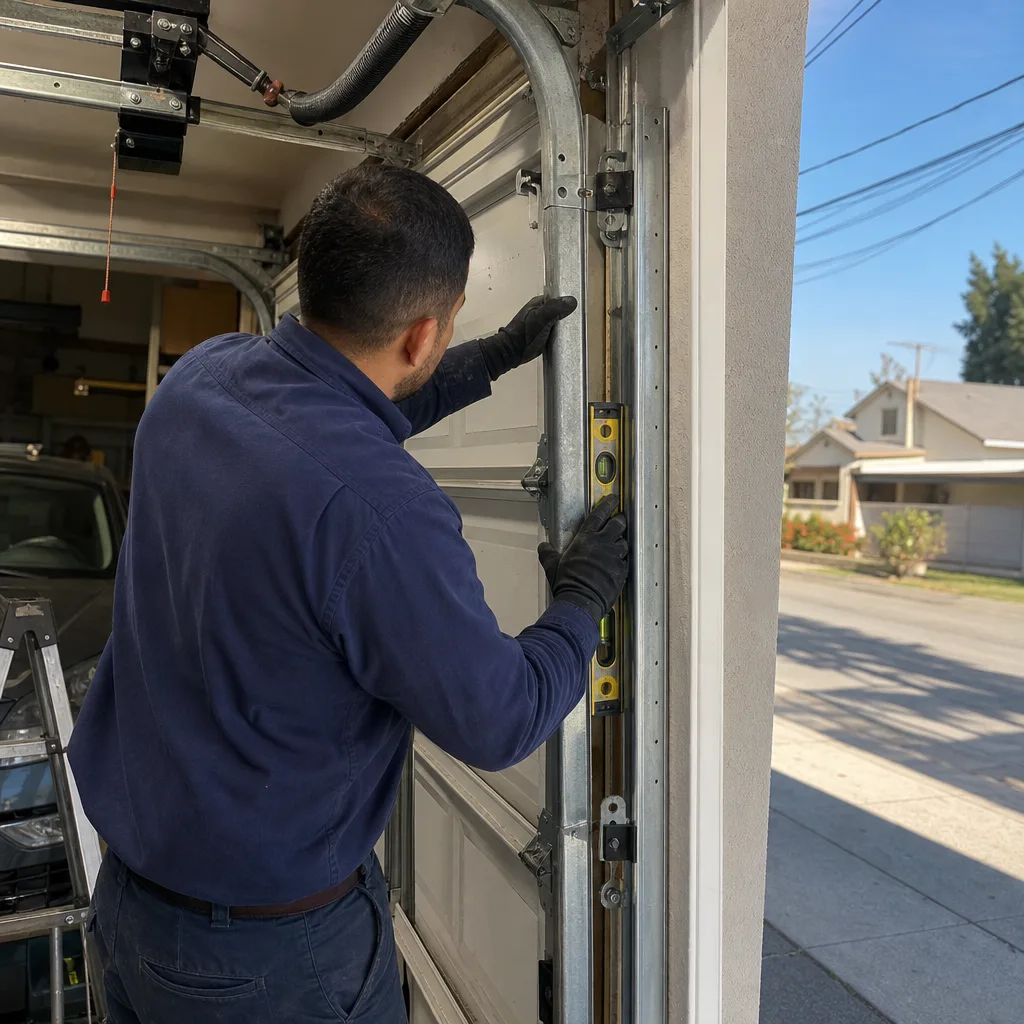
- Step 1: Verify the California Contractor License in Under Three Minutes
- Step 2: The Four Questions to Ask Before Booking Any Appointment
- Step 3: What a Compliant Written Estimate Must Include
- Step 4: Red Flags Specific to Garage Door Service Calls
- Step 5: Service Call Fees and How to Confirm What Applies
- The Photo Policy: Why Documentation Beats Star Ratings
- Santa Ana-Specific Considerations: Climate, Code, and Market
BeforeAfterStep 1: Verify the California Contractor License in Under Three Minutes
Every legitimate garage door contractor in Santa Ana who performs work over $500 in labor and materials must hold a California contractor license. The Contractors State License Board, known as the CSLB, maintains a public database at cslb.ca.gov that takes about three minutes to check. Here’s the process:
- Go to cslb.ca.gov and click “Check a License.” You’ll need either the contractor’s name, their license number, or their business name.
- Enter the information and look at the license status. You want to see the word “Active” in the status field. A license that shows “Suspended,” “Expired,” or “Revoked” is a stop sign. Do not proceed.
- Check the classification. Garage door work typically falls under the C-61/D-28 classification (Door and Gate) or a General Building (B) license. If the contractor holds a different classification and is doing door work anyway, ask why.
- Look at the Workers’ Compensation field. It should show “This license has workers’ compensation insurance.” If it says the license is exempt and the contractor claims to have employees, that’s a contradiction worth investigating.
- Scroll to the bottom for any disclosures. The CSLB lists legal actions, arbitration awards, and bond claims against the license. A contractor with a pile of arbitration awards from unhappy customers is showing you their track record in the most honest way possible.
The Santa Ana angle matters here because Orange County has one of the highest densities of garage door service providers in Southern California, which means more competition, which means more churn. A contractor who’s been licensed and active for five-plus years under the same name is showing stability. A contractor who’s cycled through three business names in four years might be running from something. The CSLB database shows you the history.
Step 2: The Four Questions to Ask Before Booking Any Appointment
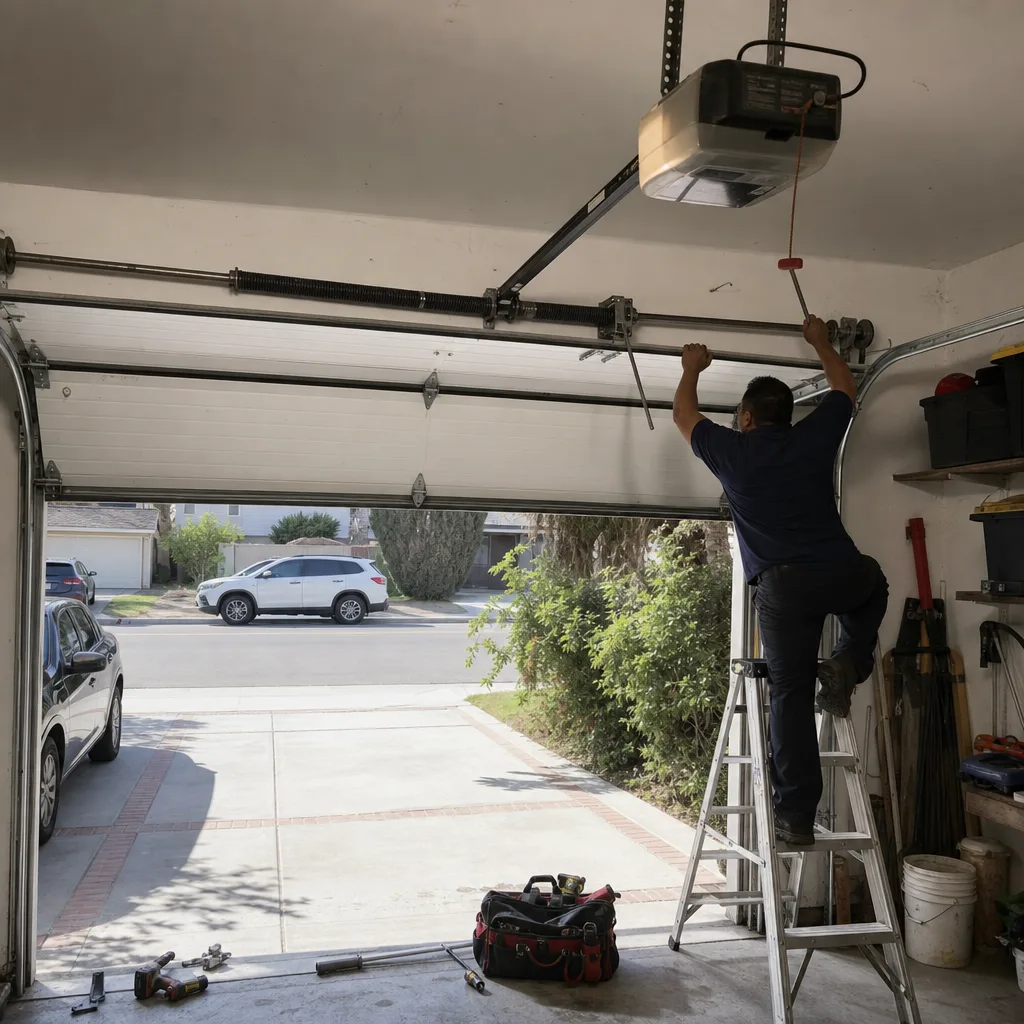
Before you schedule anything, get answers to these four questions. Ask them over the phone or by text, whichever you prefer. A contractor who bristles at any of them is telling you something useful.
Question 1: “What’s your California contractor license number?”
Ask for the number, not a yes or no answer. A real contractor recites it or offers to text it. Then you verify it yourself using the process above. If the answer is “we’re working under a license” or “my partner holds the license,” that’s an immediate red flag. The person doing the work should hold the license. Our license number at Servo Garage Doors Santa Ana is on the footer of every page on our site, not hidden in fine print, because hiding it makes no sense.
Question 2: “Will you give me a written price before any work starts?”
The answer to this one is nearly everything. In California, for home improvement work, you’re legally entitled to a written contract that includes the price before work begins under Business and Professions Code Section 7159. A contractor who says “we’ll figure that out once we’re in there” is asking you to write a blank check. Clause 1 of The Haven Standard, the operating standard we built Servo on in 2015, requires a flat, written price and written scope before any work starts. If a contractor won’t give you that, you should not hire them, full stop.
Question 3: “Will you photograph the failed component before quoting a replacement?”
This is the question that separates evidence-based contractors from margin-based contractors. If a technician opens your panel and says your torsion spring “is in bad shape” but can’t show you a photo of the break, they might be right, or they might be selling you a spring you don’t need. The founding rule at Servo is that the customer sees the failed part before anyone quotes a replacement. That’s why it’s codified as Clause 4 of The Haven Standard. A contractor who shows you the evidence respects your intelligence. A contractor who asks you to trust them is hoping you don’t have any.
Question 4: “Will you put the warranty terms in writing?”
“We stand behind our work” means nothing without a written warranty. Ask what the warranty covers, for how long, and whether it includes parts, labor, or both. A one-year parts warranty with no labor coverage is a different animal than a 365-day promise covering the repair end to end. Get it in writing, in the estimate or contract, before the technician touches a tool.
Step 3: What a Compliant Written Estimate Must Include
Under California Business and Professions Code Section 7159, a home improvement contract, including a garage door repair or installation in Santa Ana, must include certain elements. Use this as your checklist when you receive an estimate:
- The contractor’s name and license number. Not a nickname. Not a first name. The legal business name and the CSLB license number, printed clearly.
- A description of the work to be done. Not “spring repair.” It should say something like “Replace one torsion spring, 0.225-inch wire diameter, on a 16×7 non-insulated single-car door, including winding and balancing.” The more specific the description, the less room for scope creep.
- The total contract price. In dollars. If the price is “TBD,” you don’t have an estimate, you have a hope.
- A payment schedule. For repair work this is usually simple: payment upon completion. For installation, it might be a deposit with a balance due. Both should be in writing.
- The approximate start and completion dates. For repair work this might be the same day. For installation, it might be a two-week window. Either way, it should be written down.
- The contractor’s cancellation policy. California gives you a three-day right to cancel a home improvement contract in most cases. The contract should reference this or provide its own cancellation terms that don’t conflict with state law.
If the estimate is a scrawled number on a sticky note, it’s not an estimate. In our experience in Santa Ana, the contractors who produce the most thorough written estimates are the ones who also produce the most thorough work. The paperwork and the workmanship come from the same system.
Step 4: Red Flags Specific to Garage Door Service Calls
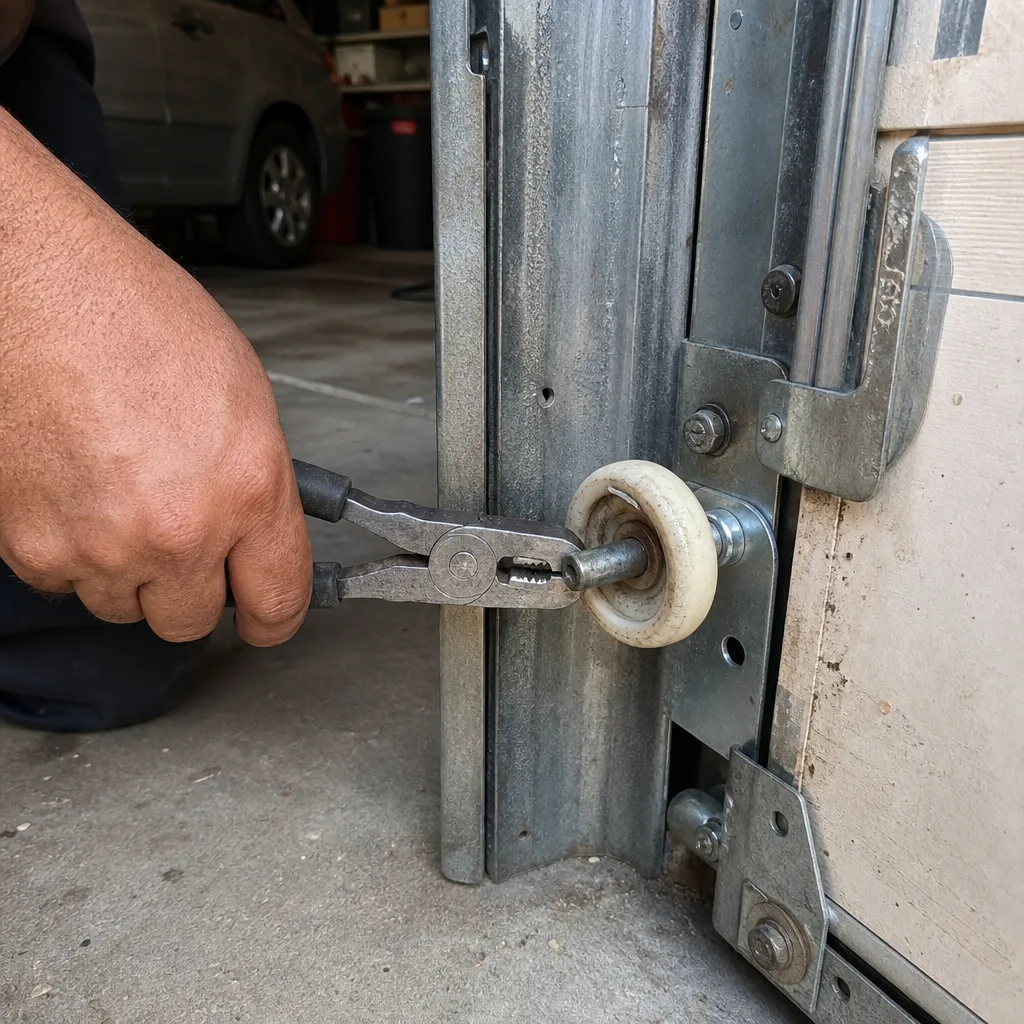
Garage door service has its own species of bad behavior. Here are the ones we see most often in Santa Ana, and why they matter.
- Same-day urgency pressure. “If we don’t replace this opener today, it’s going to fail completely and leave you locked out.” A tired opener doesn’t fail catastrophically because you waited 24 hours. Urgency pressure is a sales tactic, not a technical reality. The exception is a door that won’t close and is leaving your home unsecured, but even then, a reputable contractor will give you options, not an ultimatum.
- Verbal-only pricing. No written price, no written scope, just a number said out loud. If it’s not on paper, it doesn’t exist. This also makes it nearly impossible to get a second opinion, because you have nothing to show a competing contractor.
- Refusal to itemize parts and labor separately. “It’s $450 for the whole job.” Is the spring $120 and labor $330? Or is the spring $300 and labor $150? If they won’t break it out, they might be inflating the parts number. A written estimate should always itemize.
- The full-opener upsell when only a logic board is cited. If a technician diagnoses a logic board failure on a LiftMaster opener, $85 to $160, and then immediately pivots to “you should really replace the whole unit for $550,” ask to see the failed board. If the board genuinely failed and the opener is 12 years old, replacement might be reasonable. But if the board is fine and the real issue is a $25 limit switch, replacing the whole opener is a $500 mistake you don’t need to make. Clause 4 exists for exactly this scenario.
Step 5: Service Call Fees and How to Confirm What Applies
Most garage door contractors in Santa Ana charge a service call fee to come out and diagnose the problem. That’s normal. What varies is what happens to that fee after the diagnosis.
Typically, one of two things is true: the service fee is applied to the cost of the repair if you approve the work, or it’s separate and you pay it regardless. A fee that applies to the repair means a $49 service call on a $280 spring replacement becomes a $231 balance. A fee that doesn’t apply means you pay $49 plus $280, or $329 total.
Neither model is inherently wrong. But you need to know which one applies before the technician arrives. Ask over the phone: “Is the service call fee applied to the repair if I approve the work?” And then confirm the answer in writing, either in a text confirmation or on the written estimate itself. At Garage Door Repair in Santa Ana with Servo, the flat, written price you approve includes everything, and the price is quoted and agreed before any work starts. No separate surprises.
The Photo Policy: Why Documentation Beats Star Ratings
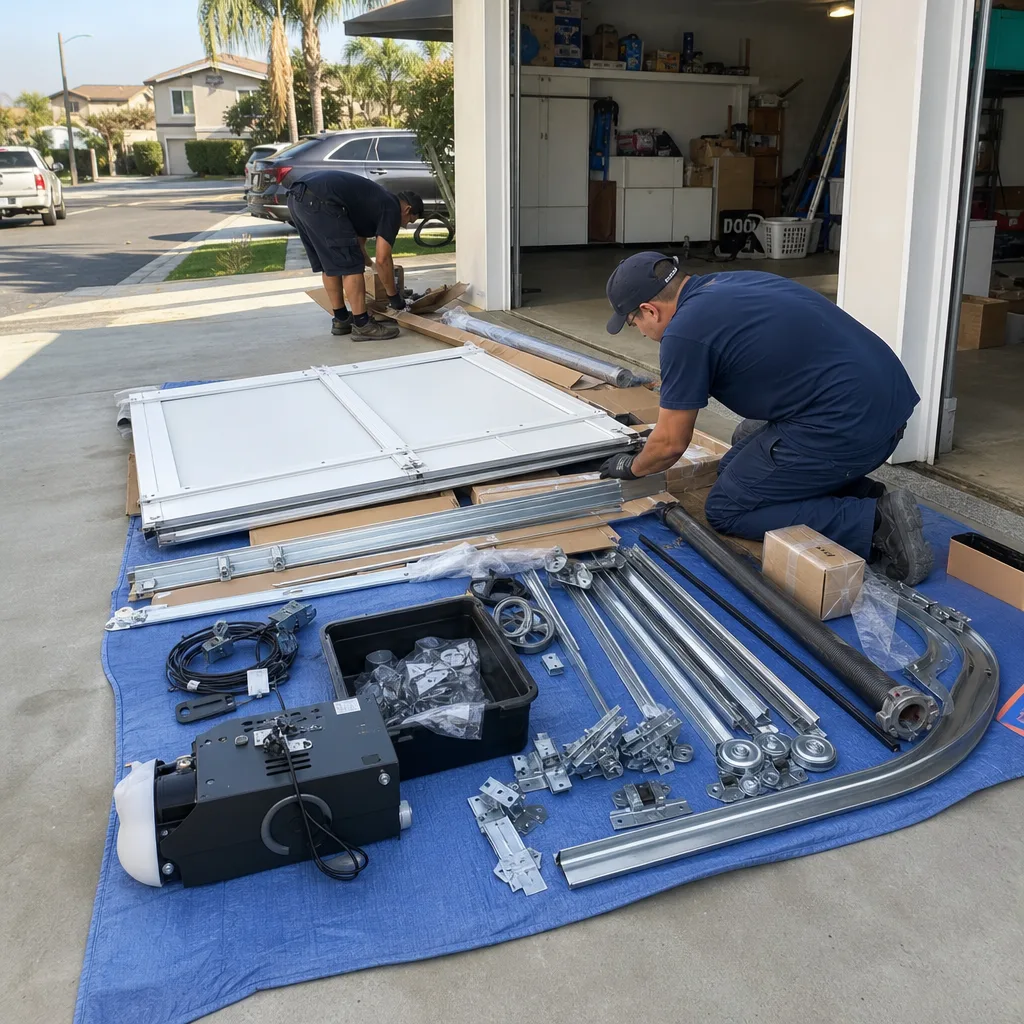
A five-star rating is a feeling. A photo of a broken torsion spring, cleanly separated at the coil and measured at 0.25-inch wire diameter, is a fact. That’s the difference between trusting someone’s opinion and examining the evidence yourself.
The single most revealing question you can ask a garage door contractor is the one we put at the top of this guide: “Will you photograph the failed component before you quote the replacement?” Here’s what that question tells you:
- A contractor who says yes prices from evidence. They open the panel, find the problem, photograph it, show it to you, and explain what they found. Their price is tied to a specific, visible failure.
- A contractor who says no, or hesitates, or says “we’ll take pictures later,” prices from margin. They rely on the fact that you can’t see inside your own door, and they quote a number that sounds urgent enough to approve.
- A contractor who says yes and then actually follows through is documenting their work from the moment they arrive to the moment they leave. That’s a behavioral pattern, not a sales pitch.
At Servo, this practice dates back to our founding in 2015. The founding rule was that the customer sees the failed part before anyone quotes a replacement. That rule became Clause 4 of The Haven Standard, and it means the documented photo record is included on every visit, not optional. You receive evidence of what was found and what was done. When we work on a Clopay door with a broken cable in Mabury Park, you see the frayed cable. When we replace a logic board on a Raynor opener in the Washington Square neighborhood, you see the old board on the bench.
This is not a gimmick. It’s a discipline. And it changes the relationship between contractor and customer before the first tool comes out.
Santa Ana-Specific Considerations: Climate, Code, and Market
What Santa Ana’s climate does to garage doors
Santa Ana sits ten miles inland, which means hotter summers and wider temperature swings than coastal Orange County cities. Those swings are hard on torsion springs, which cycle through heating and cooling every day and slowly lose their temper as a result. A spring that lasts seven years in Newport Beach might last five in Santa Ana’s inland heat. We also see more corrosion on hardware in the older neighborhoods close to the 5 and 55 freeways, where decades of exhaust and particulate have settled into every exposed surface. That corrosion shows up in stiff rollers, squealing hinges, and tracks that bind on humid mornings. None of this is fatal, but it does mean Santa Ana homeowners should expect spring and roller replacement a little sooner than their coastal neighbors. See our Seasonal Garage Door Care for Santa Ana: Year-Round Homeowner’s Guide for maintenance timing.
What the local market looks like
Santa Ana’s housing stock runs the full spectrum, from 1920s Spanish Revival homes in Floral Park with custom carriage doors to 2010s tract homes in the newer developments east of the 55 with standard 16×7 steel panels. The age of the door matters when you’re deciding between repair and replacement. A 1920s carriage door that’s been maintained and rebuilt can often be repaired and kept in service indefinitely. A 2005-era steel door with a rusted bottom panel and a failing opener might be better served by replacement. A contractor who knows Santa Ana’s housing stock can tell you which situation you’re in. A contractor who applies the same recommendation to every home is guessing. Our The Complete Guide to Garage Door in Santa Ana covers local housing stock in more detail.
Code and permit realities
Garage door replacement in Santa Ana generally does not require a city permit if you’re swapping an existing door for a new one in the same opening. Structural modifications, new openings, or converting a garage to living space are different conversations entirely, and those do trigger city review. If a contractor tells you they’ll “handle” the permit for a simple door replacement and adds a $200 line item for it, ask what the permit covers. In most cases, there isn’t one. The exception is if your home is in a historic district, like parts of Floral Park, where exterior modifications may require design review. A reputable contractor will know the Santa Ana rules. A lazy one will charge you for a permit that doesn’t exist.
Neighborhood-level service realities
Santa Ana is a dense city with narrow streets in the older central neighborhoods and gated communities in the newer edges. That matters for scheduling, parking, and access. A technician working in the Townsend neighborhood near Santa Ana College needs to navigate street parking and tight driveways. A technician working in a gated community near South Coast needs gate codes and sometimes escort policies. The better contractors plan for this. At Servo, the named technician who’s dispatched to your home gets your access details before they arrive, so the on-the-way text includes the actual ETA, not a four-hour window.
Common Mistakes to Avoid
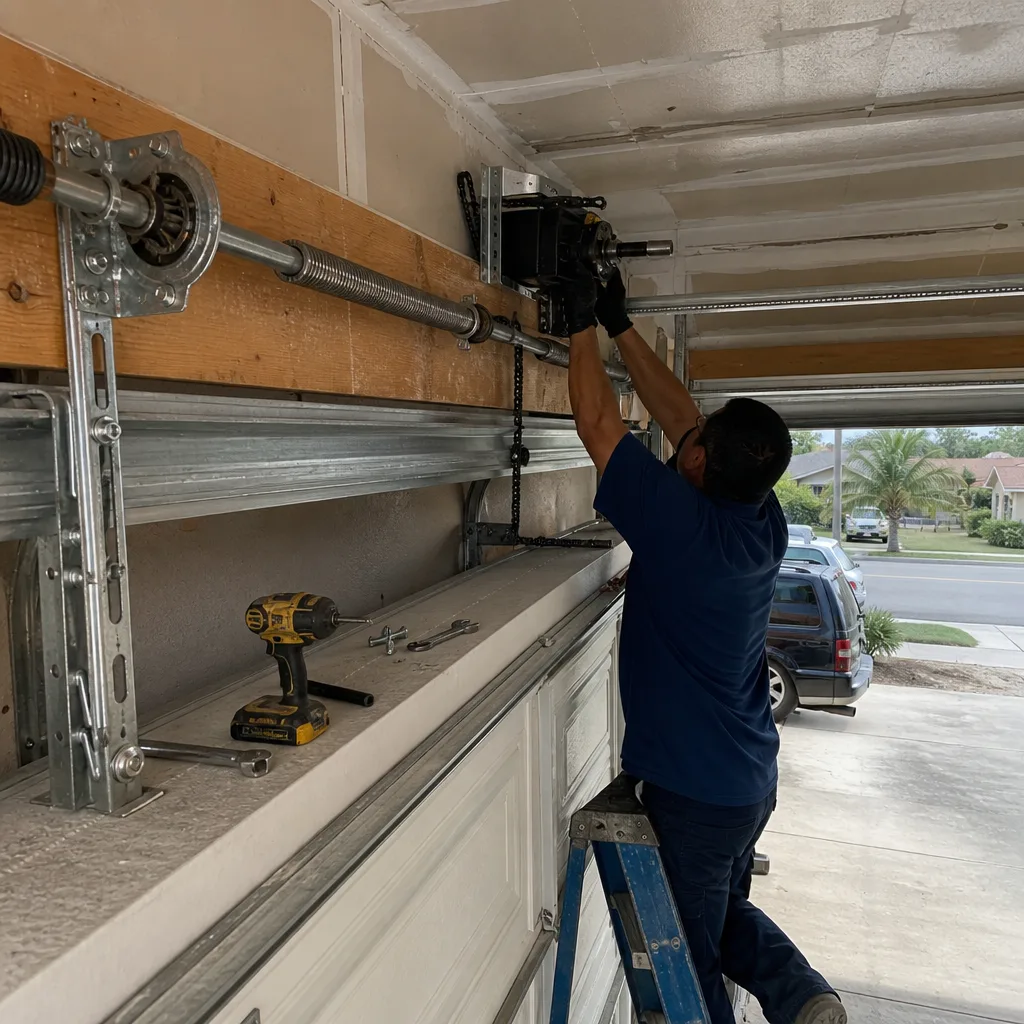
- Hiring without verifying the license. A handyman who “does garage doors” is not a garage door contractor. If they’re working without a CSLB license and something goes wrong, you have limited recourse. The three-minute license check is the cheapest insurance you’ll ever buy.
- Approving verbal estimates. If the price isn’t in writing, you’re betting your money on someone’s memory. Written prices are the only prices that count. Under Section 7159, you’re legally entitled to a written contract. Insist on it.
- Paying in full upfront. A deposit for a special-order door is normal. Paying 100% of the price before any work starts is not. The payment schedule should be in the contract, and the balance should be due when the work is complete.
- Letting urgency override documentation. “We have a slot open today” is not a reason to skip the photo policy, skip the written estimate, or skip the license check. A door that won’t open is an inconvenience. A door that won’t close is a security issue. Either way, a reputable contractor can give you a documented price before they touch the door.
- Comparing quotes without comparing scope. A $900 replacement quote for an Amarr door and a $1,400 replacement quote for a Wayne Dalton door of the same size are not the same job. Read the line items. The more detailed quote is usually the more honest one.
- Skipping the free second opinion. If you have a written estimate from another company and it feels high, get another set of eyes on it. This is actually our standard practice at Servo: bring us any competing written estimate and we’ll give you a free second opinion. The paperwork is the evidence.
When to Call a Professional
Some garage door issues are safe to observe. A broken torsion spring is not one of them. Torsion springs are wound under tension high enough to cause serious injury or death if they release unexpectedly. Cables carry that same tension. If your spring is broken, your cable is frayed, or your door is off its tracks, do not attempt a repair yourself. The same caution applies to any opener work that involves electrical components. A homeowner should not be opening a motor housing and testing live leads. For anything beyond replacing batteries in a remote or tightening a visible bolt with the door in the down position, call a trained professional. Servo Garage Doors Santa Ana offers free estimates in Santa Ana. Call (949) 569-5253.
Frequently Asked Questions
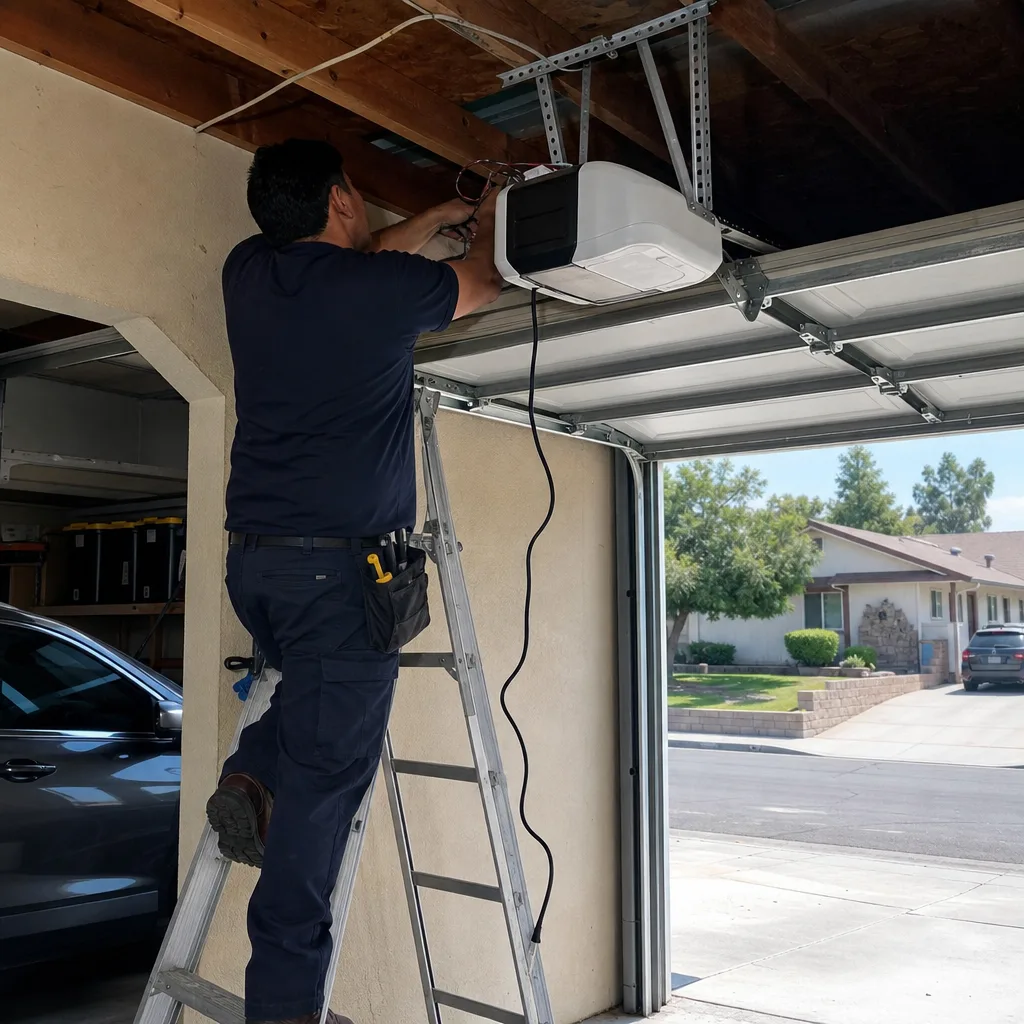
A typical garage door repair in Santa Ana runs between $150 and $350 for common problems like broken springs, snapped cables, or faulty sensors. Spring replacement, the most common repair we see, usually lands in the $180 to $340 range depending on spring size and style. Opener repairs like logic board or gear replacement typically run $120 to $280. These are ballpark figures; the exact price depends on your door, your opener, and what failed. For a flat, written quote with a price before any work starts, call Servo at (949) 569-5253. Estimates are free.
We answer live calls 24 hours a day, 7 days a week, including holidays. If your garage door won’t close and your home is unsecured, that’s an emergency, and we treat it like one. You’ll speak to a real person, not a recording, and a named technician will be dispatched with an on-the-way text. Call (949) 569-5253 and we’ll get someone on the road.
No. The flat price you approve before work starts is the price you pay when the work is done. Clause 1 of The Haven Standard requires a written price and written scope before any work begins, and that price is what appears on your invoice. If the technician discovers an additional issue while working, they document it, photograph it, show it to you, and get your approval for the additional scope before proceeding. Read our DIY vs Professional Garage Door: The Santa Ana Homeowner’s Decision Guide to understand when to call a pro. You never owe more than what you approved in writing.
Our technicians stock the common replacement parts for all eight major brands we service: LiftMaster, Chamberlain, Genie, Clopay, Amarr, Wayne Dalton, Craftsman, and Raynor. That includes torsion springs in multiple wire diameters, cables, rollers, sensors, and opener gears and logic boards. In most cases, the parts your repair needs are on the truck when the technician arrives. Special-order items, like a custom door section or a rare opener model, are ordered with a written timeline you approve before the order is placed.
Bring it to us. We offer a free second opinion on any written estimate from another company. Our technician will review the line items, visit the property if needed, and give you an honest assessment of whether the price and scope are fair. No coupon, no code, no obligation. If our assessment matches the competing estimate, we’ll tell you that too. Call (949) 569-5253 to schedule the review.
If the door is structurally sound, the panels are intact, and the opener is less than 10 years old, repair is usually the right call. If the door has rusted through, the panels are warping, or the opener predates safety sensors, replacement starts to make more financial sense. In Santa Ana’s inland climate, we see rust and heat fatigue accelerate wear on doors that sit in direct afternoon sun. A documented photo record during your diagnosis shows you exactly what you’re working with, which makes the repair-versus-replace decision a lot less abstract. For a free estimate and a written recommendation, call Servo at (949) 569-5253.
The Bottom Line
Hiring a garage door contractor in Santa Ana is not about finding the highest-rated listing or the one that answers the phone fastest. It’s about finding a contractor who will show you evidence before they ask you for money. Verify the license. Demand a written price. Ask for a photo of the failed part. Get the warranty in writing. Those four steps eliminate nearly every bad outcome this industry produces. The contractors who can meet that standard are the ones who have systems in place, and systems are what protect you when the door gets heavy and the spring gives out. For a flat, written price before any work starts, call Servo Garage Doors Santa Ana at (949) 569-5253. We’ve been serving Santa Ana since 2015, and every job leaves with a photo record of what we found and what we did.
Written by Marcus Deller, Owner at Servo Garage Doors Santa Ana, serving Santa Ana since 2015.