
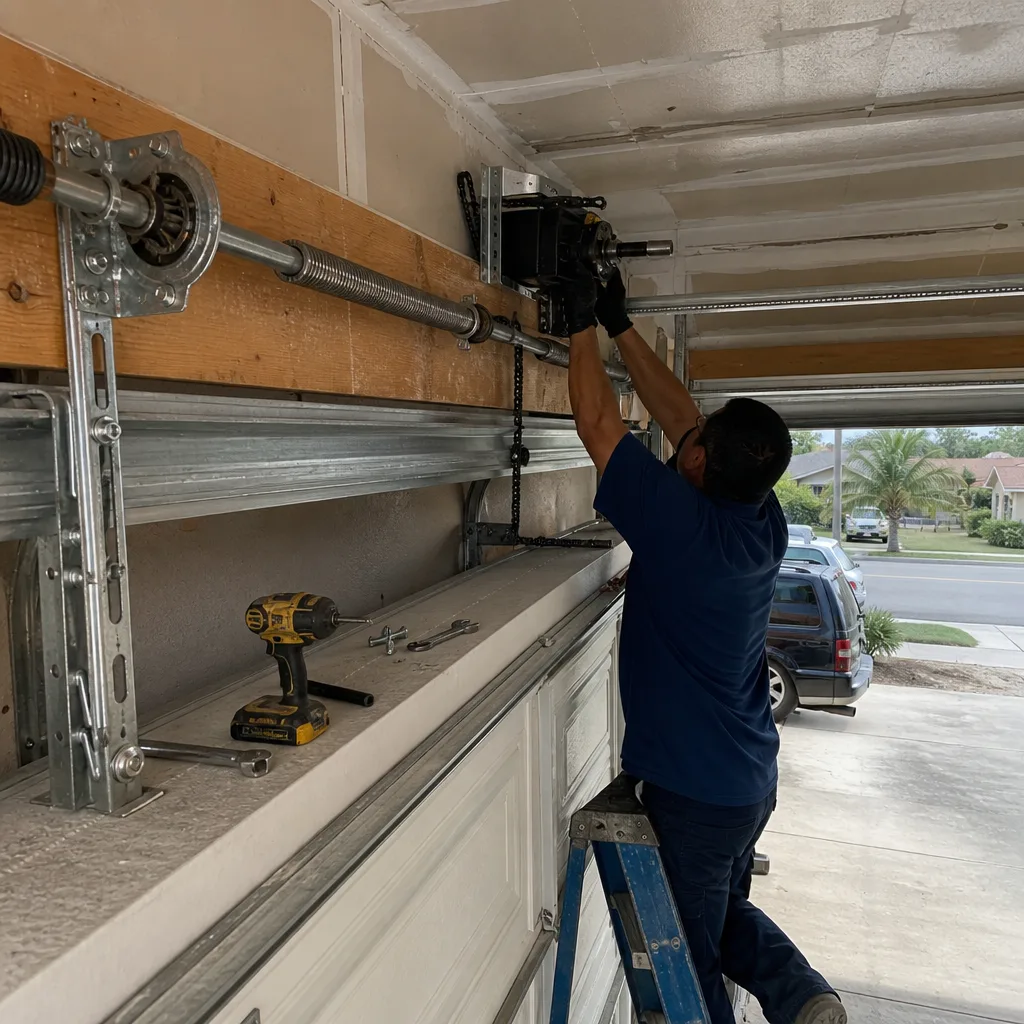
Last updated September 19, 2026
Full 25-point door and opener safety check with every visit - springs, cables, rollers, tracks, and your LiftMaster or Chamberlain opener included
You get a price before we start. It does not change when the truck arrives.
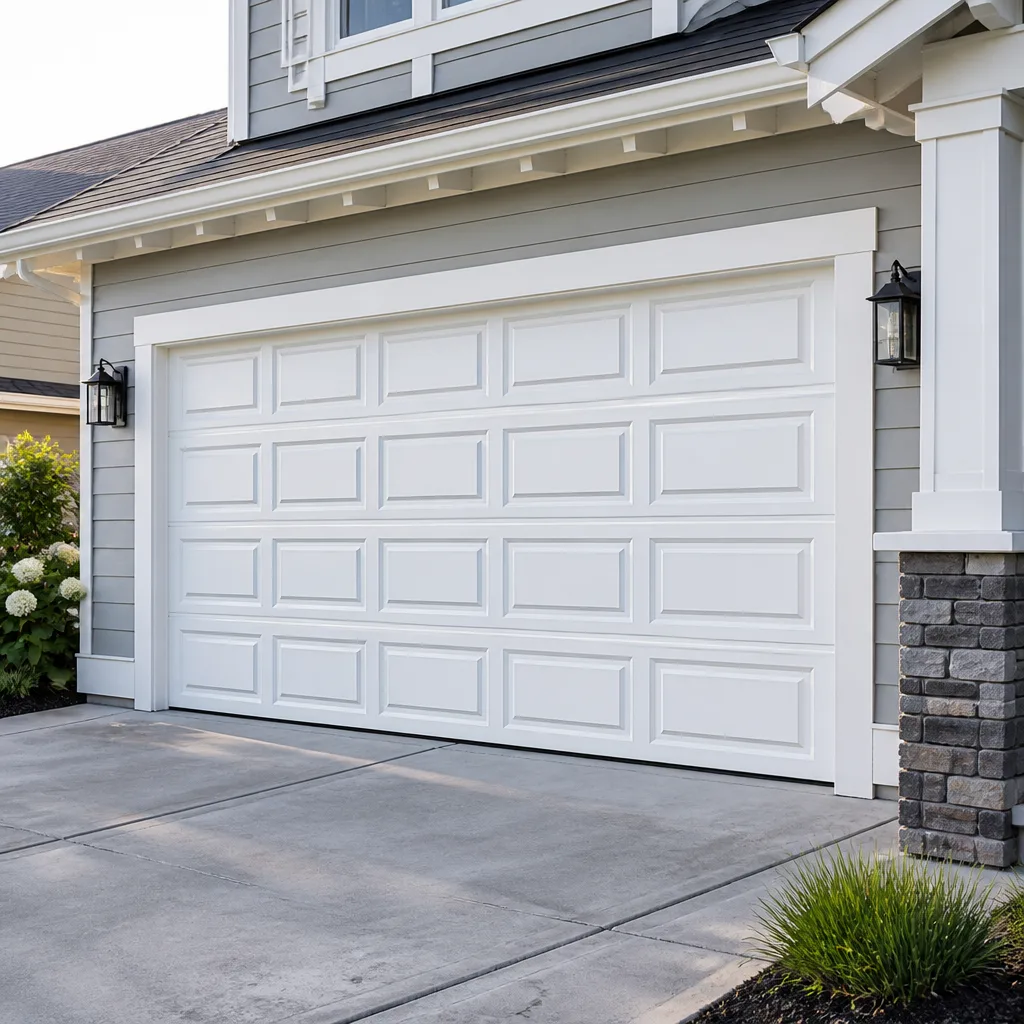
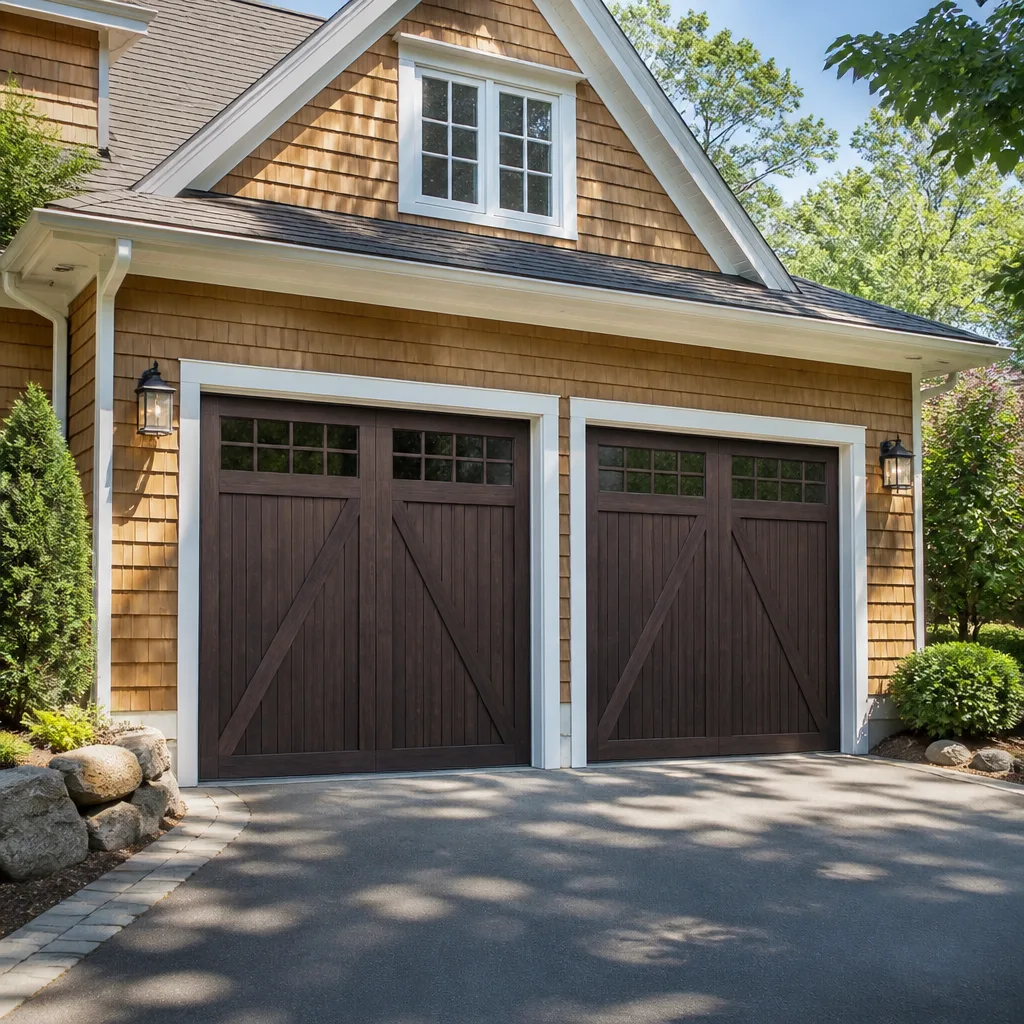
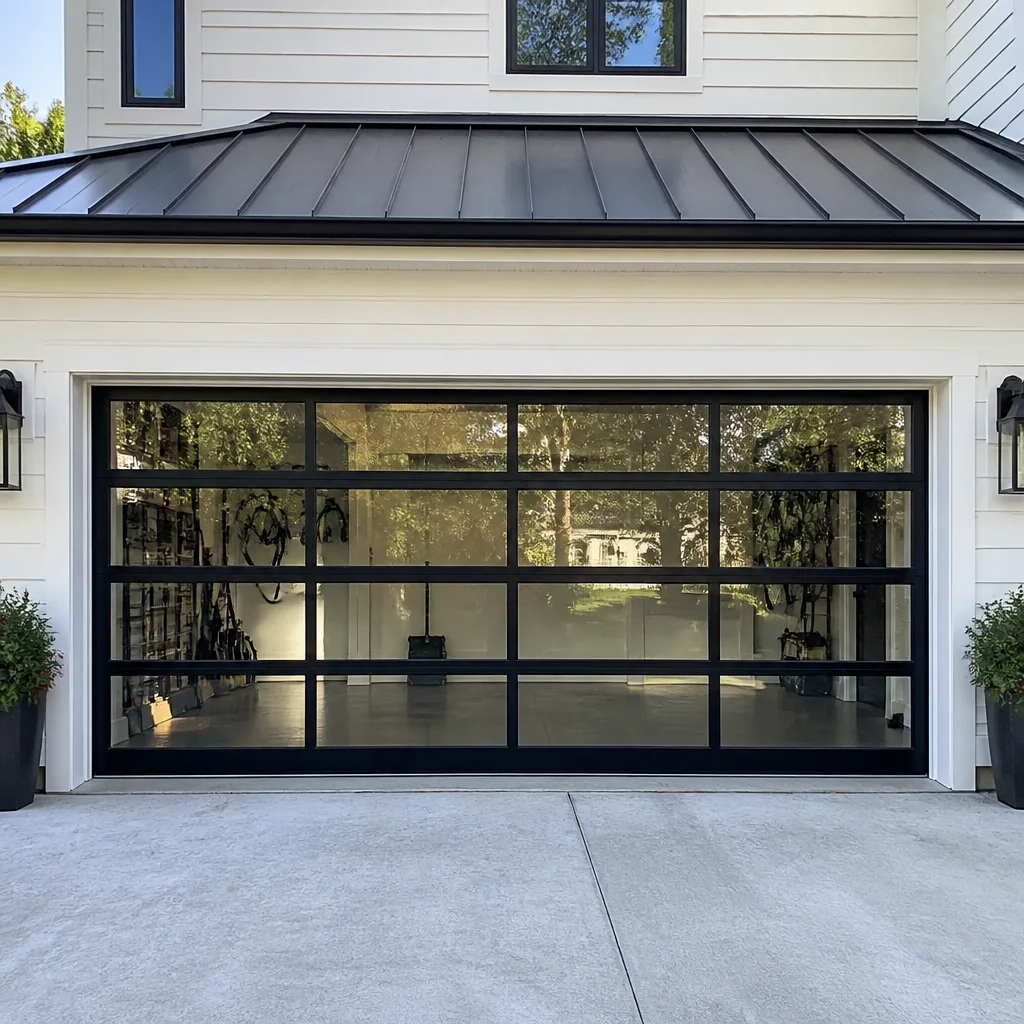
Modern flush
 Before
 After
After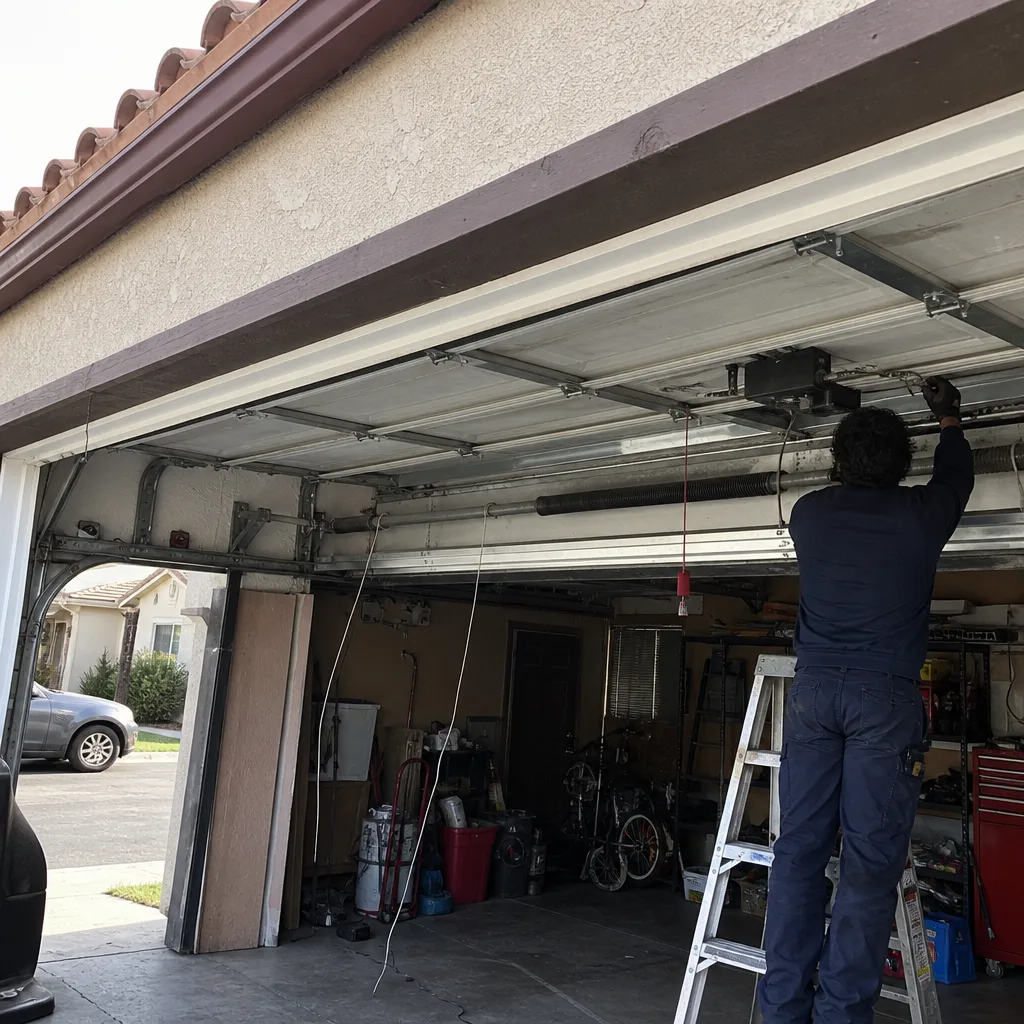 Before
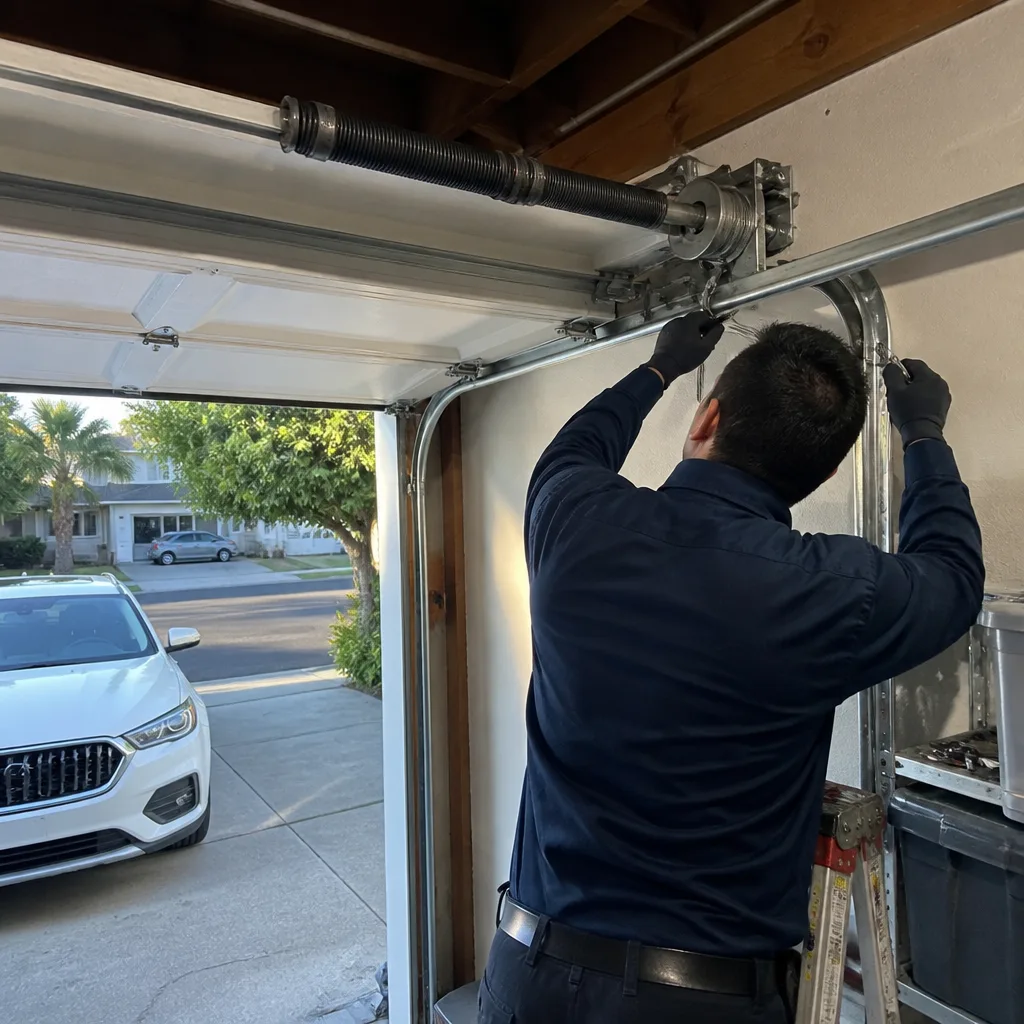 After
After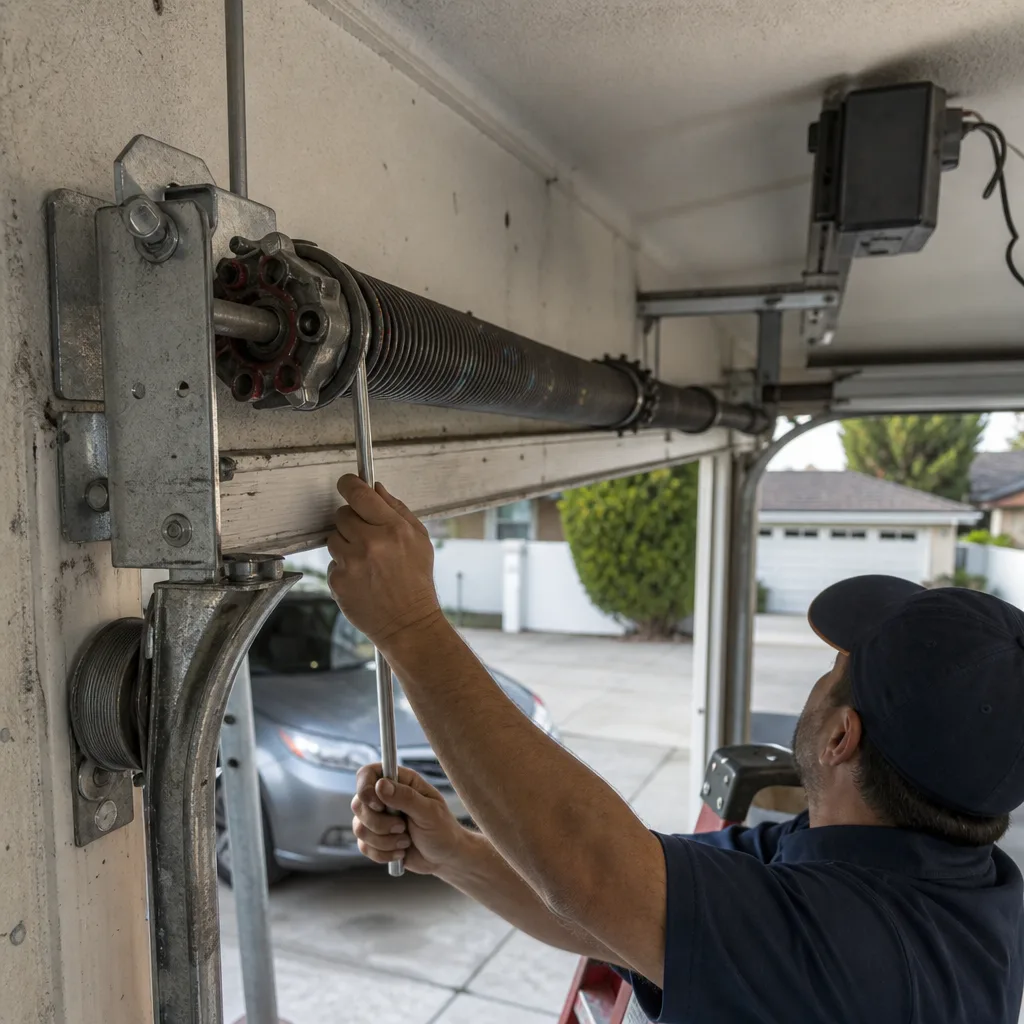 Before
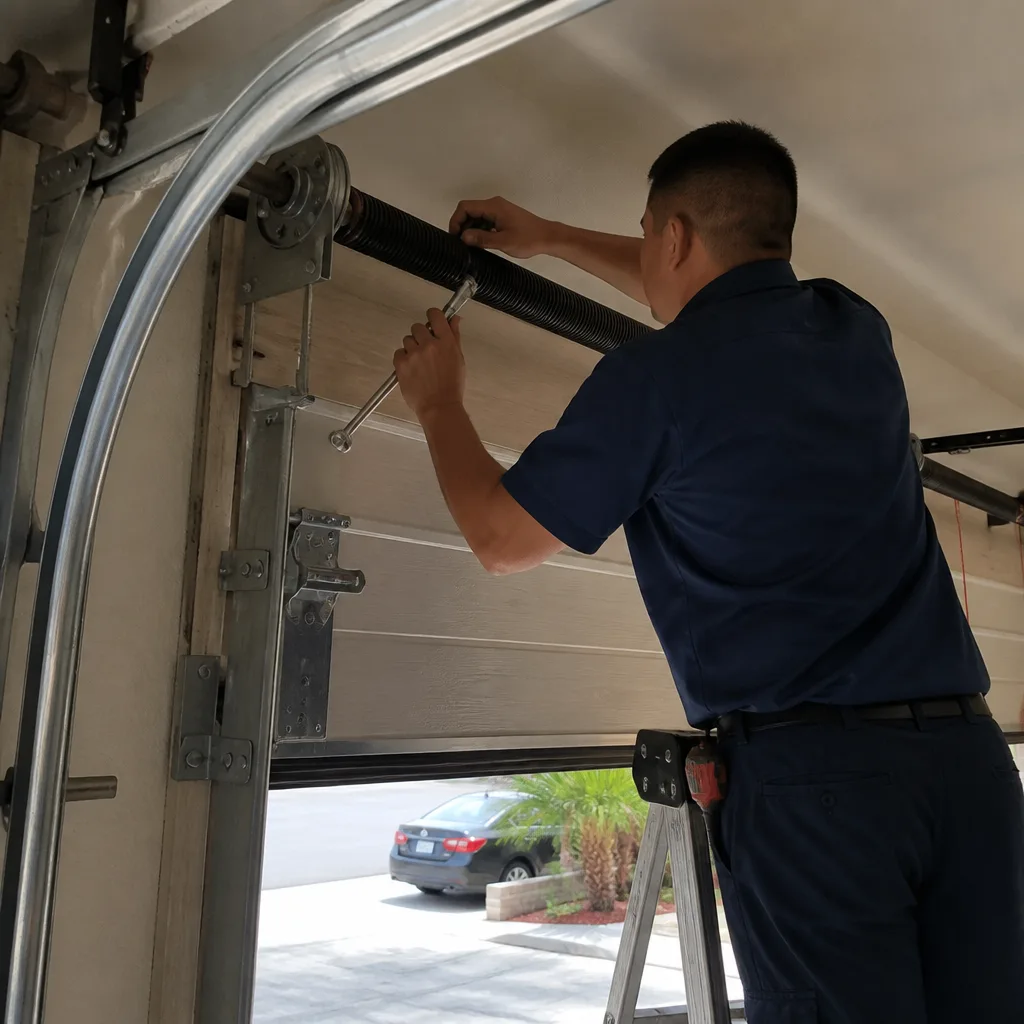 After
AfterSeasonal Garage Door Care for Santa Ana: Year-Round Homeowner’s Guide
The Santa Ana winds that sweep through Orange County from October through February are not just a wildfire concern. They are a garage door alignment risk. Wind loading on a door that is open, partially open, or even closed but unlatched applies lateral force to the track mounting brackets. Over multiple seasons, that force loosens the lag bolts holding the vertical track to the door frame. It is one of the most common sources of off-track doors in Santa Ana, and it routinely gets misdiagnosed as spring or cable failure. This guide explains the three distinct stress periods that shape garage door wear in this city, which components fail during each one, and how to document your seasonal inspections so no one can sell you a repair you do not need. For a deeper dive into local repair considerations, see our Complete Guide to Garage Door in Santa Ana.
Quick Answer
Seasonal garage door care in Santa Ana means working around three stress periods, not four seasons: the Santa Ana wind season (October through February), the marine-layer months (November through March), and the summer heat plateau (June through September). Wind season loosens track mounting hardware, marine layer promotes corrosion on steel components, and sustained heat shifts aluminum panel geometry and sensor alignment. A date-stamped photo record from each inspection is the single most useful tool a homeowner can keep.
Table of Contents
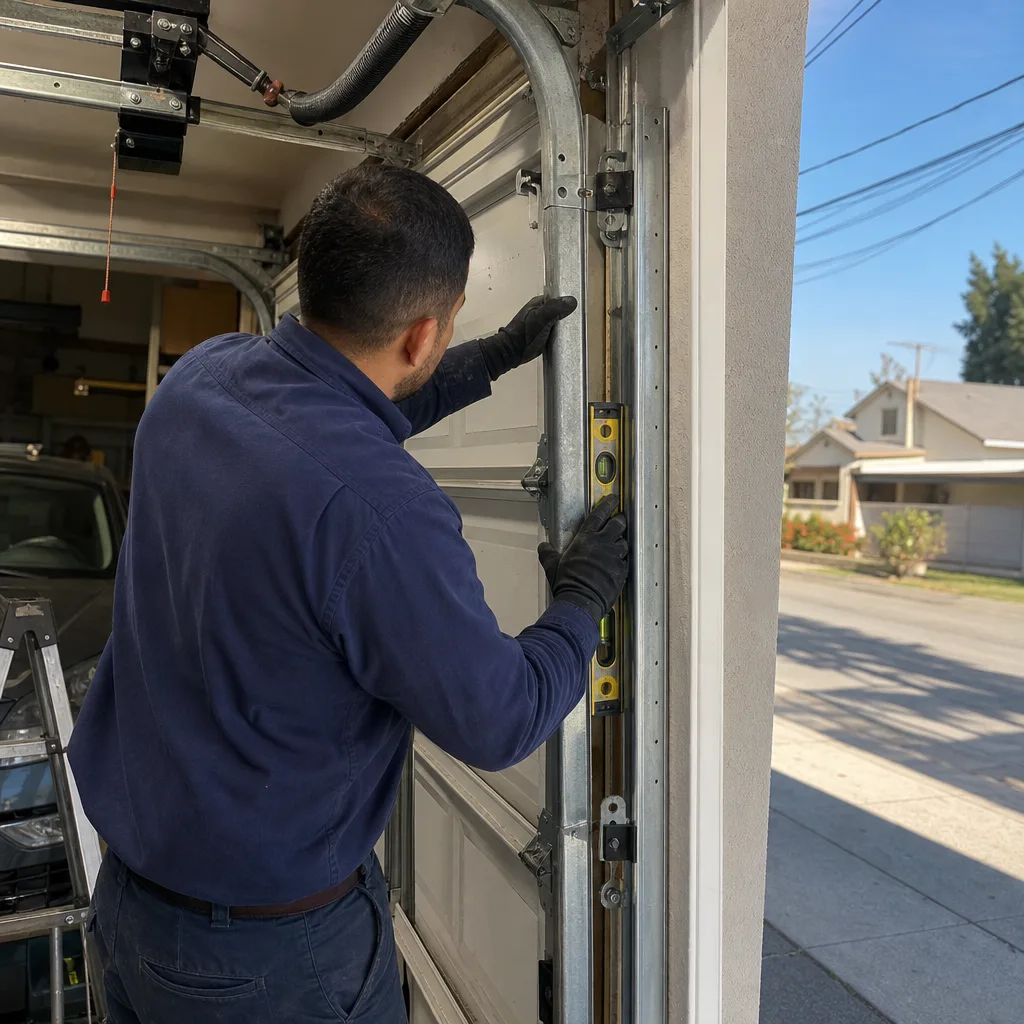
- The Three Santa Ana Stress Periods That Actually Matter
- October-February: Santa Ana Wind Season and Lateral Bracket Inspection
- November-March: Marine Layer Corrosion and Weatherseal Checks
- June-September: The Heat Plateau and Thermal Expansion
- The Santa Ana Task Calendar: What to Do and When
- How to Use Date-Stamped Photos as Maintenance Documentation
- Common Mistakes to Avoid
- When to Call a Professional
- Frequently Asked Questions
- The Bottom Line
BeforeAfterThe Three Santa Ana Stress Periods That Actually Matter
Santa Ana does not have four seasons in any meaningful sense for a garage door. What it has are three recurring environmental conditions, each of which stresses a different set of components in a predictable pattern. Understanding this pattern is the difference between catching a problem early and discovering it at 7 a.m. on a workday when the door refuses to open.
The first stress period is the Santa Ana wind season, which typically runs from October through February. These northeast winds, channeled through the Santa Ana Canyon, regularly gust to 40 mph and occasionally exceed 60 mph in exposed areas like Floral Park and the neighborhoods east of the 55. A garage door presents roughly 100 to 160 square feet of surface area to that wind. When the door is open, that surface becomes a sail. The force transfers through the panels into the rollers, then into the track, and finally into the lag bolts that secure the track brackets to the wood framing. Those bolts are the weak point in the chain.
The second stress period is the marine layer season, roughly November through March. Santa Ana sits far enough inland that the morning overcast often burns off by 10 a.m., but the overnight and early morning humidity is real, averaging 70 to 85 percent relative humidity during those months. That sustained moisture is what drives corrosion on exposed steel hardware. The torsion spring, the cable drums, the hinge bodies, and the bottom brackets all accumulate surface oxidation. Left unchecked in a coastal-adjacent climate like this one, surface rust can progress to pitting, and pitting on a torsion spring coil is a fatigue crack waiting to happen.
The third stress period is the summer heat plateau, roughly June through September. Santa Ana averages 20 to 30 days per year above 90 degrees, with the hottest stretches concentrated in July and August. Direct western sun exposure on a garage door face can push panel surface temperatures well above 140 degrees, even when ambient air temperature is in the 90s. That heat does measurable things to the door: aluminum panels expand and contract on a daily cycle, photo-electric sensor housings drift as the brackets holding them warm and cool, and torsion spring tension calibration shifts as the steel wire’s modulus changes with temperature.
None of these three stress periods is a dramatic, single-event failure in most cases. They are gradual, cumulative, and entirely predictable. That predictability is what makes a seasonal maintenance routine worth doing.
October-February: Santa Ana Wind Season and Lateral Bracket Inspection
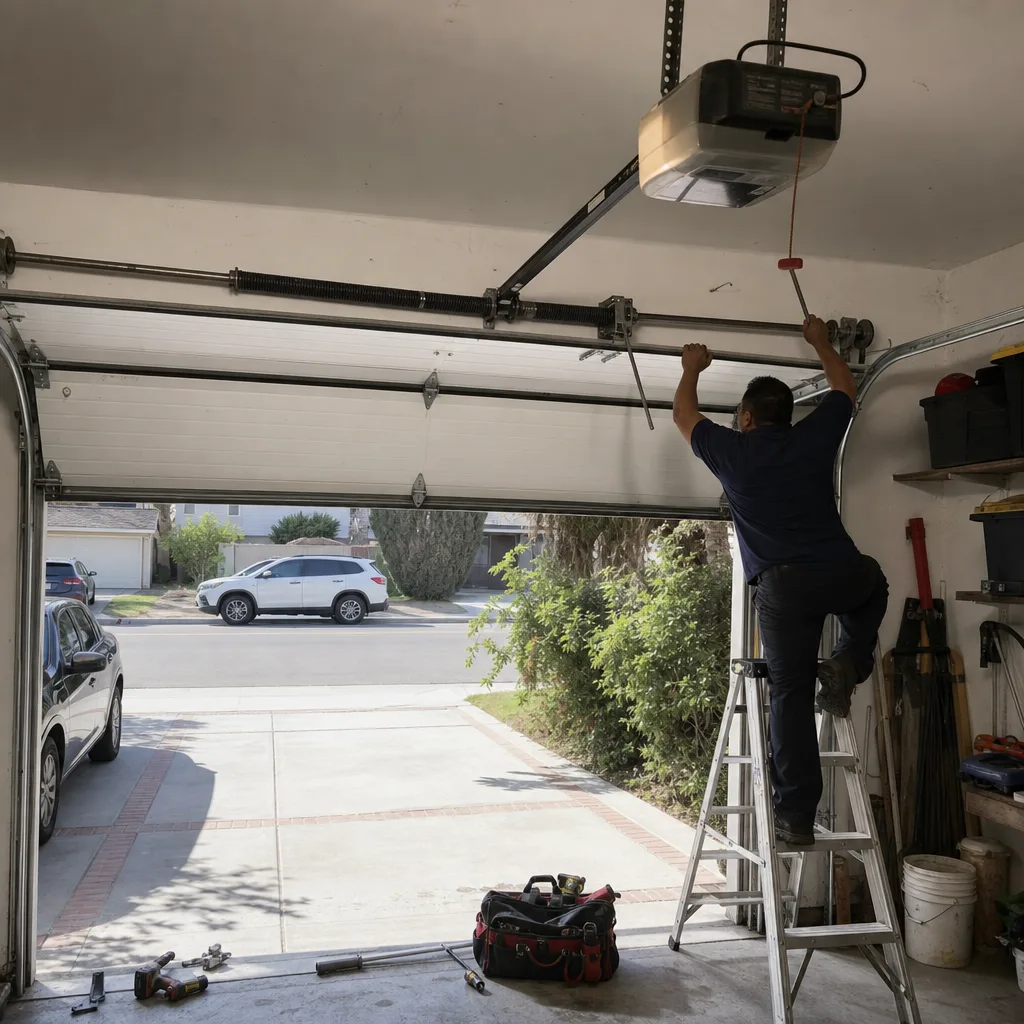
Wind season is when we see the highest volume of off-track door calls in Santa Ana. The mechanism is almost always the same: repeated lateral wind loading on the door face loosens the lag bolts that hold the vertical track brackets to the door frame. Once those bolts lose their grip, the track begins to flex. A flexing track lets a roller depart the track, and the door jams or drops. The homeowner reports a “broken spring” because the door suddenly will not move. The actual cause is three loose lag bolts that cost $15 to fix if caught early, or a full track re-alignment and panel replacement if not.
The wind season inspection protocol is straightforward and takes about 15 minutes. Do this once in October before the winds pick up, and again in January after the peak wind events.
- Close the door fully and disengage the opener by pulling the emergency release cord. You want the door to sit dead on the floor with no opener tension on it.
- Stand inside the garage and face the left vertical track. Grab the track at chest height and pull it toward you with moderate force. It should not move. If you feel any play or hear a creak from the bracket area, the lag bolts are loosening.
- Repeat on the right track. Apply the same force in the same direction. Compare the two sides. A door that has begun to rack under wind load will show more movement on the side that takes the brunt of the wind, which in Santa Ana is typically the side facing the canyon or the prevailing northeast exposure.
- Inspect the lag bolt heads visually. Look for a gap between the bracket plate and the wood framing, or for rust staining running down from the bolt hole. Rust staining means moisture has entered the hole, which means the wood is softening, which means the bolt’s holding power is degrading faster than the bolt itself.
- Run the door up and down once by hand and watch the rollers. A door that is starting to rack will show the roller stems riding unevenly in the track, with the gap between the roller wheel and the track rail changing as the door travels.
If you find looseness, a track re-alignment with new lag bolts is often a sub-$200 repair if the framing is still sound. If the wood has softened from repeated movement, the fix involves opening the drywall or trim to sister new blocking behind the bracket. That is a bigger job, and it is the reason early inspection matters. Panels that have racked off-track can bend the track itself, and a bent track is a replacement part, not a repair.
One more wind season note: garage door openers that use a belt or chain drive are not immune to wind effects. A door that shakes in high wind transmits vibration through the trolley carriage and into the opener rail. Over time, that vibration can loosen the mounting bolts that hold the opener motor to the ceiling brackets. If you hear a rattling from the opener unit specifically during a wind event, check those bolts.
November-March: Marine Layer Corrosion and Weatherseal Checks
The marine layer is Santa Ana’s stealth problem. Unlike wind, which announces itself, marine-layer humidity works quietly. It does not damage anything in a single week. It accumulates, season after season, and by the time visible pitting appears on a torsion spring coil, the spring is already compromised.
The distinction that matters here is between surface rust and structural corrosion. Surface rust is cosmetic and almost inevitable on garage door hardware that is more than a few years old in this climate. It looks like an even, orange-brown discoloration across the surface of the steel. Structural corrosion is different. It appears as small pits, flakes, or raised nodules, and it typically concentrates at stress points: the ends of a torsion spring where the wire bends, the crimp on a cable, the pivot point on a hinge. Surface rust is a maintenance item. Structural corrosion is a replacement item.
The marine-layer inspection checklist:
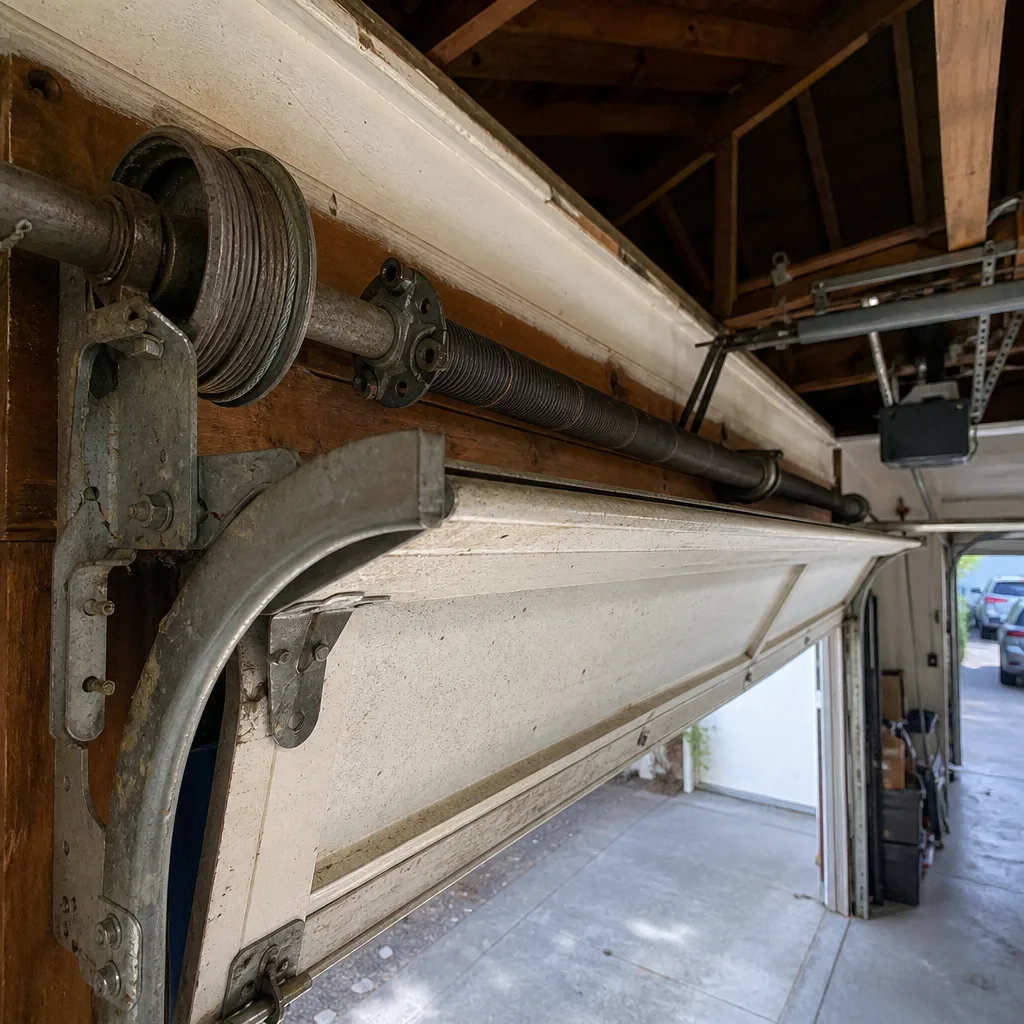
- Torsion spring coils: Look at the spring with the door closed. Surface rust on the outer diameter is normal for uncoated oil-tempered springs, but pitting is the red flag. Run your finger along the coil if you can reach it safely. A smooth, uniform surface is fine even if it is discolored. Roughness or flaking is not.
- Cable drums and cables: The cable drums at each end of the torsion shaft are typically made of aluminum or steel. Aluminum drums will not rust, but the galvanized steel cables will eventually show red rust at the point where they wrap onto the drum. Fraying at that point is a failure waiting to happen.
- Bottom brackets: These steel brackets hold the bottom rollers and anchor the lift cables. They sit close to the garage floor, which is exactly where marine-layer moisture collects. Corrosion at the cable attachment point on the bottom bracket is a serious condition to watch.
- Bottom weatherseal: The rubber seal along the bottom edge of the door does more than keep out water and leaves. It prevents moisture from wicking up into the bottom panel of the door. A torn or flattened weatherseal lets standing water from a wet driveway sit against the panel edge, and on steel doors that is how rust begins at the bottom rail. On wood doors, it is how rot begins.
Replacing a bottom weatherseal is a 30-minute job on most doors and costs $25 to $60 in parts. It is the single cheapest preventive action on this entire list, and in a marine-layer climate it pays for itself many times over during the life of the door. We recommend checking the weatherseal in November and again in February.
For the hardware, the practical advice from our experience in Santa Ana is to wipe down the torsion spring and cable drums with a dry cloth during each marine-layer-season inspection. Do not lubricate the spring with penetrating oil or WD-40; that attracts dust and accelerates wear. If the spring is coated in surface rust only, a light wipe with a dry cloth removes the loose oxidation. If you see pitting, that spring is on borrowed time, and the conversation should move to replacement before it breaks at an inconvenient moment. The same logic applies to the lift cables: fraying is a replacement signal, not a wait-and-see item.
June-September: The Heat Plateau and Thermal Expansion
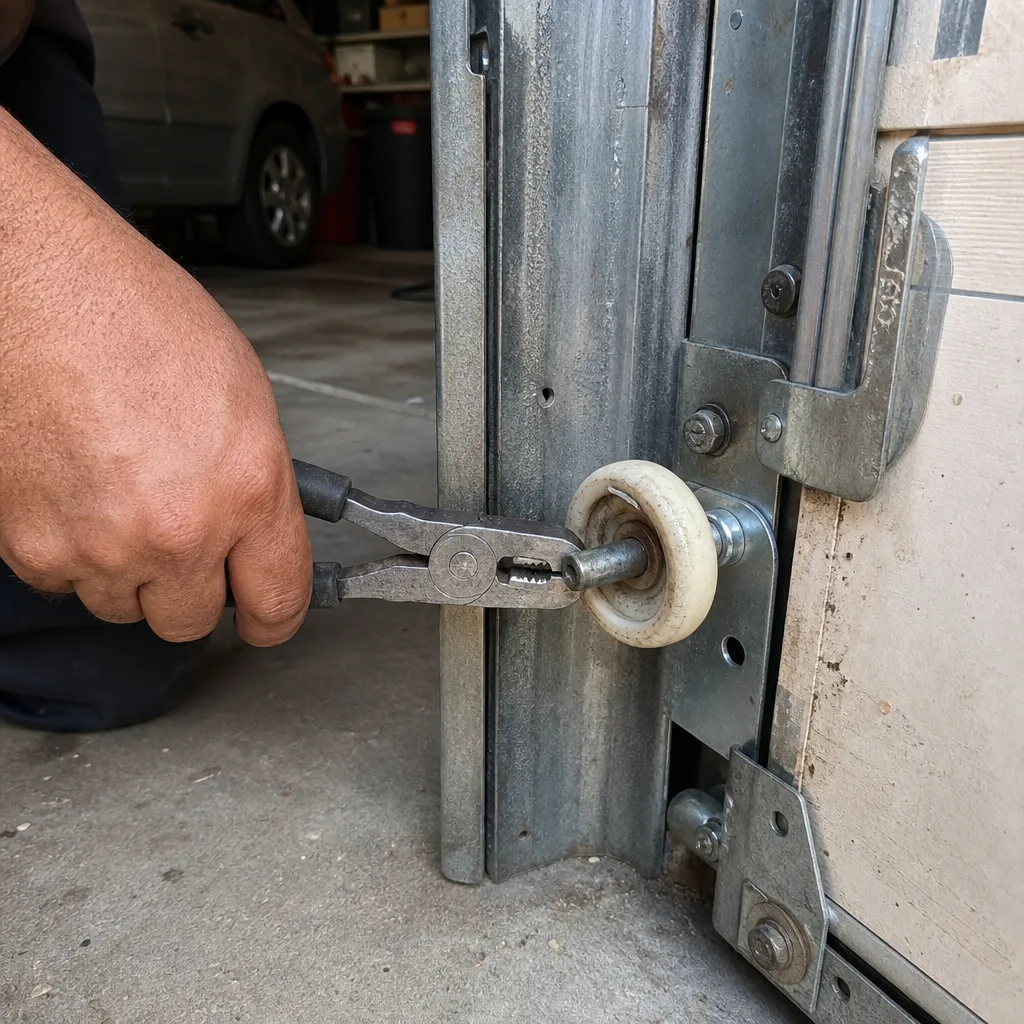
Santa Ana’s summer heat does two distinct things to garage doors. The first is thermal expansion of the panel material. The second is alignment drift in the photo-electric sensor system. Both are measurable, predictable, and preventable with a seasonal check.
Aluminum panels expand more than steel panels do. Aluminum’s coefficient of thermal expansion is roughly twice that of steel, which means a 16-foot aluminum door will grow by about 1/8 to 1/4 inch across its width between a cool morning at 60 degrees and a hot afternoon with the panel at 140. That movement is not much, but it happens every single day for months. The expansion forces the panels outward against the vertical track, and that increases side friction on the rollers. A door that runs smoothly in the morning and sounds like it is dragging by 3 p.m. is often an aluminum door in thermal expansion. It is not a sign that the door is failing. It is a sign that the track spacing and roller tolerances need a seasonal adjustment.
Steel doors expand less, but they absorb heat more efficiently. A dark-colored steel door facing west in a Santa Ana neighborhood like West Floral Park will get hot enough to be uncomfortable to touch. The heat transfers through the panel into the hardware, and that has a documented effect on torsion spring calibration. The steel wire in a torsion spring loses a small percentage of its effective modulus at elevated temperatures, which means a spring that is perfectly wound at 70 degrees will be slightly under-tensioned at 140. The effect is not large, but it shows up as a door that drifts down slightly after opening, or a door that struggles to hold at the half-open position on a hot afternoon. If you notice that behavior only in the summer months, thermal effect on the spring calibration is the likely explanation, not a failing spring.
The photo-electric sensors, the pair of small units mounted near the bottom of each track, are the most common summer service call in Santa Ana. The sensor brackets are stamped steel, and they expand and contract with ambient temperature swings. A sensor that was aligned perfectly in May has drifted a few thousandths of an inch by August, and that is enough to break the invisible beam that tells the opener the doorway is clear. The classic symptom is a door that refuses to close and the opener lights flash when you press the button. Heat shimmer is also a factor on asphalt driveways and concrete pads that radiate heat upward into the sensor housing.
The summer check is a 10-minute routine:
- On a hot afternoon, run the door through a full open-close cycle twice. Listen for changes in sound from morning to afternoon. A louder afternoon door on aluminum panels points to track spacing, not a spring issue.
- Check the sensor alignment. Both sensors should show a steady indicator light when the beam is aligned. A flickering or dark sensor light in the afternoon heat is a drift issue. Re-aligning the sensor is usually a matter of loosening the bracket, nudging the sensor until the light steadies, and re-tightening.
- Test the reversal function. Place a 2×4 flat on the floor in the door’s path and close the door. The door should reverse within 2 seconds of contacting the wood. This is a mandatory test year-round, but it is especially important in summer because sensor drift is more common in heat.
- Check the door’s half-open behavior. Run the door to the half-open position and stop it. It should hold there without drifting. A slow drift downward on a hot day is the thermal tension symptom described above.
None of these summer adjustments requires special tools. All of them are covered in the basic Garage Door Repair in Santa Ana service call, and most are included in a standard maintenance visit.
The Santa Ana Task Calendar: What to Do and When
Most garage door maintenance guides offer a generic quarterly schedule: lubricate the rollers, check the balance, test the sensors. That calendar ignores the reality that Santa Ana’s three stress periods are what actually drive wear. For help deciding what to handle yourself versus when to hire out, see our DIY vs Professional Garage Door: The Santa Ana Homeowner’s Decision Guide. This calendar replaces the generic schedule with the tasks that address the specific conditions this city throws at a door.
| Month | Task | Stress Period Addressed | Time Required |
|---|---|---|---|
| October | Track bracket inspection and lag bolt torque check; lubricate rollers and hinges with white lithium grease | Santa Ana wind season begins | 15 minutes |
| November | Bottom weatherseal inspection; replace if torn or flattened; wipe down torsion spring and cable drums with dry cloth | Marine layer moisture | 10 minutes |
| January | Second track bracket inspection after peak wind events; check opener mounting bolts for vibration loosening | Peak Santa Ana wind season | 15 minutes |
| February | Full corrosion inspection: springs, cables, bottom brackets, hinges; weatherseal re-check | Late marine layer | 20 minutes |
| June | Sensor alignment check; door balance test at morning and afternoon temperatures to establish baseline | Heat plateau begins | 10 minutes |
| August | Repeat sensor check; thermal expansion measurement on aluminum doors; reversal test | Peak heat plateau | 10 minutes |
This calendar totals about 80 minutes of inspection time per year. That is the entire maintenance burden for a typical Santa Ana garage door. Compare that to the cost of an emergency off-track repair, which runs $250 to $500 in this market depending on panel and track damage, or a torsion spring replacement at $180 to $340 when caught before it breaks versus $250 to $450 when it breaks under load and damages other components. For detailed pricing on all common repairs, see our Garage Door Cost Breakdown: The Santa Ana Homeowner’s Reference for 2026. The annual inspection time is the cheapest insurance policy available, and it requires no tools beyond a wrench for the track check and a flashlight for the corrosion inspection.
Two of these tasks deserve extra emphasis. The October track bracket check catches the wind damage before it becomes an off-track event. The February corrosion inspection catches marine-layer damage before a spring or cable fails under tension. If you only do two tasks per year, do those two. They address the two failure modes that produce the most expensive repairs in this city.
How to Use Date-Stamped Photos as Maintenance Documentation
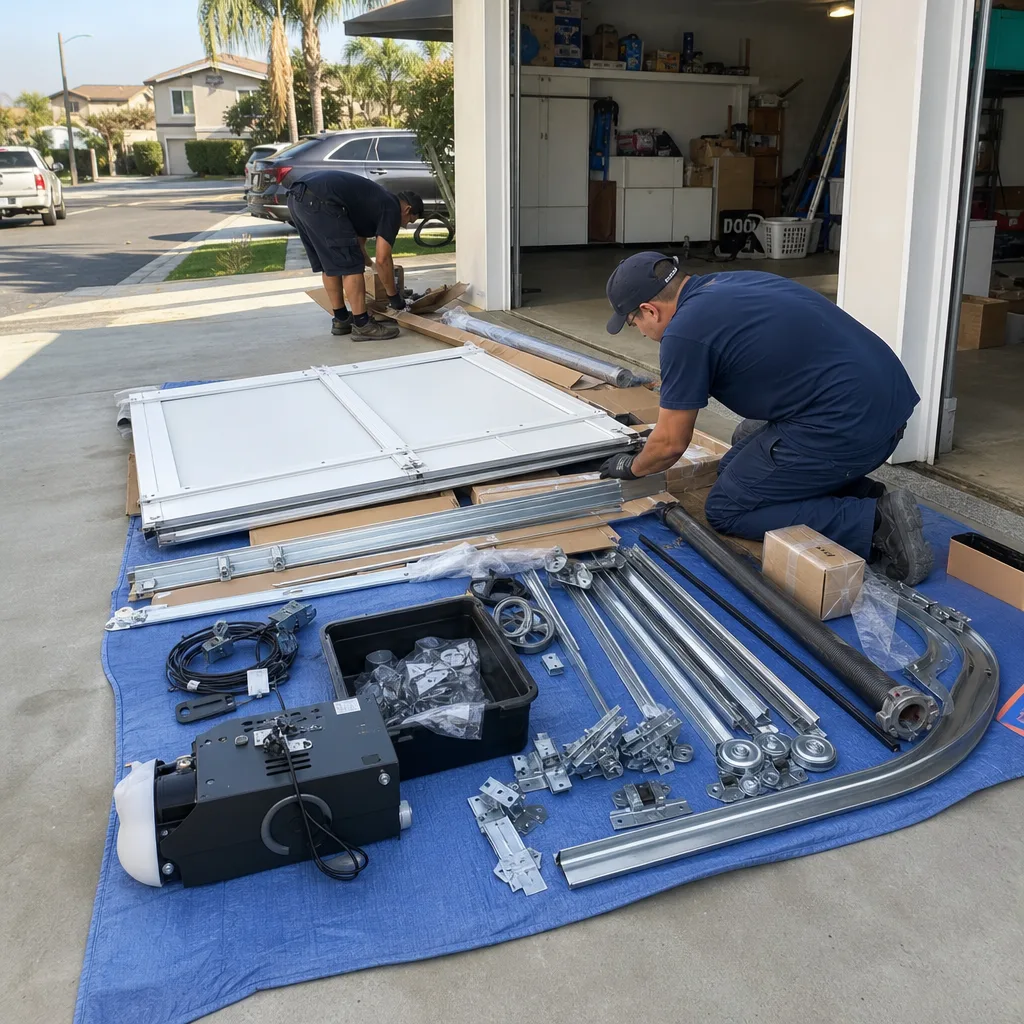
Here is a scenario we see regularly in Santa Ana. A homeowner has a garage door spring break in March. They call a contractor, who inspects the door and tells them the track brackets are also loose and the cables are corroded. The homeowner has no way to know whether those conditions existed before the spring broke or developed because of it. The contractor is asking them to make a $400 decision without evidence. That is precisely the situation that date-stamped documentation solves.
The practice is simple. During each inspection on the task calendar above, take five photographs with your phone:
- The left vertical track with the bracket and lag bolts visible, taken from two feet away so the hardware is legible.
- The right vertical track in the same framing.
- The torsion spring, centered, showing the full length including both ends.
- The lift cable on one side, focusing on the cable drum and the wrap point.
- The bottom weatherseal along the full width of the door.
The phone adds a date stamp automatically. Store the photos in a folder named for the month. That is the entire system. Six inspection cycles per year, five photos per cycle, thirty images per year. Total storage cost is negligible.
The value appears the moment a contractor claims a component “must have failed recently.” You can pull up the October photo and see the condition of the track brackets five months earlier. If the brackets were tight on October 12 and the contractor finds them loose on March 3, you know the wind season did the damage. If the cables were clean in November and show pitting in February, the marine layer did the damage. More important, the contractor knows you have the photo record. That changes the conversation from assertion to evidence.
This is a different philosophical approach than the industry norm. The standard garage door repair model has historically relied on the homeowner not being able to verify what the technician claims. Our position is the opposite, and it is written into our operating standard. Clause 4 of The Haven Standard requires that the technician photograph the failed component before quoting a replacement, so the customer sees the evidence before spending a dollar. We built the company around that rule in 2015, and we recommend homeowners adopt the same practice on their own inspections. The photo record is what makes seasonal maintenance verifiable instead of theoretical.
If you are considering a Garage Door Installation in Santa Ana, the same documentation principle applies. A photo record of the existing door and hardware, taken before installation begins, protects both parties on a job that involves thousands of dollars in material and labor.
Common Mistakes to Avoid
- Lubricating the torsion spring with penetrating oil. WD-40 and similar products are solvents with a light lubricant added. They strip any protective coating off the spring surface and then attract dust and grit, which accelerates wear at the coil contact points. Use white lithium grease on rollers and hinges only. Leave the spring dry.
- Tightening track bolts without checking the condition of the wood behind them. A lag bolt that loosened once has already begun wallowing out the pilot hole in the framing. Re-tightening without inspecting the wood gives a false sense of security. The fix lasts until the next wind event, then fails again. In Santa Ana’s wind season, this is the most repeated homeowner mistake we see.
- Ignoring a door that drifts down only in the afternoon. That thermal tension symptom described in the heat plateau section is not a quirk. It is a measurable change in spring tension caused by temperature. Left unaddressed, the spring will eventually fail to hold the door, and the door will drop under its own weight. That failure mode damages panels and can injure anyone in the path.
- Assuming surface rust means the spring is failing. In a marine-layer climate like Santa Ana’s, surface rust is normal on uncoated torsion springs after three to five years. Pitting is the problem, not discoloration. Replacing a spring for surface rust alone is unnecessary. Replacing a pitted spring is mandatory.
- Skipping the reversal test because the sensors seem fine. The sensor beam and the reversal mechanism are two separate safety systems. A door can have perfectly aligned sensors and a failed reversal function. The 2×4 test takes ten seconds and verifies the system that protects people and pets from a closing door.
- Waiting until a wind event to check the brackets. The Santa Ana winds are seasonal and predictable. The October inspection exists to catch loose bolts before the January gusts find them. Waiting until the wind is already loading the door means the damage is being done while you inspect.
When to Call a Professional
Some seasonal maintenance tasks are homeowner-appropriate. The inspections, the weatherseal checks, the sensor alignment, and the photo documentation are all doable with basic tools and this guide. Some repairs are not. For more guides & resources on keeping your door running smoothly, explore our blog.
Call a professional when the torsion spring is pitted, frayed, or broken. The spring stores enough tension energy to cause serious injury, and the winding and unwinding process is not a DIY task. Call when a lag bolt hole in the door framing shows signs of softened wood, because the repair involves structural blocking work behind the drywall. Call when the door has come off track under load, because the re-seating process requires spring tension knowledge and the door may be unstable. And call when the opener is making grinding noises that are not resolved by rail lubrication, because that points to gear damage inside the motor unit.
Servo Garage Doors Santa Ana offers free estimates in Santa Ana. Call (949) 569-5253 and a live person will answer, day or night, including weekends and holidays. The price is quoted in writing before any work begins, and a documented photo record goes home with you when the technician leaves. That is how we have handled every job since 2015.
Frequently Asked Questions
A seasonal inspection done by a homeowner costs whatever a flashlight and a wrench cost, which is to say nothing. A professional maintenance visit in Santa Ana typically runs $89 to $149, depending on the number of doors and whether any minor adjustments are included. Repairs found during maintenance are quoted separately at rates that range from $25 to $60 for a weatherseal replacement up to $250 to $500 for off-track re-seating with bracket repair. Call (949) 569-5253 for an exact written quote. Estimates are free.
We answer calls live, 24/7, and we dispatch emergency calls the same day with a named technician and an on-the-way text. For non-emergency seasonal maintenance and inspections in Santa Ana, we typically schedule within one to two business days. The price is always written and quoted before work starts, regardless of how quickly we get there.
No. The written quote you receive is the price you pay. Clause 1 of The Haven Standard requires a flat, written price and written scope delivered before any work begins, and that is the rule we built Servo Garage Doors around in 2015. If the technician finds an additional issue during the job, a new written quote is provided before any additional work is performed. The original quote does not change.
Yes, in specific ways. Santa Ana’s marine-layer season brings sustained overnight humidity that accelerates corrosion on steel hardware compared to cities further east like Corona or Riverside. The Santa Ana winds add a lateral load on track brackets that inland neighborhoods do not experience to the same degree. And the summer heat plateau, while not as extreme as Palm Springs, is hot enough to cause measurable thermal expansion on aluminum doors and sensor drift on exposed brackets.
Look at the spring surface. Uniform discoloration is normal. Pitting, flaking, or visible cracks are replacement signals. Also check the spring ends where the wire meets the anchor cones; that is where fatigue fractures begin. The springs are under high tension, so do not attempt to remove or replace them yourself. A professional can assess the spring safely and quote replacement with the photo evidence shown before any work begins.
Technicians carry the most frequently needed parts, including torsion springs in standard sizes, weatherseals, rollers, hinges, brackets, and cables. Because we service all major brands including LiftMaster, Chamberlain, and Craftsman openers, common opener parts like sensors, remotes, and logic boards are also typically on the truck. The photo of the failed component is taken before replacement is quoted, so you see what is being replaced before you approve the work. Call (949) 569-5253 and we will confirm parts availability for your specific door model.
The Bottom Line
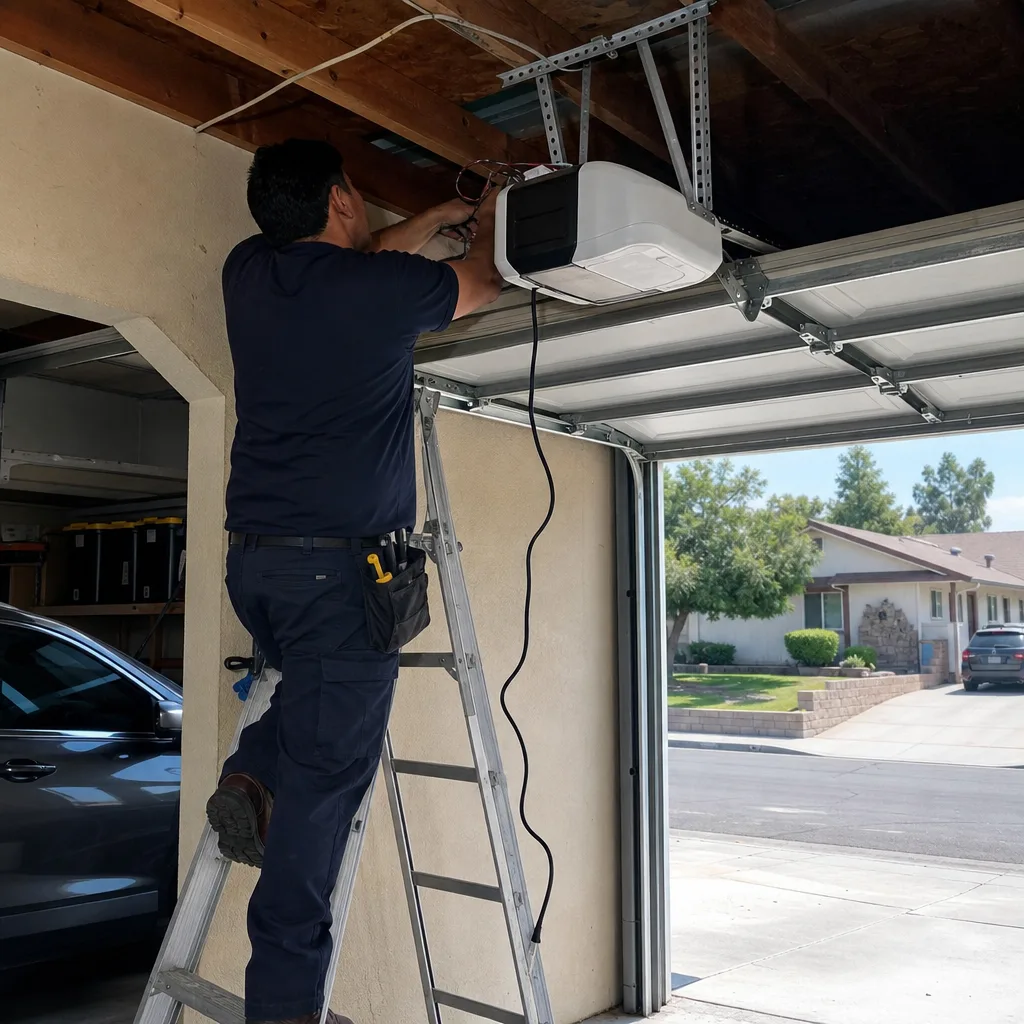
Santa Ana’s garage doors live in a three-stress-period reality: wind season loads the track brackets, marine-layer season feeds corrosion, and the heat plateau shifts panels and sensors. Each stress period has a specific inspection that catches its damage early, and each inspection is cheap insurance against the alternative of emergency repair at two to four times the cost. The task calendar in this guide gives you a complete year of maintenance in under 90 minutes of total time. The photo documentation system gives you evidence that outlasts any contractor’s claim. And if you would rather have a professional handle it, the Garage Door Opener Repair & Installation in Santa Ana team at Servo Garage Doors handles seasonal maintenance, repairs, and full replacements, always with a written price before work starts and a documented photo record when the job is done.
We have made more than 18,000 garage doors right since 2015, every one of them with a written price before the work started and a documented record when the technician left. That is the way it should work, and it is the way we do it. For a free estimate in Santa Ana, call (949) 569-5253. A live person answers. Always.
Written by Marcus Deller, Owner at Servo Garage Doors Santa Ana, serving Santa Ana since 2015.