
Last updated September 19, 2026
Full 25-point door and opener safety check with every visit - springs, cables, rollers, tracks, and your LiftMaster or Chamberlain opener included
You get a price before we start. It does not change when the truck arrives.
Modern flush
 Before
 After
After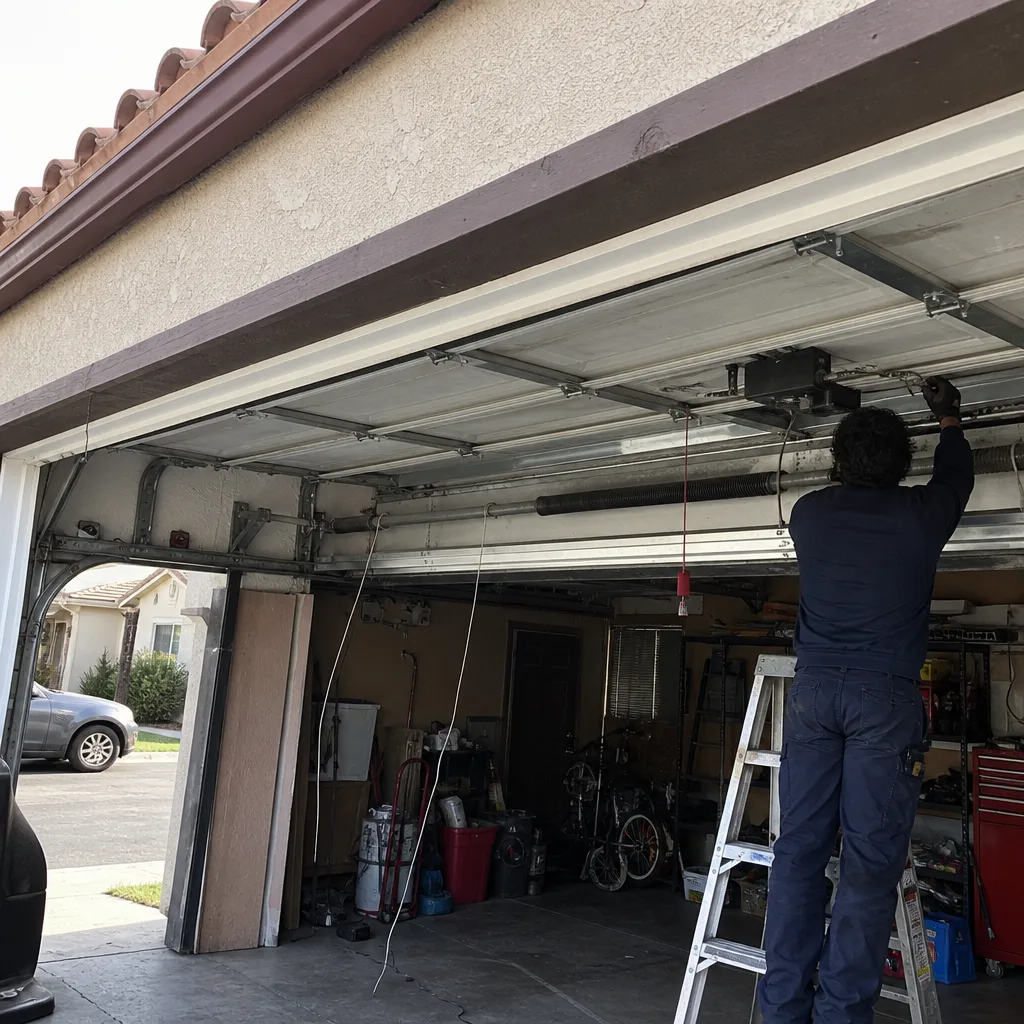 Before
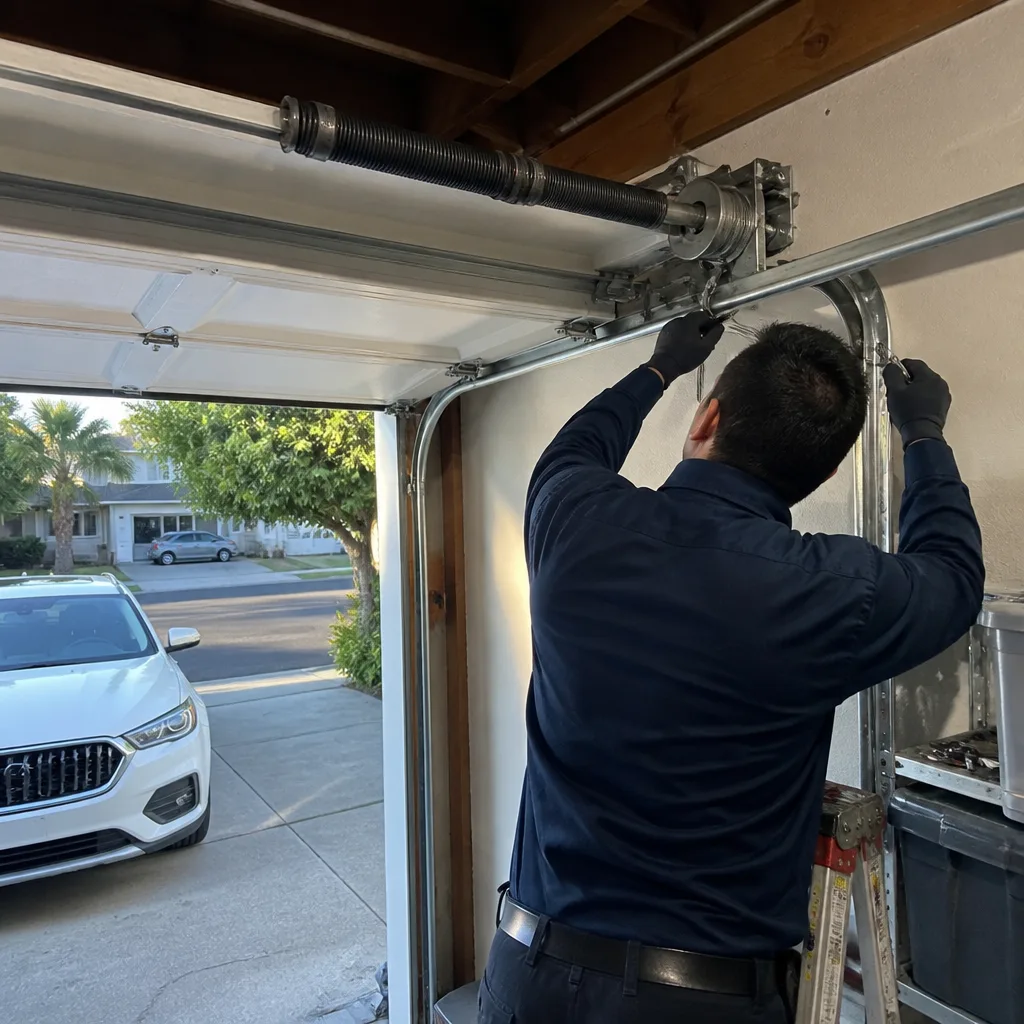 After
After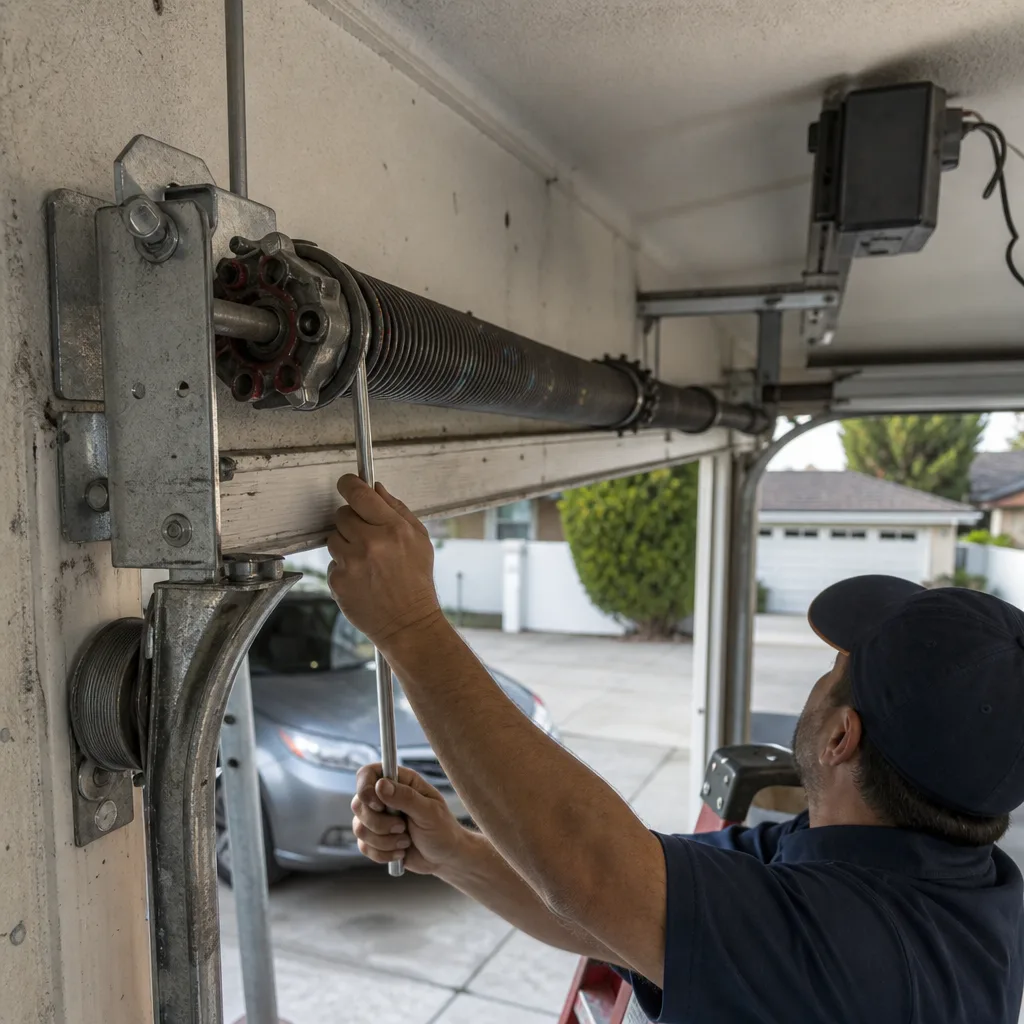 Before
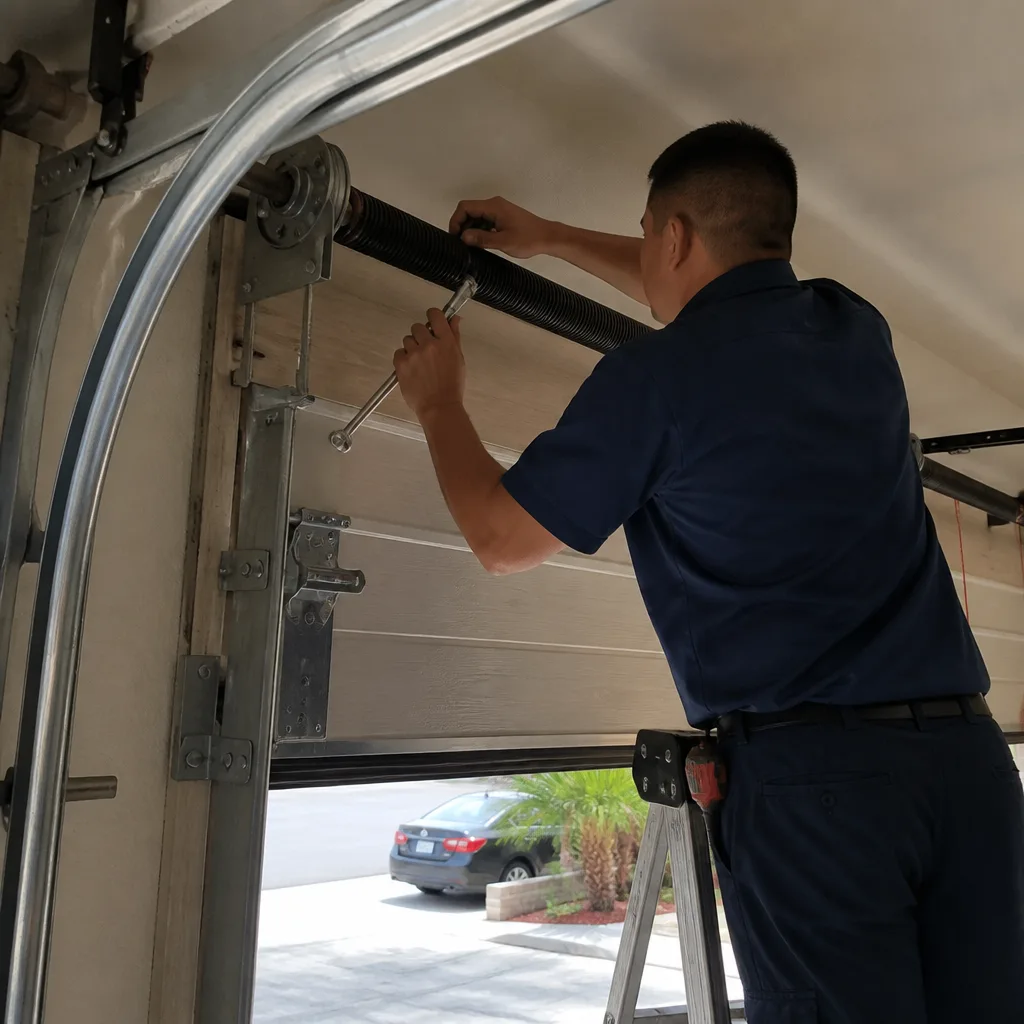 After
AfterGarage Door Warning Signs: A Santa Ana Homeowner’s Reference Guide
A garage door that hesitates for half a second before moving is not “just old.” It is an opener drawing above its rated current to compensate for mechanical friction that should not be there. That hesitation is the opener’s logic board logging a strain event. Catching it means a $30 roller set. Missing it means a $200 to $400 opener replacement when the motor burns out. This complete guide to garage door in Santa Ana, written from thousands of service calls across the city, teaches you to read the warning before it becomes a failure.
Quick Answer
The most common garage door warning signs in Santa Ana homes are grinding noises (roller or hinge wear), metallic popping (cable strand failure), rhythmic clunking (flat-spotted rollers), visible cable fraying, weatherseal gaps greater than 3/8 inch, and a door that reverses before fully closing. Any visible cable strand separation or a door that moves slower in one direction than the other warrants a professional inspection immediately. The gap between warning and failure is where repair costs double.
Table of Contents
- Auditory Warning Signs Mapped to Specific Components
- Visual Warning Signs: The Measurement Thresholds That Matter
- Behavioral Warning Signs and What They Implicate
- Warning Signs Commonly Misread by Homeowners
- How to Photograph and Document a Warning Sign Before Calling
- Santa Ana Climate and Housing Factors That Accelerate Wear
- Common Mistakes to Avoid
- When to Call a Professional
- Frequently Asked Questions
BeforeAfterAuditory Warning Signs Mapped to Specific Components
The sounds a garage door makes are diagnostic data. Most Santa Ana homeowners hear an odd noise for weeks before they act on it, because nobody taught them what the noise means. A technician does not need a decibel meter to identify these sounds. The rhythm, the material, and the timing relative to door movement are what matter.
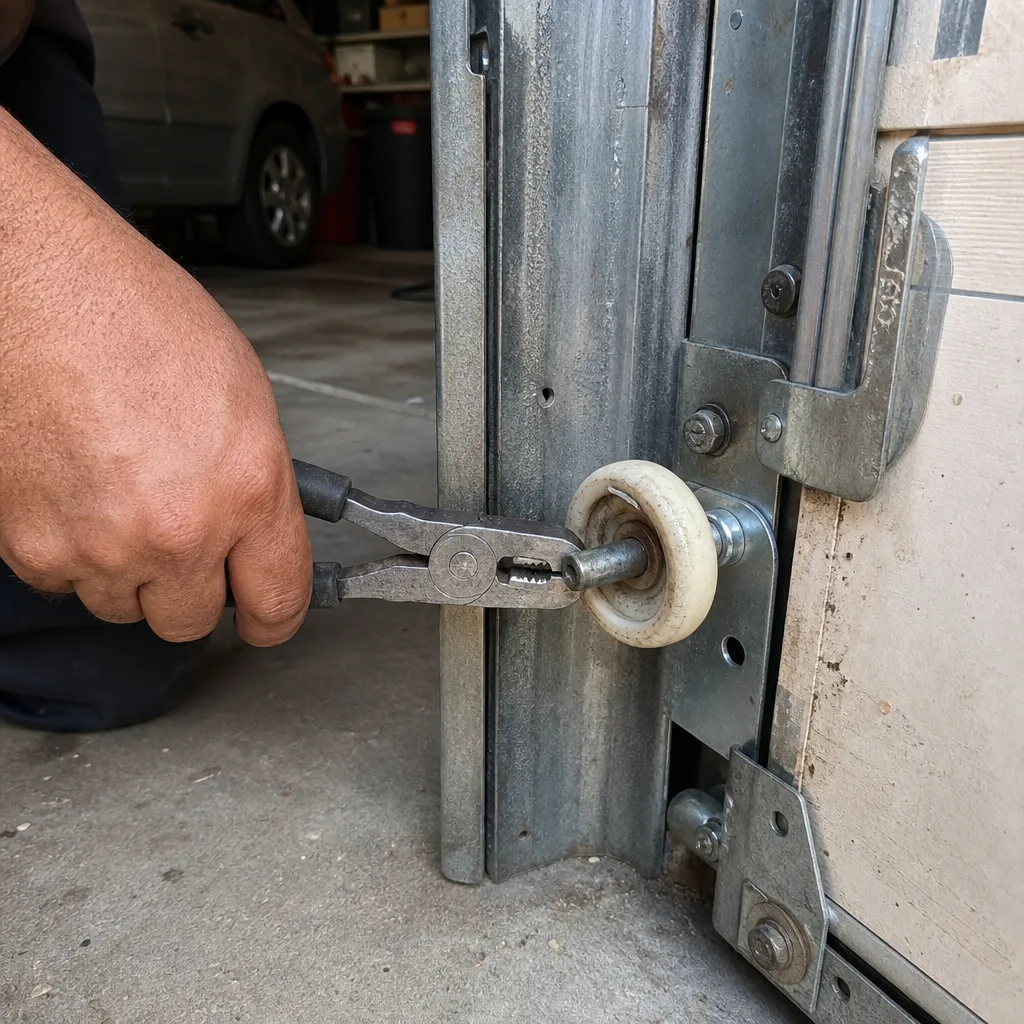
Grinding or scraping almost always points to roller or hinge wear. Steel rollers with failing bearings stop spinning and begin sliding in the track. The sound is metallic, rough, and continuous while the door moves. It is most audible near the track itself. In neighborhoods like Floral Park and Washington Square where homes date to the 1950s and 1960s, we regularly find original steel rollers that have never been replaced. A roller with a seized bearing grinds against the track, and the track itself starts to lose its galvanized coating. This is the point where a $30 roller replacement becomes a $150 track repair if ignored.
Metallic popping is the sound of cable strand failure. A garage door cable is made of dozens of individual steel strands twisted together. When one or two strands snap under tension, they produce a sharp, distinct pop. The door still operates because the remaining strands hold, but the cable has lost structural integrity. Any popping sound from the cable area means the cable needs replacement before it lets go entirely. When a cable fails under load, the door slams down on one side, and the repair bill triples.
Rhythmic clunking at a regular interval as the door moves points to a flat spot on a worn roller. As the flat spot passes over the track, the door briefly drops and catches, producing a clunk. The interval matches the circumference of the roller. This is one of the clearest early warnings a door gives, and it is also one of the most commonly ignored because the rhythm sounds almost mechanical and routine.
Squealing from the opener unit itself is different from track noise. It points to the opener’s drive gear or belt. Chain-drive openers that have never had the chain tension checked will develop a metallic squeal from the sprocket. Belt-drive openers that squeal typically have a worn belt tensioner. LiftMaster and Chamberlain openers are common in Santa Ana homes, and both use a plastic drive gear that eventually strips. The squeal is the warning. The strip is the failure.
Visual Warning Signs: The Measurement Thresholds That Matter
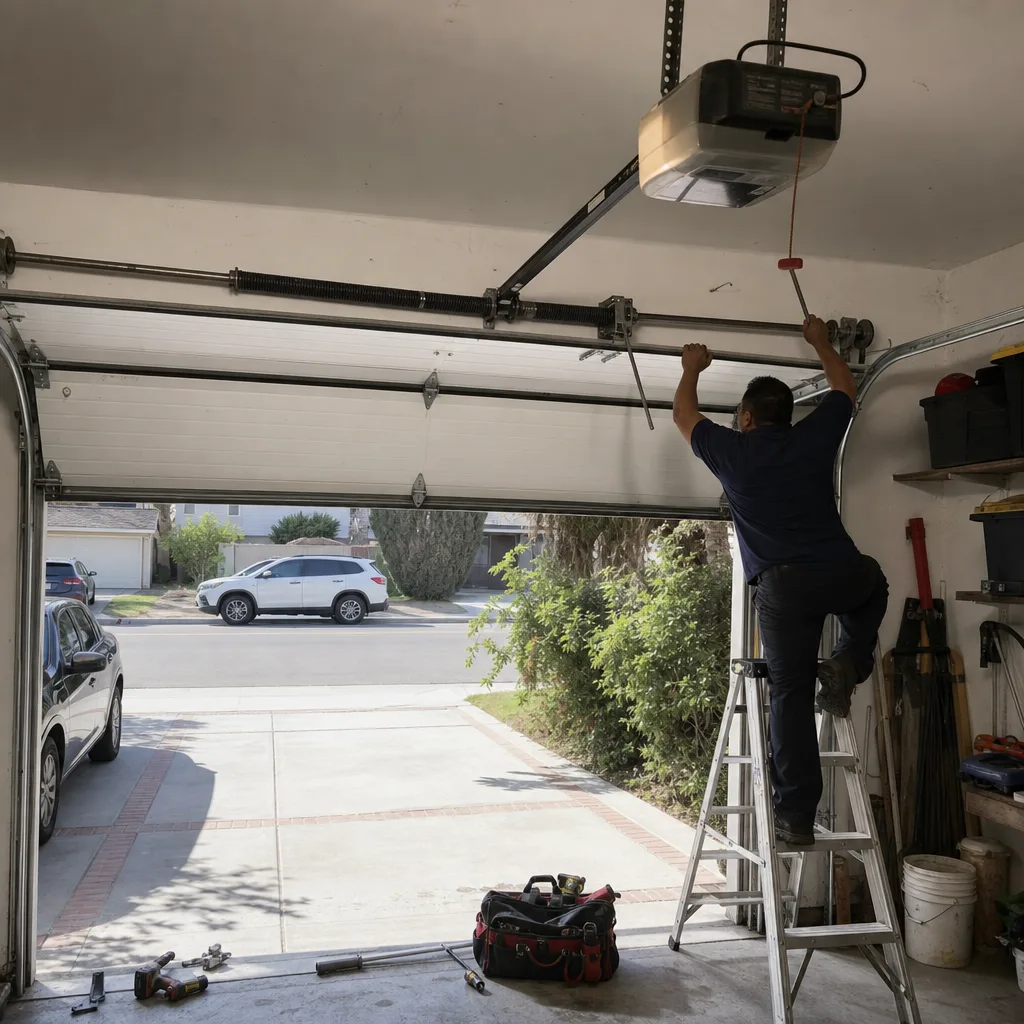
Most homeowners look at their garage door every day without seeing it. The difference between a normal door and a failing door is visible, but only if you know what to look for and what threshold separates “monitor” from “call now.” Here are the specific thresholds we use on every inspection in Santa Ana.
Cable Fraying: Any Visible Strand Separation = Call Now
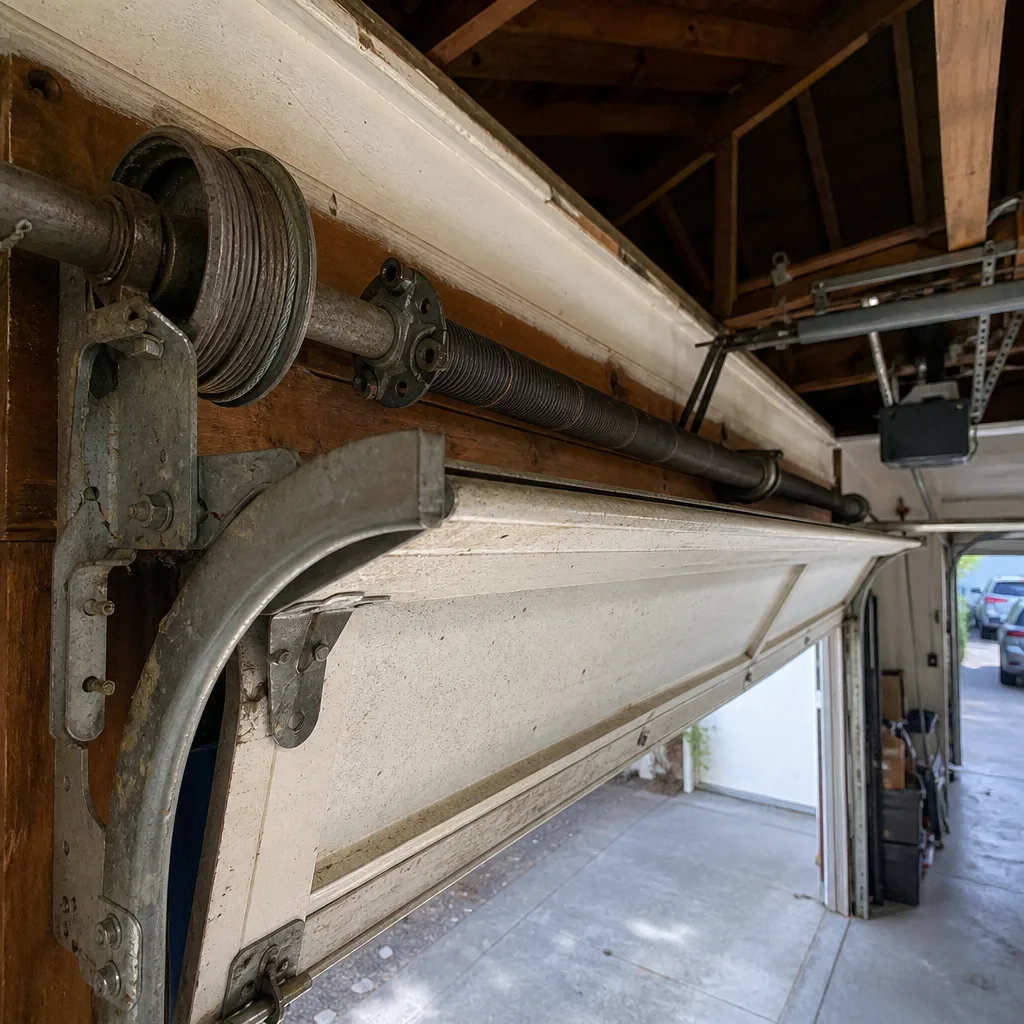
Garage door cables are not a component where partial damage is acceptable. Unlike a weatherseal that can wait, a fraying cable is holding hundreds of pounds of tension. The moment you can see individual strands separating, the cable’s rated capacity has already dropped below its safety margin. There is no “wait and see” on cables. If you can see it fraying, it gets replaced that week. The cables are the highest-tension component on the door, and when they fail, they fail violently. This is not a DIY inspection item and not a DIY replacement item. The torsion spring assembly holds enough stored energy to cause serious injury, and the cables are part of that assembly. A trained professional should handle anything involving the spring or cable system.
Weatherseal Gap at the Floor: Greater Than 3/8 Inch = Active Water Intrusion Risk
The rubber weatherseal along the bottom of the door is the barrier between your garage floor and Santa Ana’s winter rain. Hold a ruler against the floor at the largest visible gap. If the gap exceeds 3/8 inch, water will enter during any sustained rainfall, and with it comes dampness that warps stored items, rusts tool steel, and attracts pests. In Santa Ana’s rainy season, a 3/8-inch gap across a 16-foot door lets in several gallons over the course of a storm. The weatherseal itself is a $25 to $60 part depending on door width and profile. The damage it prevents is not.
Panel Crease Depth: Surface vs. Structural Breach
A dent from a basketball or a glancing hit from a car bumper leaves a surface crease. The paint may crack, but the steel panel itself retains its structural shape. A structural breach is different. If you can see daylight through the crease, or if pressing on the crease causes the panel to flex inward more than 1/8 inch, the panel’s structural integrity is compromised. A surface crease is cosmetic. A structural breach means the panel is no longer doing its job of keeping the door rigid as it cycles. Over time, a structurally compromised panel will cause the door to rack, which wears hinges, rollers, and track. In Santa Ana’s hot afternoons, panel expansion can make a surface crease look worse than it is, which is why the flex test matters more than the visual depth.
Track Gaps and Mounting Hardware
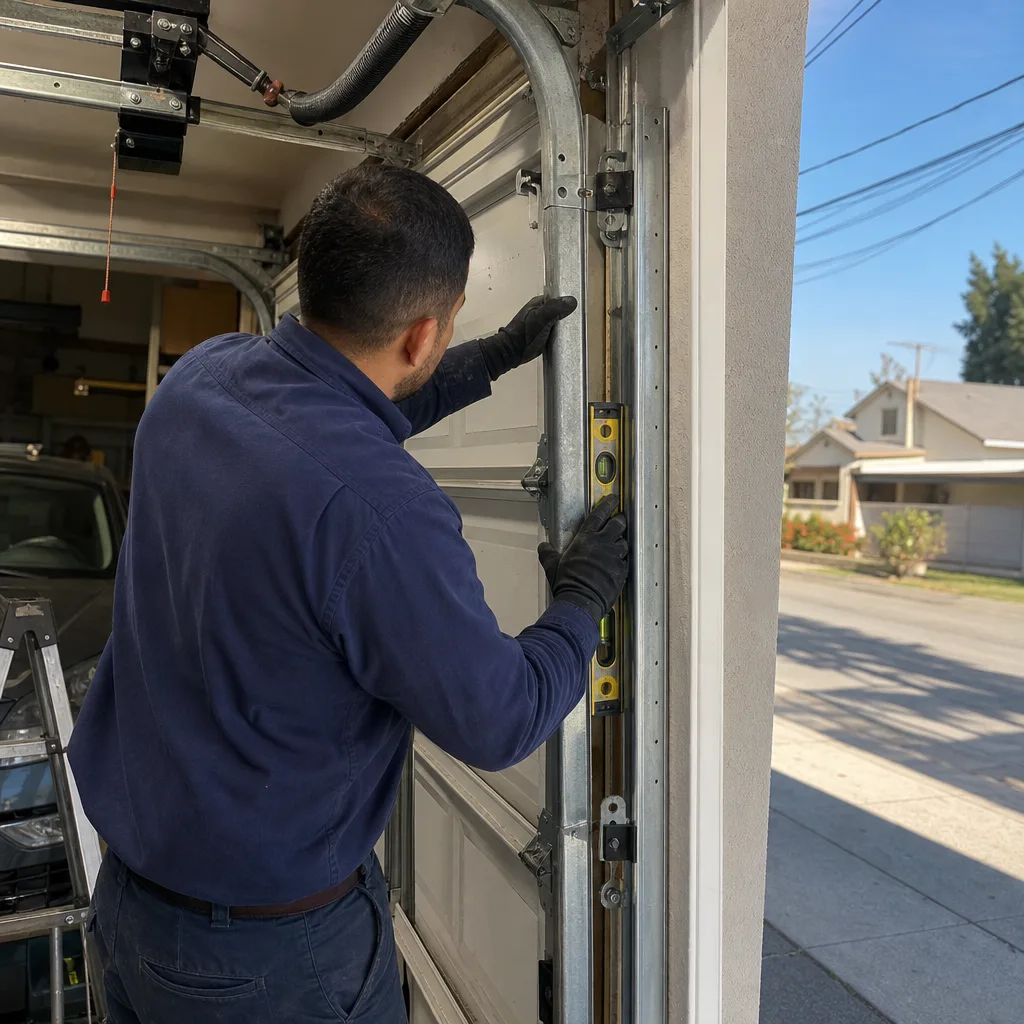
Stand at the side of the door and look at the vertical track. The rollers should sit fully inside the track channel. If you can see the roller’s axle extending past the track edge, the track has spread or the roller is the wrong size. Look at the bolts holding the track to the wall brackets. Any bolt with visible movement, rust staining running down from the bolt head, or a gap between the bracket and the wall is a mounting failure in progress. The track is the road the door travels on. When it moves, the door moves against it.
Behavioral Warning Signs and What They Implicate
Behavioral signs are the ones homeowners notice first, because the door does something it never used to do. Each behavior maps to a specific component or system. Here is what we tell Santa Ana homeowners who call describing these symptoms.
The Door Reverses Before Fully Closing
This is the most common behavioral complaint we hear, and it has two distinct causes. The first is a safety sensor misalignment. The photo eyes near the floor on either side of the door must maintain a clear line of sight. If one is knocked out of alignment, the opener’s logic board interprets the signal interruption as an obstruction and reverses the door. The fix is usually a realignment, but the warning sign is that the door refuses to close, not that it closes badly.
The second cause is more concerning: a failing limit switch inside the opener. The limit switch tells the opener when the door has fully reached the closed position. A limit switch that is drifting causes the opener to think the door has hit an obstruction when it has actually hit the floor. The door reverses because the opener is confused, not because something is in the way. This is a component failure inside the opener itself and typically requires opener repair or replacement.
The Opener Light Flashes but the Door Does Not Move
A flashing opener light is an error code. On LiftMaster and Chamberlain units, the number of flashes corresponds to a specific fault. A single flash typically indicates a sensor obstruction or wiring fault. Multiple flashes point to logic board or motor issues. When we get this call in Santa Ana, our first question is how many flashes happen before a pause. The pattern is the diagnostic. Many homeowners assume a flashing light means the opener is broken beyond repair, but a flashing light is an opener trying to tell you what is wrong. The logic board on modern openers is designed to communicate failure modes through the light. Reading that signal before calling can save a diagnostic fee, though a professional should still confirm the diagnosis before replacement parts are ordered.
The Door Moves Slower in One Direction
Asymmetrical speed is a significant warning that is often dismissed. A door that opens normally but closes slowly, or vice versa, indicates directional mechanical resistance. The most common cause is a torsion spring that has lost tension on one side, meaning the opener is doing extra work in one direction while the spring assists in the other. The second most common cause is track misalignment that only binds the door in one portion of its travel. Both conditions place uneven load on the opener motor. The motor is not designed to be the primary lifting force; the spring is. When the spring degrades and the motor compensates, the motor’s service life drops sharply. A door that moves slower in one direction is a spring assessment call, not an opener adjustment call.
The Door Hesitates Before Moving
The half-second hesitation described in the introduction is the opener’s motor drawing current before mechanical movement begins. In a properly balanced door, the motor begins moving almost instantly when activated. The hesitation is the motor fighting against friction: a worn roller, a dry bearing, a spring that no longer provides enough assist. The logic board on a Genie or LiftMaster opener is measuring current draw every cycle. The hesitation is the mechanical system telling the electrical system to work harder. The repair at this stage is cheap. The repair after the motor burns out is not.
Warning Signs Commonly Misread by Homeowners
Some of the most alarming warning signs turn out to be benign, and some of the most benign-looking signs are serious. Knowing which is which saves money and prevents unnecessary emergency calls.
A Door That “Sticks” in Summer Is Usually Panel Expansion, Not Track Damage
Santa Ana summers push garage door panels past 120 degrees on direct sun exposure. Steel expands when heated, and a dark-colored door on a west-facing garage can expand enough to bind slightly against the weatherstrip or the track. The door feels like it is sticking, but the track is not damaged. The fix is often a simple track clearance adjustment or a different weatherstrip profile, not a track replacement. We get these calls every July and August in neighborhoods like West Floral Park and Morrison Park, where garages face into the afternoon sun. If the door only sticks during the hottest part of the day and operates normally in the evening, panel expansion is the likely culprit. If the door sticks at all temperatures, track damage or roller failure is more likely.
A Door That Opens on Its Own Is Usually a Logic Board or Frequency Issue, Not a Security Breach
A garage door that opens without anyone pressing a remote triggers an immediate security panic. In most cases, the cause is not a break-in attempt but an electronic fault. Older openers with fixed-frequency remotes can be triggered by radio interference from nearby transmitters. Newer rolling-code openers from LiftMaster and Chamberlain eliminate that vulnerability, but a failing logic board can still produce sporadic open commands. The genuine security concern is an opener with a fixed frequency code that is easy to intercept. If your opener is more than 15 years old, the security risk is real, and replacement with a rolling-code unit is the correct response. If your opener is newer and opens on its own, the logic board is suspect, and the fix is opener repair.
A Squeaky Door Is Often a Dry Hinge, Not a Spring Problem
Homeowners hear squeaking and assume the spring is about to fail. In our experience, most squeaking comes from dry hinge pins or dry roller bearings. A drop of lubricant on each hinge pin and roller bearing often eliminates the noise entirely. The spring itself rarely squeaks unless there is coil-to-coil contact from corrosion. Santa Ana’s dry climate works in your favor here: rust is less aggressive than in coastal cities like Huntington Beach or Newport Beach, but the trade-off is that lubrication dries out faster. Hinges should be lubricated annually regardless of the sound, and any noise that persists after lubrication is worth a professional look.
How to Photograph and Document a Warning Sign Before Calling
This is the section most guide writers skip, and it is the one that saves Santa Ana homeowners the most money. The sequence matters: the photo should exist before anyone quotes a replacement. Here is why and how.
When a technician arrives at a home with a documented photo of the problem, the conversation changes. The diagnostic half of the call is already done. The technician confirms the diagnosis, checks for additional issues, and quotes a repair. Without a photo, the homeowner describes the sound or the symptom, and the diagnostic process starts from zero. A clear photo narrows the diagnosis before the truck even rolls.
Step-by-Step Documentation
- Photograph the specific component. If you see cable fraying, photograph the frayed section up close. If you see a panel crease, photograph it from three angles: straight on, from the side, and from inside the garage if possible.
- Photograph the context. Step back and capture the entire door, the track, and the opener unit. The wide shot helps the technician understand how the component fits into the system.
- Record the sound. If the issue is auditory, take a 10-second video of the door opening and closing. The sound pattern is diagnostic data.
- Note when the issue occurs. Time of day, temperature, whether the door had been used recently. Behavioral signs that only appear under specific conditions are clues.
- Send the photos before the appointment. Any reputable company should accept them. Servo Garage Doors Santa Ana includes a documented photo record on every visit as standard practice. The customer sees what the technician sees.
The reason this sequence matters is Clause 4 of The Haven Standard: the failed component is photographed before any replacement is quoted. A homeowner who shows up to the conversation with their own photo has already internalized that principle. They are not going to be told a part needs replacing without seeing the evidence. That is the way it should work.
Santa Ana Climate and Housing Factors That Accelerate Wear
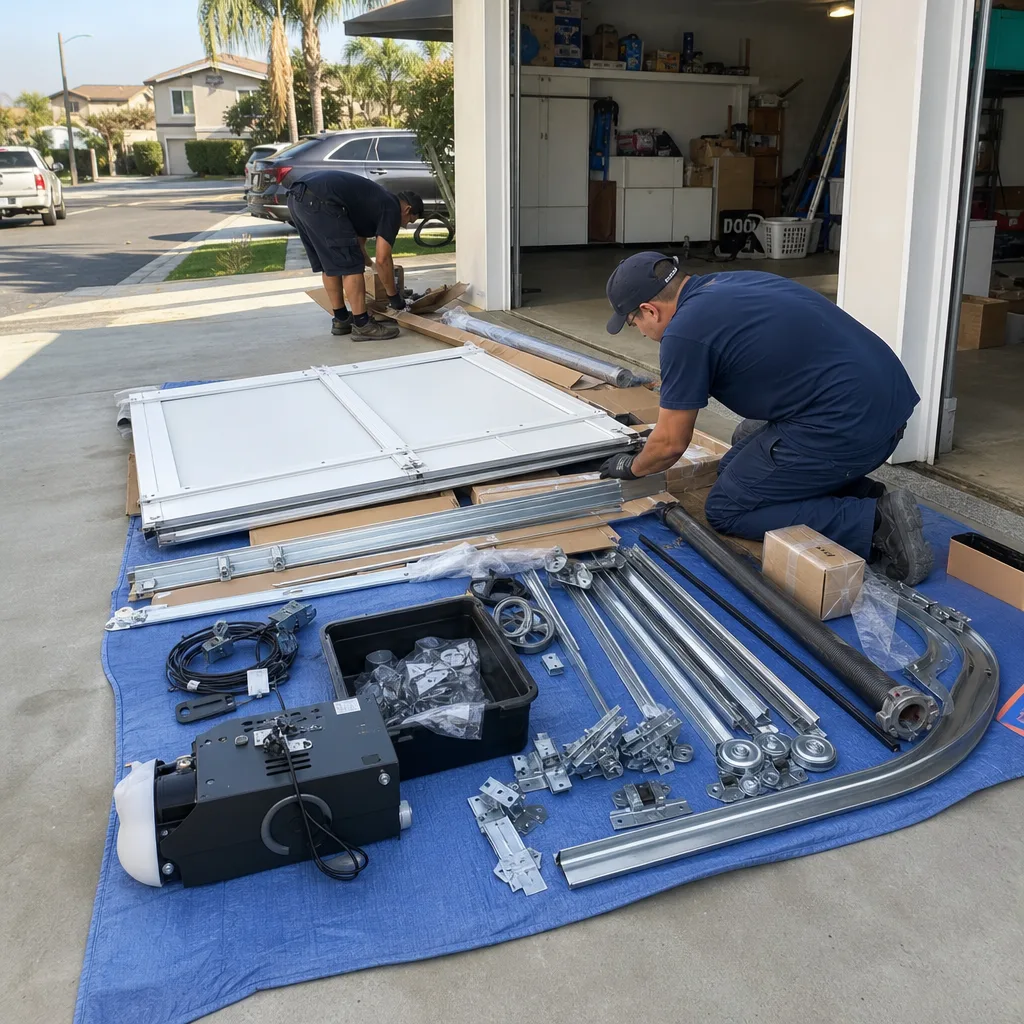
Garage door wear is not uniform across Southern California. The specific conditions in Santa Ana affect how fast components degrade and which components fail first. Here is what the local environment does to your door.
Inland heat and direct sun. Santa Ana sits inland from the coastal marine layer, which means higher summer temperatures and more direct sun exposure than coastal Orange County cities. A west-facing garage door in Santa Ana absorbs hours of afternoon sun. Panel expansion cycles heat up and cool down every single day, and over years, that cycling fatigues hinges and loosens mounting hardware. Dark-colored doors absorb more heat and cycle more aggressively. We see more hinge failures and more panel stress cracks on west-facing doors in Santa Ana than on comparable doors in shaded coastal neighborhoods.
Dry air and lubrication breakdown. Santa Ana’s aridity means less rust than you would find in Huntington Beach, but it also means oil-based lubricants evaporate faster. Hinges, roller bearings, and the torsion spring all need annual lubrication, and Santa Ana homeowners who skip it experience more metal-on-metal wear than the same door would show in a more humid climate. The solution is not more frequent lubrication but the right lubricant: a silicone or lithium spray, not WD-40.
Older housing stock with original doors. A significant portion of Santa Ana’s housing stock was built between 1950 and 1980. Many of those homes still have their original garage doors. A steel door from 1970 may have survived because the environment is dry, but survival is not the same as good condition. Original rollers, original hinges, and original springs from that era are decades past their service life. We regularly find torsion springs from the 1980s still under tension in Floral Park homes. The spring is doing its job today, but the wire inside has been holding tension for 40 years. Metal fatigue is cumulative, and there is no way to inspect for fatigue without disassembling the spring. The age of the spring is the inspection. If your door has a spring older than 15 years, it is due for replacement regardless of how it looks.
Common Mistakes to Avoid
- Lubricating a failing roller instead of replacing it. Lubricant reduces friction but cannot restore a seized bearing. If a roller is already grinding, the bearing is damaged. Lubrication buys weeks, not months.
- Ignoring a fraying cable because the door still opens. A cable with visible strand separation is holding tension on borrowed time. The remaining strands are carrying more than their rated load, and eventual failure is guaranteed, not likely.
- Adjusting the opener force settings to “fix” a slow door. Cranking up the force on a LiftMaster or Chamberlain opener to compensate for mechanical resistance destroys the opener motor and violates the door’s safety reversal settings. The correct fix is finding the mechanical friction, not overpowering it.
- Replacing the opener when the spring is the problem. We see this regularly: a homeowner pays for a new opener, and the door still moves slowly because the spring was the failed component. The opener was never the problem. The spring was. A spring assessment is cheap and should happen before any opener replacement.
- Waiting for complete failure before calling. The entire thesis of this guide is that the gap between warning and failure is expensive. A grinding roller costs $30 to replace. An off-track door costs $150 to $300 to realign, plus the roller, plus the potential panel damage from the jam. The math is not complicated.
- Hiring a contractor who will not put the price in writing before starting. In Santa Ana, as everywhere else, the driveway quote that triples after disassembly is a pattern, not an anomaly. Any contractor who will not commit to a written price before work starts is telling you something about how the job will end.
When to Call a Professional
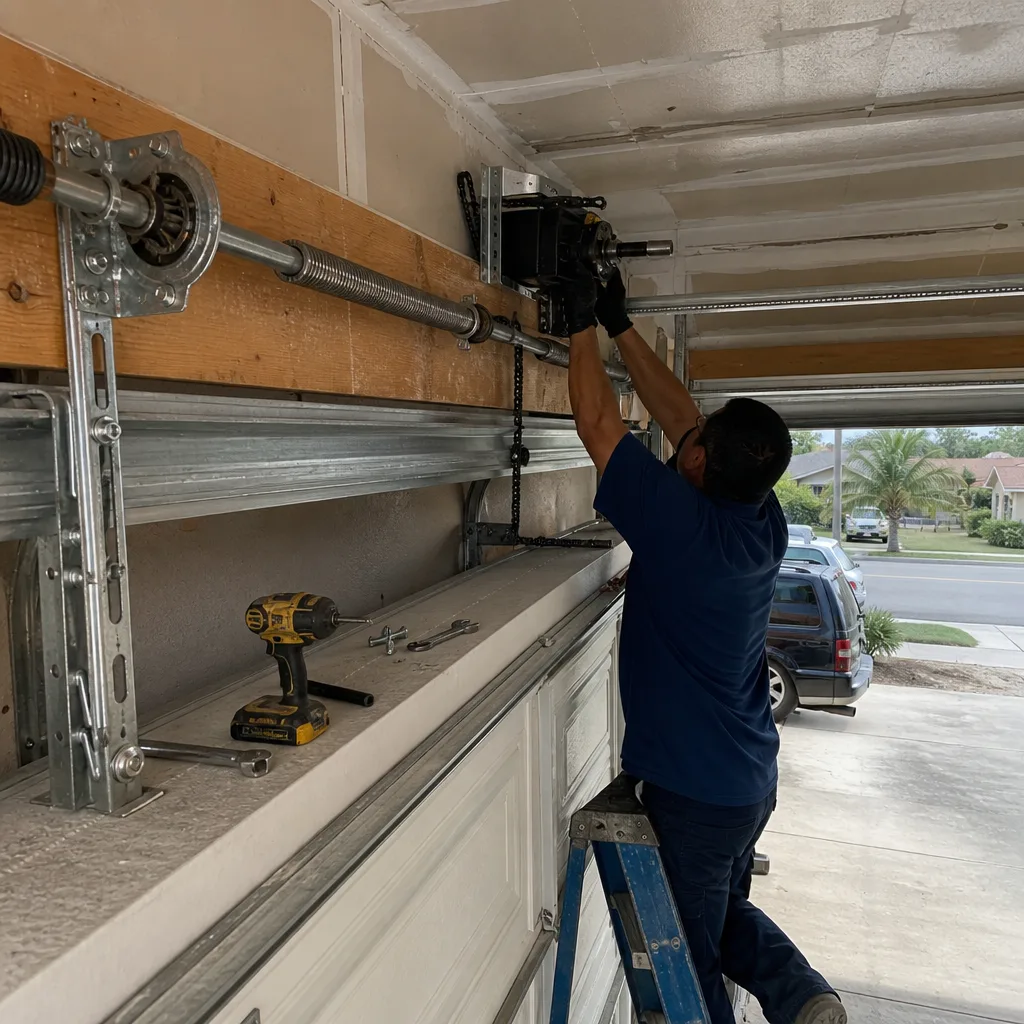
Some warning signs are informational. Others are actionable. Here is the line. Call a professional today if you see any visible cable fraying, hear metallic popping from the cable area, notice the door moving slower in one direction than the other, or find that the door reverses before fully closing and a sensor realignment does not fix it. Call within the week if you hear grinding, see a weatherseal gap above 3/8 inch, or feel a hesitation before the door moves. The springs, cables, and anything under tension should never be DIY territory, and the opener’s electrical components carry the same risk. Servo Garage Doors Santa Ana offers free estimates across Santa Ana, and every estimate is a flat, written price with a written scope before any work starts. Call (949) 569-5253.
Frequently Asked Questions
Most garage door repairs in Santa Ana fall between $150 and $550 depending on the component. A roller set replacement typically costs $130 to $250, a weatherseal replacement runs $80 to $180, and an opener repair runs $180 to $400. Spring replacement is typically $250 to $450 installed. These are the ranges we quote across Santa Ana, and the final price is always written before work starts. Call (949) 569-5253 with a description of the sound or symptom, and we will give you an exact quote, free.
Yes. Servo Garage Doors Santa Ana runs same-day repair routes across the city, and our emergency line answers 24 hours a day, seven days a week with a live person, not a recording. If your door is stuck open or the cable has snapped, we dispatch a background-checked technician to your home, and you get a text with the technician’s name before they arrive. Call (949) 569-5253 and tell us what happened.
No. The price we quote is the price you pay, and it is written before any work begins. That is Clause 1 of The Haven Standard, the documentation system Servo operates under. The technician diagnoses the problem, photographs the failed component, and presents a written quote with a written scope. If you approve it, the work happens at that price. If you decline, there is no charge beyond any dispatched service fee, which is disclosed when you call.
Yes. Our service vehicles carry the most common replacement parts for the brands we service: LiftMaster, Chamberlain, Genie, Raynor, and the other major manufacturers. Rollers, hinges, cables, weatherseals, springs in common sizes, and opener components are stocked on the truck. That is how we complete most repairs on the first visit. Call (949) 569-5253 with your door’s brand and the symptom, and we will confirm parts availability before the technician rolls.
An adjustment changes spring tension and costs less than replacement because the spring itself is still sound. Replacement is indicated by age (15 years or older), visible coil separation, or a spring that has snapped. Since the spring is under high tension, this is not a DIY evaluation. A technician needs to measure the spring’s wire diameter, coil length, and winding count before determining whether adjustment or replacement is the right call. Servo photographs and documents what we find, so you see the evidence before any replacement is quoted.
Grinding means a roller bearing has failed or a hinge is metal-on-metal, and the component is actively wearing the track. It should be addressed within a week. The repair is typically a roller set or hinge replacement, which is inexpensive. The cost of waiting is a worn track or a door that jams off-track, which is substantially more expensive. Call (949) 569-5253 and describe the sound. We will tell you over the phone whether it matches the pattern we hear from roller failure or something more involved.
The Bottom Line
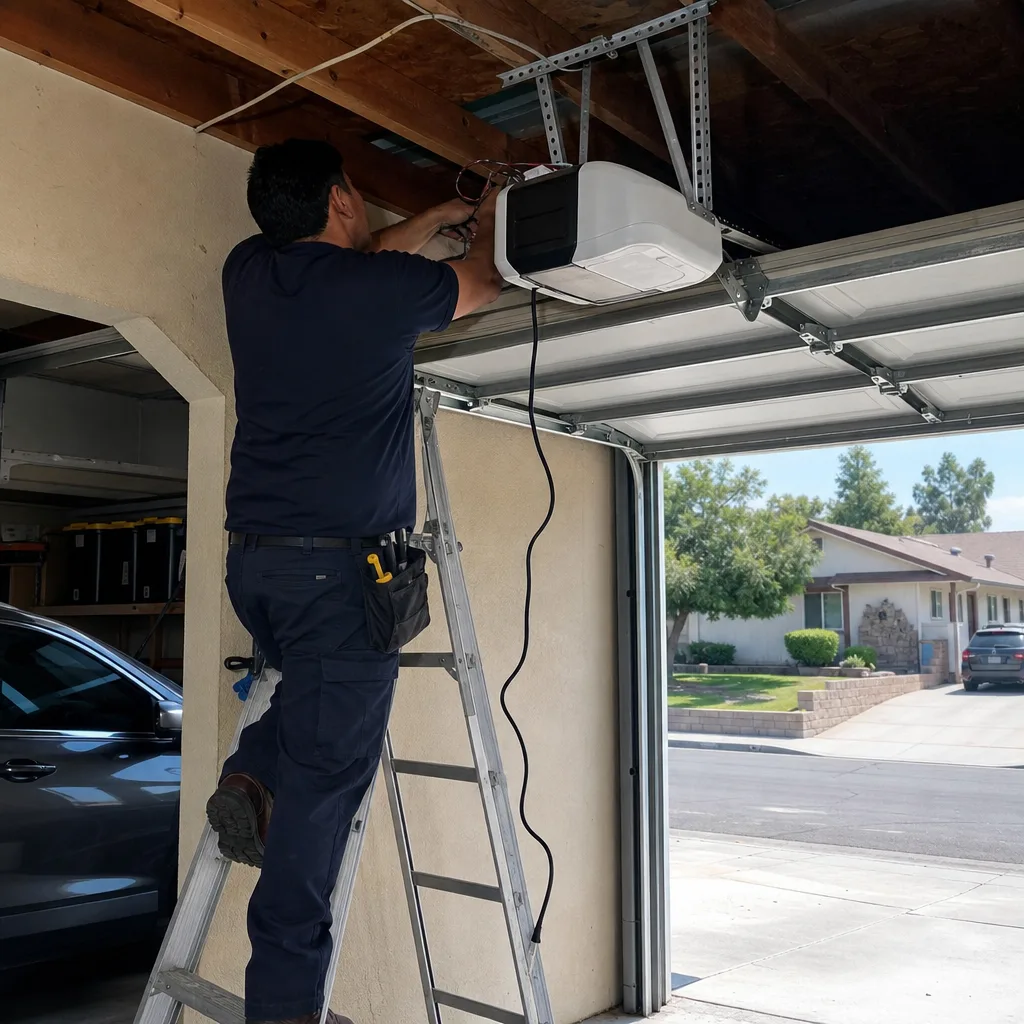
A garage door communicates its condition clearly if you know the vocabulary. Grinding points to rollers, popping points to cables, clunking points to flat-spotted rollers, and hesitation points to the opener motor compensating for mechanical friction. The warning signs documented here are specific, measurable, and actionable. The gap between catching a worn roller and missing an off-track failure is the difference between a $30 repair and a $300 one. Santa Ana homeowners who read the warnings early, photograph what they find, and demand a written price before work starts will save money on every single repair. For more guides & resources, visit our blog. That is not a theory. It is what 18,000 garage doors made right since 2015 have shown us.
For warning signs in your Santa Ana garage, Servo offers garage door repair in Santa Ana with written pricing before any work starts. If your door needs more than a repair, we also handle garage door installation in Santa Ana, and opener repair and installation for LiftMaster, Chamberlain, Genie, and Raynor units. You can also see what we cover on the Servo Garage Doors Santa Ana home page.
Written by Marcus Deller, Owner at Servo Garage Doors Santa Ana, serving Santa Ana since 2015.