
Last updated September 19, 2026
Full 25-point door and opener safety check with every visit - springs, cables, rollers, tracks, and your LiftMaster or Chamberlain opener included
You get a price before we start. It does not change when the truck arrives.
Modern flush
 Before
 After
After Before
 After
After Before
 After
AfterGarage Door Permits, Codes & Inspections in CA: What You Need to Know
Most garage door replacements in Santa Ana do not require a permit. That’s the part nobody tells you. But the exceptions are specific, and missing one means you’ll discover the problem years later when an escrow officer asks about a permit number that doesn’t exist. We’ve seen unpermitted garage door work delay closings, trigger retroactive inspection fees, and cost homeowners two to three times what a permitted job would have cost from the start. This guide lays out exactly which garage door projects in California, and Santa Ana specifically, trigger a permit, an inspection, or a code compliance review, and which ones you can complete without telling the city anything.
Quick Answer
In Santa Ana, a like-for-like garage door replacement, meaning the same size, same type, and same weight without structural modification, typically does not require a building permit. However, if the replacement alters the door opening, involves structural framing, changes the garage from unconditioned to conditioned space, or is part of a larger remodel that already has a permit, you’ll need approval from the Santa Ana Building & Safety Division. Opener installations must comply with UL 325 entrapment standards regardless of whether a permit is required.
Table of Contents
- When a Garage Door Replacement Triggers a Permit in Santa Ana
- What “Like-for-Like” Actually Means Under California Code
- UL 325 and Opener Safety: What Inspectors Verify
- Title 24, R-Value, and When Energy Code Applies
- How Unpermitted Work Surfaces at Resale and What It Costs
- What the Santa Ana Building & Safety Division Actually Checks
- How to Pull a Garage Door Permit in Santa Ana: Step by Step
- Frequently Asked Questions
BeforeAfterWhen a Garage Door Replacement Triggers a Permit in Santa Ana
The City of Santa Ana adopts the California Building Code (CBC) with local amendments. Under CBC Section 105.2, work that is exempt from permits includes “minor repairs” that do not change the structure, egress, fire rating, or energy performance of a building. A garage door that is replaced with one of the same dimensions, same operational type, same weight class, and no change to the rough opening falls under this exemption in most cases. But the word “most” is doing real work there.
Here are the specific conditions in Santa Ana that push a garage door replacement from exempt to permitted:
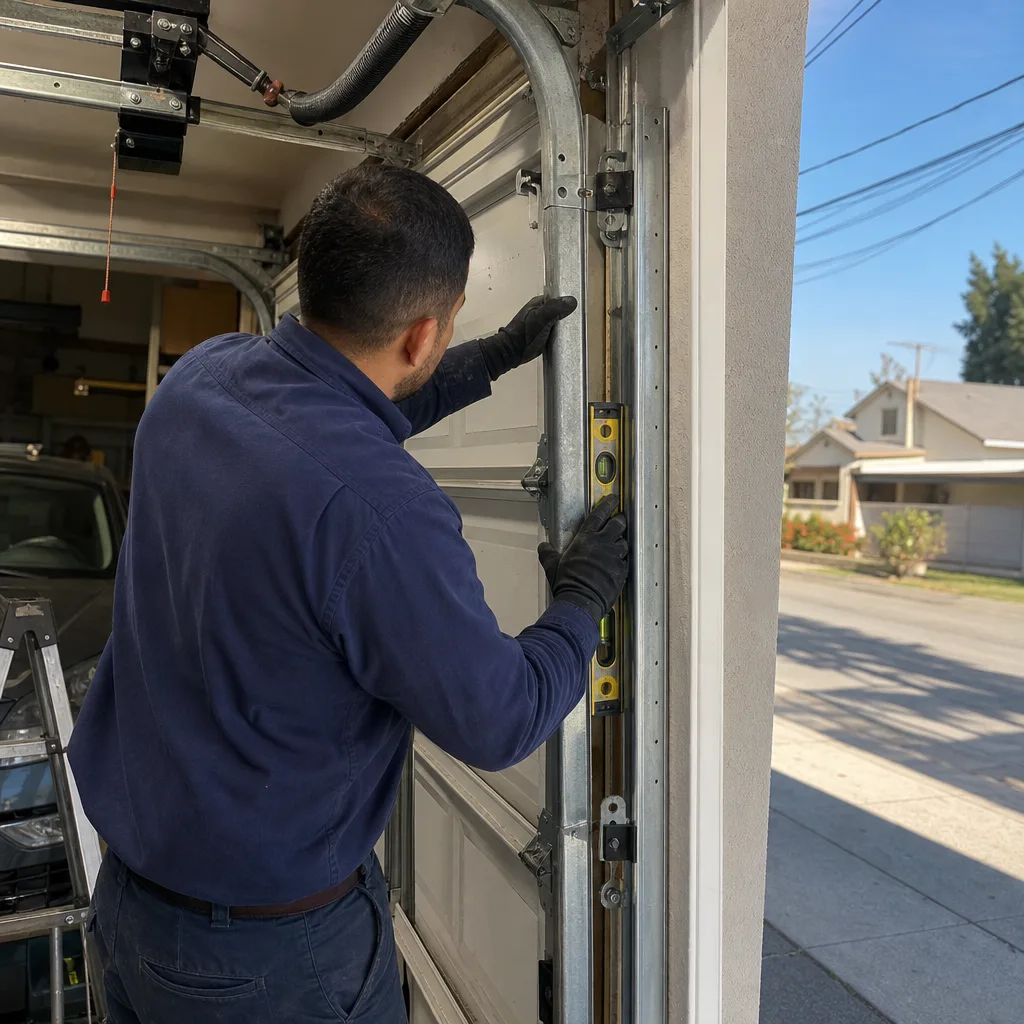
- Rough opening modification: If the header, jambs, or sill need to be changed, even by an inch, the city considers this structural work. A permit is required, full stop.
- Change from a swing-out or carriage door to an overhead door: This isn’t a replacement. It’s a conversion. The building’s structural load path changes, and the city treats it as an alteration, not a swap.
- Widening or heightening the door opening: Any dimensional change to the opening itself means the header above the door now carries a different load. This requires engineering review and a permit.
- Adding a door to a garage that didn’t have one: Cutting a new opening in a garage wall is structural work. A permit is non-negotiable, and you’ll need plans.
- Converting an unconditioned garage to conditioned space: If you’re adding insulation, drywall, and a mini-split to the garage and the door is part of that project, the larger permit covers the door. The door itself must then meet Title 24 requirements for a conditioned envelope.
- Replacement on a garage that is part of a multi-family structure: Condominium and apartment garages are treated differently. The door may be a fire-rated assembly component in some buildings, and swapping it without review can violate fire code. In Santa Ana, multi-family garage door replacement almost always requires a permit.
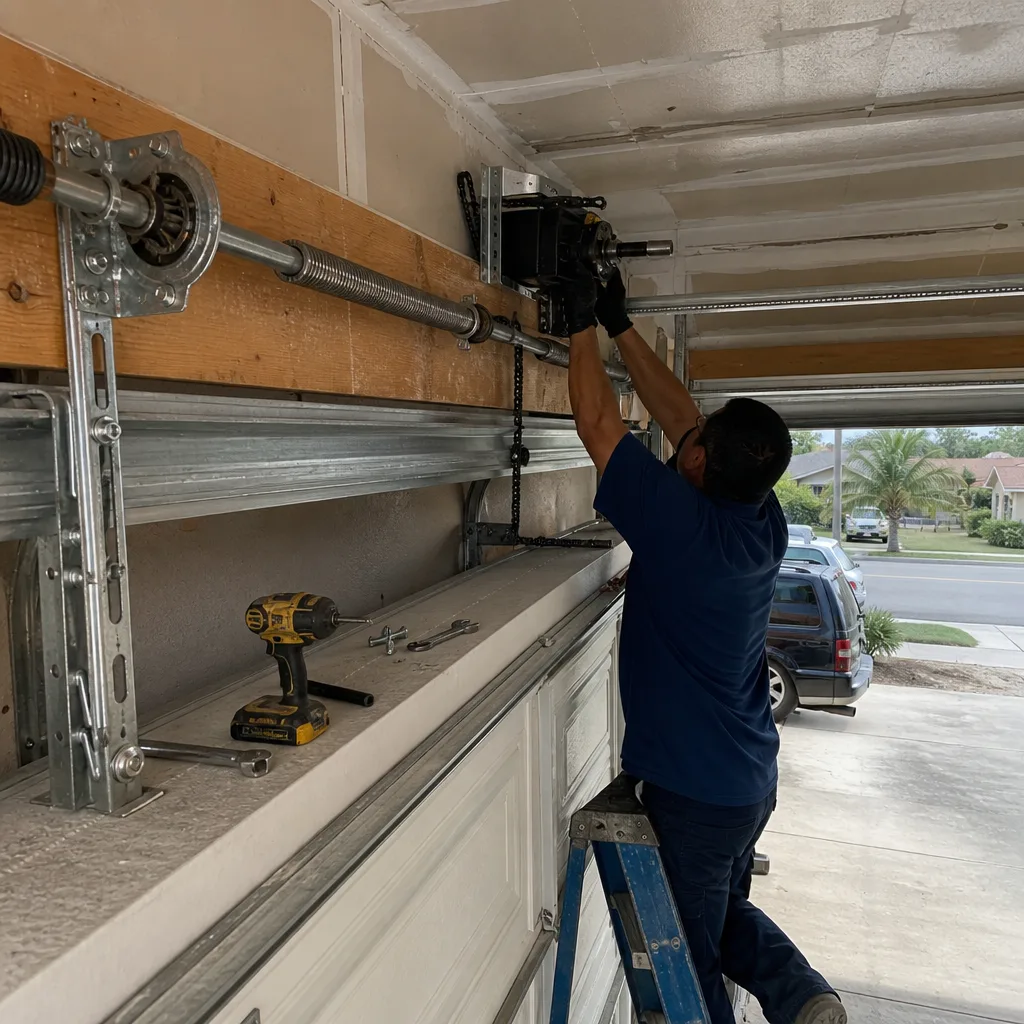
What doesn’t trigger a permit: swapping panels on an existing track system, replacing springs or cables, mounting a new opener to the existing ceiling structure, or replacing a door of identical size, weight, and type. For more context on spotting issues before they escalate, see our Garage Door Warning Signs: A Santa Ana Homeowner’s Reference Guide. In our experience at Servo, roughly 80 percent of the garage door replacements we do in Santa Ana fall into the no-permit category. The other 20 percent are almost always opening modifications, multi-family work, or part of a larger permitted remodel.
If you’re not sure which category your project falls into, the Santa Ana Building & Safety Division answers questions at their public counter at 20 Civic Center Plaza. Bring a photo of the existing door and rough opening measurements. A phone call works too, though you’ll usually get a faster answer by visiting the counter or sending the question through the city’s online permit inquiry form. We’ve found the counter staff to be direct and practical about this specific question because they field it constantly.
What “Like-for-Like” Actually Means Under California Code
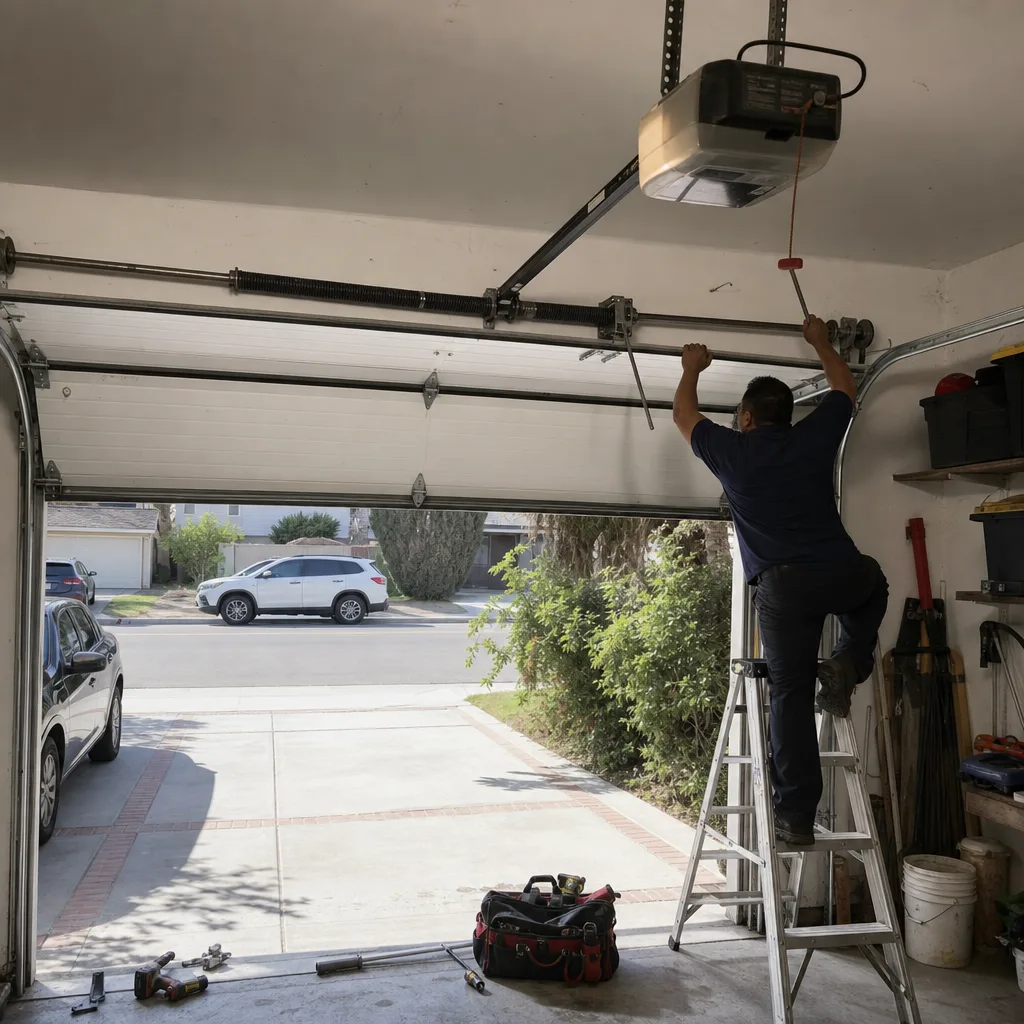
The phrase “like-for-like” is not a technical term in the California Building Code. It’s shorthand the industry uses, and the lack of a definition is where homeowners get into trouble. The code defines exempt work by what it does not do: it does not change structural members, does not alter egress, does not reduce fire resistance, does not change the building envelope’s energy performance. A replacement is exempt only when none of those four conditions are violated.
Here’s what that means in practical terms for a Santa Ana garage door replacement:
- Size and weight: The new door must fit the same rough opening and present a similar load to the spring and track system. A hollow-core steel door replaced with a solid wood door is a weight change. On an attached garage, the door is part of the building’s wind load path under CBC Section 1609. A significantly heavier or lighter door changes that calculation. This is why door manufacturers publish weight per square foot, and why a competent installer asks before quoting a material change.
- Fire separation: In California, the wall between an attached garage and living space is a fire-rated assembly. The door itself is not typically the fire-rated component, that’s the wall and the door header. But if your replacement changes the header or jamb construction, even to accommodate a different track profile, you’ve touched the fire assembly. That triggers a permit.
- Egress: Garages with a pedestrian door or a side door are subject to egress requirements under CBC Section 1008. A garage door itself is not a required egress door, but altering the man-door frame or the vehicle door opening can change how egress is calculated on the garage’s floor plan. This matters more in multi-family and accessory dwelling unit scenarios, both of which exist in abundance in Santa Ana’s older neighborhoods like Heninger Park and Washington Square.
- Energy performance: On a conditioned or attached garage, the door is part of the thermal envelope. A non-insulated door swapped for an insulated one, or vice versa, changes the envelope’s U-factor. Details in the Title 24 section below, but the short version: if your garage is attached to the house, an inspector can ask for documentation that the new door meets the energy code.
The practical test we tell customers: if you can describe the job as “we unbolted the old door and bolted in a new one of the same size and type,” you’re exempt. If the description includes the words “framing,” “header,” “structural,” “opening,” “width,” “height,” or “load-bearing,” stop and call the city first. The permit fee is small compared to what retroactive compliance costs.
UL 325 and Opener Safety: What Inspectors Verify
UL 325 is the Underwriters Laboratories standard for automatic operator systems, including garage door openers. Every garage door opener manufactured after January 1, 1993 must include a photoelectric sensor or edge sensor that reverses the door when something interrupts the beam near the floor. If your opener is older than that date and you’re replacing the door, most Santa Ana inspectors will require you to bring the opener into compliance before they sign off on the door inspection.
What inspectors check during a garage door inspection, when one is required:
- Photoelectric eyes: The sensors must be mounted no higher than 6 inches above the garage floor, aligned across the door opening, and wired so the door reverses if the beam is broken while closing. Inspectors test this with a deliberate foot-break of the beam during the closing cycle.
- Reverse mechanism: The door must reverse when it contacts a 2-inch solid object placed on the floor under the closing path. Inspectors carry a test block for exactly this. If the door doesn’t reverse within 2 seconds of contact, it fails.
- Force settings: The opener’s force adjustment must be set low enough that the door stops and reverses under resistance, not plows through it. Inspectors test this manually with a hand on the door edge.
- Manual release: The emergency release handle must be red, clearly visible, and operable from the ground without a ladder. This is so the door can be disengaged during a power failure or fire.
- Warning labels: The opener, the door, and the track assembly must carry the manufacturer’s UL listing markings and entrapment warning labels. Missing labels are a technical fail in some jurisdictions, though Santa Ana inspectors tend to be lenient on this if everything else passes.
This is relevant even when no permit is involved. A garage door opener is the heaviest moving object attached to a home. The Consumer Product Safety Commission attributes roughly 300 entrapment injuries per year to garage doors, most involving children and older openers without functional safety systems. In our repair work across Santa Ana, we regularly find openers from the 1980s still in service in older homes in the Wilshire Square and Morrison Park neighborhoods. The doors get replaced, but the opener hangs on until it fails. A door replacement is the right moment to retire pre-1993 openers, and a trained technician should handle the UL 325 compliance check because the test requires cycling the door multiple times under load. For ongoing care tips, review our Garage Door Repair Maintenance Checklist for Santa Ana Homeowners.
Title 24, R-Value, and When Energy Code Applies
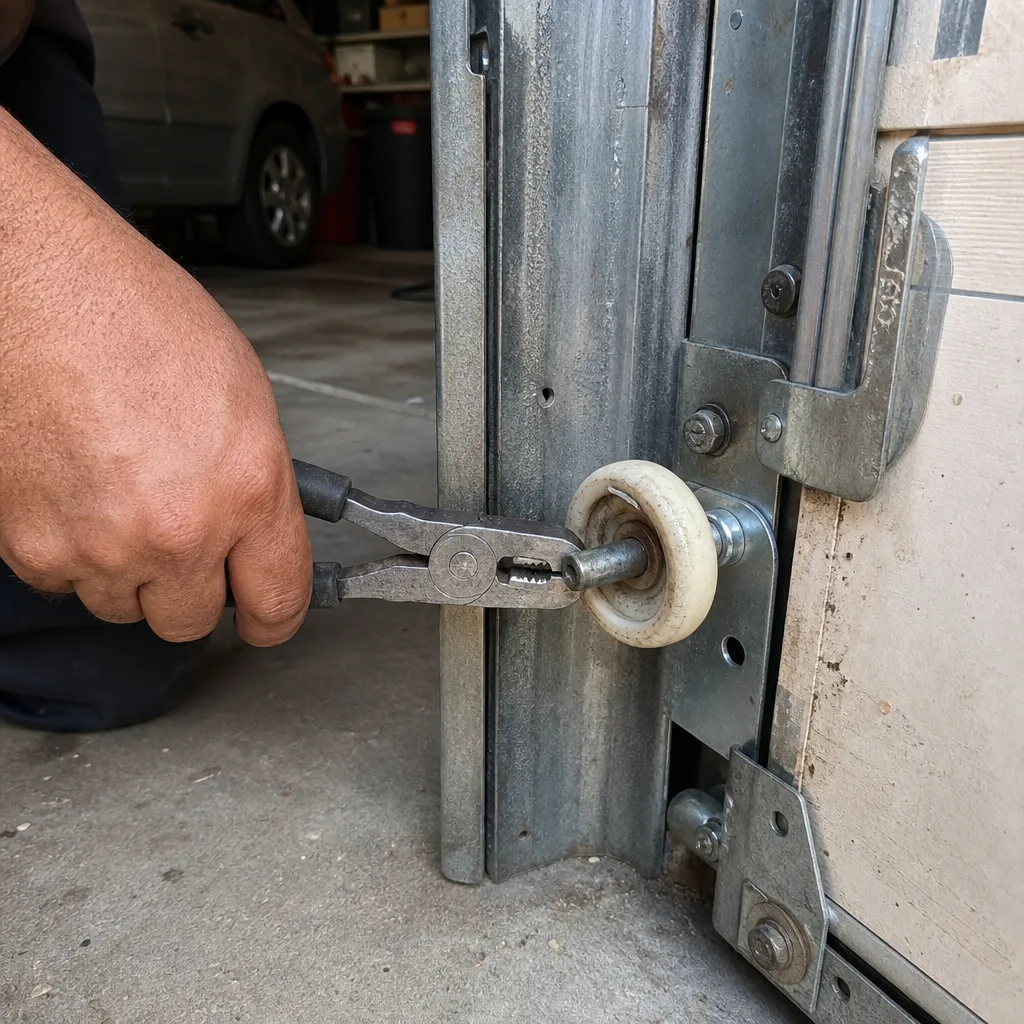
California’s Title 24 energy code sets minimum thermal performance standards for building components, including garage doors when the garage is part of a conditioned space. A “conditioned space” is any area within the building’s insulated envelope that is heated or cooled. An attached garage with a shared wall to the house but no supply registers is not conditioned, and a door on that garage does not need to meet Title 24 U-factor requirements. But if the garage has been finished, insulated, and heated or cooled, or if your project is adding those things, the door becomes an envelope component.
Santa Ana is in California Climate Zone 8, which spans the Inland Orange County basin. Zone 8 has moderate heating demands but notable cooling loads: summer highs in Santa Ana routinely exceed 90 degrees. For a conditioned garage in Zone 8, the code’s prescriptive requirement for a garage door is a maximum U-factor of 0.35, which translates to an R-value of roughly R-4 to R-6 depending on construction. That’s a low bar: a standard insulated steel garage door from brands like Clopay or Wayne Dalton in the R-6 to R-9 range clears it. A non-insulated single-layer steel door with an R-value under 1 does not.
What the code actually requires when Title 24 applies to your garage door:
- Documented R-value: The door manufacturer must provide a certified U-factor or R-value for the specific door model and size. The label or spec sheet is the evidence. A verbal claim from an installer won’t satisfy an inspector.
- Weatherstripping continuity: The perimeter seal must be complete: bottom seal on the door, jamb seals on both sides, and a top seal at the header. Gaps defeat the thermal envelope and will be flagged by an inspector during an energy compliance inspection.
- Insulated construction: The door panels must be constructed with insulation, not a retrofit panel dressing. Sectional doors with a steel-polyurethane-steel or steel-polystyrene-steel sandwich construction are the standard compliance path. Doors from Amarr and Clopay in the insulated lines document this without drama.
If you’re replacing a garage door as part of a larger remodel that includes finishing the garage into living space, your project likely requires a whole-house Title 24 compliance form (CF-1R) from a certified energy consultant, and the garage door will be one line item. The door installer doesn’t produce this form; the project designer or energy consultant does. But the installer must install a door that matches the door schedule on the form. We’ve been handed CF-1R documents that specify a door with an R-value that doesn’t exist in the customer’s chosen style, and that mismatch stalls the inspection. Bring the door spec to your energy consultant before they finalize the form.
How Unpermitted Work Surfaces at Resale and What It Costs
Unpermitted garage door work rarely causes a problem until the house is sold or refinanced. At that point, three things happen in sequence: the title company pulls the city’s permit history for the property, the buyer’s inspector compares the existing improvements against the permit file, and any discrepancy becomes a disclosure item. A garage door replacement with no permit on file is not automatically a deal-breaker, but it is a negotiation point. In a buyer’s market, it becomes a price reduction. In a seller’s market, it becomes a repair contingency.
In Santa Ana, the cost to remediate unpermitted garage door work after the fact breaks down like this:
| Remediation Step | Typical Cost Range in Santa Ana |
|---|---|
| Retroactive permit application (building, no structural plan review) | $180-$400 |
| Plan review for structural work (if framing was changed) | $600-$1,500 |
| Inspector re-inspection fee (each visit) | $90-$180 |
| Correction work to bring a non-compliant door to code (worst case) | $800-$3,000 |
| Buyer credit negotiation at resale (typical range we’ve heard reported) | $500-$2,500 |
For reference: pulling the permit at the start of a structural garage door project typically costs $200 to $800 in Santa Ana, including any required plan check. That’s the economics. The risk-adjusted cost of skipping the permit is a multiple of the permit fee itself, before you count the time drain and the stress.
Title companies in California pull permit history from the city or county as a matter of standard due diligence. They’re not hunting for garage door permits specifically; they’re building a record of the property, and any permitable work that doesn’t appear on that record is an open question. Sellers in California are also required to complete the Transfer Disclosure Statement, which asks directly about any work done without a permit. Lying on that form is a legal liability. The honest answer, “we replaced the garage door in 2019 without a permit because the contractor said one wasn’t needed,” is a common entry, and it usually compels the seller to obtain a retroactive permit or offer a credit.
Our strongest advice on this point: keep paperwork. The Servo approach on every replacement is a written scope and price before work starts, per Clause 1 of The Haven Standard, and a photo record when the technician leaves. That photo record includes the door make, model, size, and weight class. If the city ever asks, and at resale someone always asks, you have a document trail that shows what was done and when. A photo of the old door next to the new door, timestamped, is better than a memory.
What the Santa Ana Building & Safety Division Actually Checks
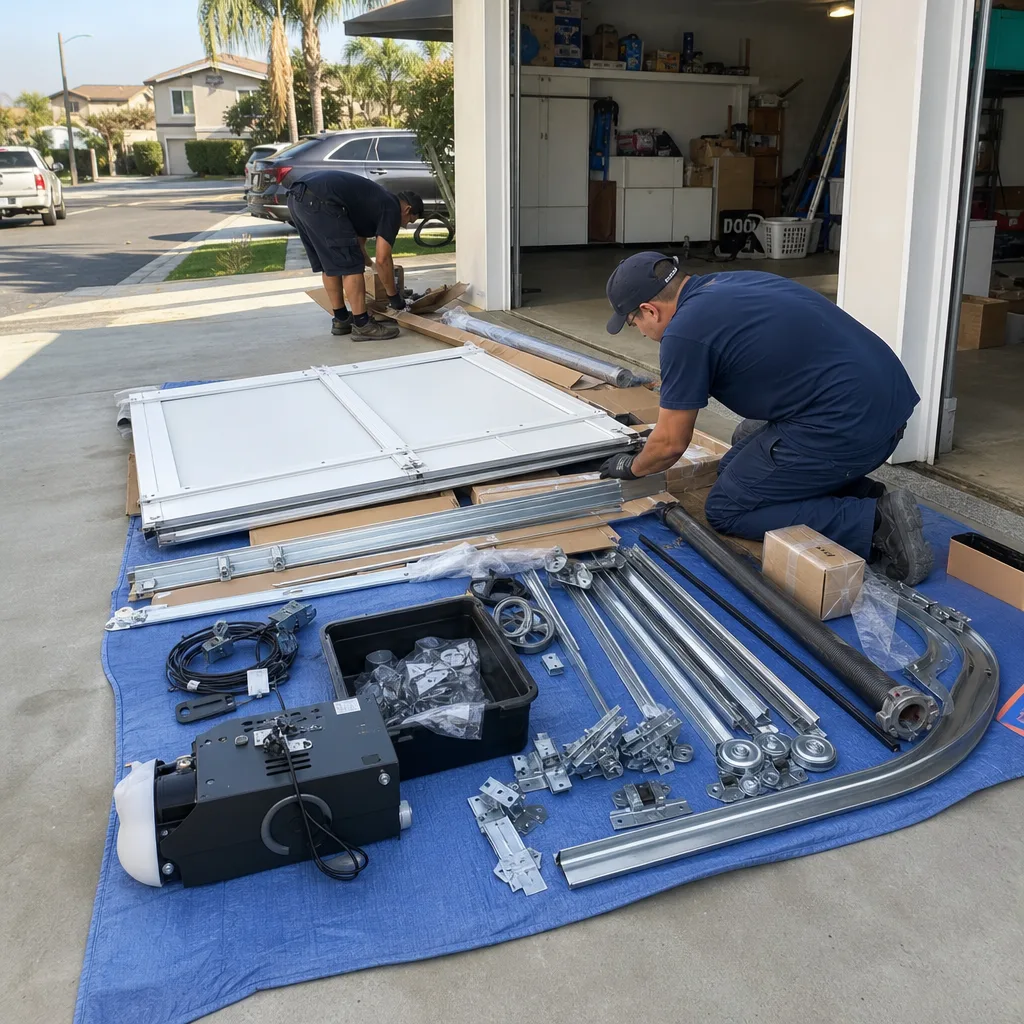
Santa Ana’s building inspection for a garage door, when one is required, is narrower than most homeowners assume. It is not a full safety audit of your entire garage. The inspector verifies the specific items listed on the permit card and the code sections that apply to the permitted scope. A garage door inspection typically takes 10 to 15 minutes. Here’s the standard checklist, in the order a Santa Ana inspector usually runs it:
- Permit card visibility: The approved permit must be posted on the job site, usually in a front window or on the garage door frame. If the card isn’t visible, the inspector can reschedule. We tape the permit to the inside of the garage door jamb as standard practice.
- Door operation: The inspector cycles the door twice: once up, once down. They’re checking for smooth travel, no binding, no scraping on the track, and a balanced door that stays put at mid-height. A door that drifts down at mid-height fails.
- Entrapment protection: The photoelectric sensor test and the 2-inch reverse test described in the UL 325 section above. This is the most common failure point we see on inspections.
- Structural attachment: The inspector visually confirms that the track mounting brackets are anchored to structural framing, not drywall alone. Long lag bolts into the jamb studs or header are the expectation. If the inspector sees deck screws or drywall anchors, the inspection fails.
- Fire-rated assembly (attached garages): If the project touched the wall between garage and house, the inspector checks that the drywall on the garage side is 1/2-inch Type X or 5/8-inch, that the door to the house is solid-core or labeled fire-rated, and that the garage door penetration is sealed. This only comes up on structural permits.
- Title 24 compliance (conditioned garages only): If the permit scope includes energy compliance, the inspector wants to see the CF-1R form and the door’s R-value documentation. No form, no pass.
To schedule a garage door inspection in Santa Ana, you call the Building & Safety Division’s inspection request line or use the city’s online permitting portal. Inspections are scheduled for the next business day in most cases, with a call-ahead window of 30 minutes before arrival. The homeowner or the contractor can be on site; the permit holder is responsible for access. If you’re working with a contractor, make sure their name and license number appear on the permit application, because Santa Ana requires the licensed contractor to be the permittee on jobs they perform.
How to Pull a Garage Door Permit in Santa Ana: Step by Step
If your specific project requires a permit, the process in Santa Ana is straightforward and faster than most homeowners expect for a simple garage door job. Here’s the sequence, with realistic timeframes based on what we’ve seen in the city:
- Determine permit type: A like-for-like door with no structural change but on a multi-family building is a simple “building permit, alteration” with a flat fee and no plan review. An opening modification or header change requires plan review and possibly engineering. The Building & Safety Division counter at 20 Civic Center Plaza can confirm the category in one visit. Bring dimensions and photos.
- Prepare submittal documents: For a simple alteration permit, you’ll need the property address, parcel number, a description of work, and the door manufacturer’s spec sheet. For structural work, you’ll need dimensioned drawings of the new opening, the door schedule listing the make and model, and in some cases a structural calculation for the new header, prepared by a California licensed engineer.
- Submit and pay: Santa Ana accepts over-the-counter submittals for simple alterations. Plan-review submittals go into the queue, and a first review typically comes back in two to three weeks. Fees are payable at submittal for counter permits and at permit issuance for plan-review permits. Total cost for a straightforward door replacement with opening modification runs $600 to $1,200 including plan check.
- Complete the work: Once the permit is issued, the work proceeds. The permit card must be posted. If the project sits idle for more than 180 days, the permit can expire under California Health and Safety Code Section 18938, and you’ll need an extension.
- Schedule the inspection: Call the inspection line or use the portal. Santa Ana inspectors typically arrive between 9 a.m. and 2 p.m. on the scheduled day. Be ready to run the door through its full cycle and have the UL 325 sensors tested.
- Receive final sign-off: The inspector signs the permit card on the spot if everything passes. A green tag on the permit card is a pass. If corrections are required, the inspector lists them, and you have 30 days to re-inspect before the permit goes into a correction cycle. Keep the finaled permit card in your house file. This is the document that future buyers will ask to see.
If the process feels like more than you want to manage, a licensed garage door contractor in Santa Ana can handle it end to end. Our How to Hire a Garage Door Contractor in Santa Ana: A Step-by-Step Guide walks you through vetting the right professional. The contractor’s name and California license number go on the permit as the responsible party, and they’re the one who meets the inspector. The permit stays on the property regardless of who pulled it, which is the point: the permit runs with the building, not the contractor.
Common Mistakes to Avoid
- Assuming every garage door needs a permit: This is the inverse mistake. Most like-for-like replacements in Santa Ana are exempt, and pulling a permit unnecessarily wastes money and weeks. The correct question is not “does this need a permit” but “does this change the opening, the structure, or the energy envelope.” If the answer to all three is no, it’s exempt.
- Using the phrase “just a door swap” when the opening changed: We’ve seen homeowners tell the city one thing and then the inspector sees a modified header. The correction path on that scenario is expensive and adversarial. Describe the work accurately when you apply.
- Retiring a pre-1993 opener without upgrading UL 325 compliance: The door is fine. The opener is not. Inspectors check the opener during door inspections, and a 1988 Craftsman opener without photo eyes fails the inspection even if the door itself is flawless.
- Ignoring R-value documentation on a conditioned garage: The door manufacturer’s spec sheet is the evidence. If your installer can’t produce a U-factor for the door model they’re quoting, they’re quoting the wrong door for a Title 24 project. Ask for the documentation before you sign.
- Trusting a contractor’s verbal assurance that “we handle permits”: Ask to see the permit card before work begins. A licensed contractor who pulls permits has a paper trail. One who doesn’t is borrowing from your future resale. At Servo, we list the permit status on every garage door installation in Santa Ana quote, so the customer sees it before spending a dime.
- Throwing away the finaled permit card: This single sheet of paper is worth its weight in resale negotiation. Photograph it, file it, and pass it to the buyer. We’ve had customers tell us their finaled permit from a 2019 door replacement smoothed a 2023 sale.
- Scheduling the inspection before the work is actually complete: A Santa Ana inspector who arrives to find trim missing, sensors on the floor, and no permit card will fail the job and note the failed inspection. Clean up before the inspector arrives.
When to Call a Professional
Structural modification of any kind, multi-family door replacement, conditioned garage door work under a Title 24 compliance form, and any project where the permit process is more than you want to manage alone. If the job touches the header, the opening dimensions, or the fire-rated wall between a garage and living space, a licensed contractor with Santa Ana permit experience is the difference between a day at the Building & Safety counter and a stalled project. Even on no-permit replacements, installation quality determines whether the door passes a future inspection and holds up over time. Garage Door Repair in Santa Ana work is our core service, but we also do full replacements, and every job, permitted or not, carries a written price and a documented photo record. Servo Garage Doors Santa Ana home is independently owned and operated under The Haven Standard. We offer free estimates in Santa Ana. Call (949) 569-5253.
Frequently Asked Questions
No, not if the replacement is like-for-like: same size, same type, same weight, no structural change to the opening, and the garage is unconditioned space on a single-family home. Yes, if you’re changing the opening dimensions, modifying the header or jambs, converting the door type, working on a multi-family building, or the door is part of a larger conditioned-space remodel. When in doubt, call the Santa Ana Building & Safety Division at 20 Civic Center Plaza or ask a licensed installer to verify before work begins. You can also explore more guides & resources on our blog.
Yes. Every automatic garage door opener manufactured after January 1, 1993 must include photoelectric sensors or an edge sensor that reverses the door, plus a manual release mechanism. Inspectors in Santa Ana test this on any permitted door inspection, and even on unpermitted work, the standard applies because it’s a safety code, not a permit requirement. Pre-1993 openers without photo eyes should be replaced when the door is replaced.
There isn’t a flat fine. The city’s response is case by case. For work already completed, the Building & Safety Division typically requires a retroactive permit, which includes the standard permit fee plus a penalty that can double the original fee, followed by an inspection. If the work doesn’t meet code, you’ll also pay to correct it. For work in progress without a permit, the city can issue a stop work order, which halts the project until a permit is issued.
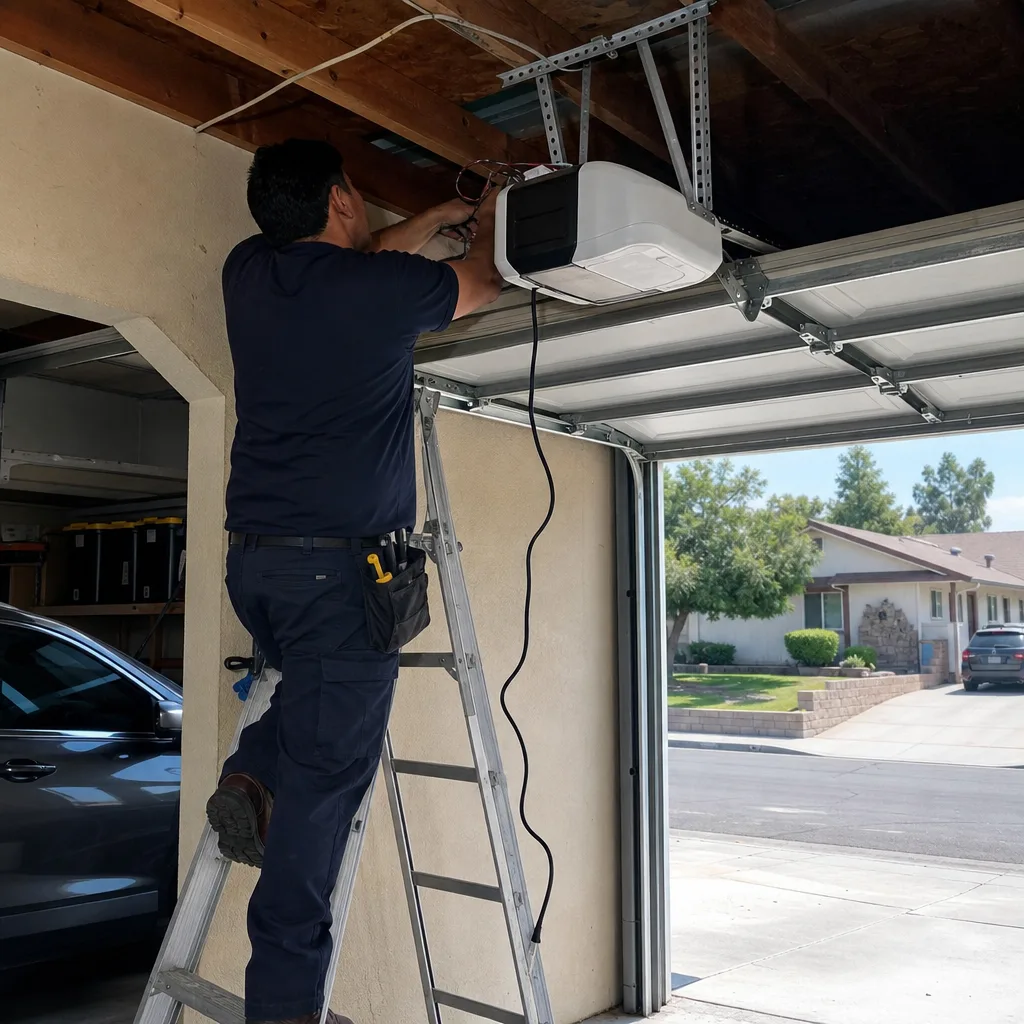
Yes, in most cases. Opener installation on an existing door with no structural change falls under the same minor repair exemption as door replacement. However, you still must comply with UL 325 sensor requirements and the manufacturer’s installation instructions. We don’t recommend DIY opener work because the torsion spring and cable system on an existing door is under high tension, and a mistake there causes serious injury. This is one of the tasks where a trained professional is worth the cost.
For a simple alteration permit with no plan review, the permit can be issued the same day at the Building & Safety Division counter. For structural work requiring plan review, expect two to three weeks for first review, plus one week for corrections if the plan is rejected. The inspection itself is scheduled for the next business day after you call. End to end, a structural garage door project can be permitted and inspected within a month if the paperwork is complete.
Yes. Under California Health and Safety Code Section 18938, a building permit expires if work does not begin within two years of issuance, or if work stops for more than 180 days before completion. For a garage door project, this is rarely an issue because the work is short. But if you pull a permit and then postpone the project, watch the clock. An expired permit requires a new application and fee. For help with permit questions or a free estimate on a garage door project in Santa Ana, call (949) 569-5253.
The Bottom Line
The permitting line for garage door work in California comes down to one question: did the project change the structure, the opening, or the energy envelope? Like-for-like replacements in Santa Ana are exempt from permits. Structural changes are not, and the cost of getting that wrong surfaces at resale, when the permit history matters and the buyer’s inspector is looking for documentation. UL 325 opener safety and Title 24 energy compliance apply regardless of permit status. If you’re not sure, call the city or call a licensed installer who can tell you which side of the line your project falls on. We’re happy to answer the permit question on the phone before we ever quote a job. That’s the point of Clause 1: the written price and written scope come first, and the documentation is the proof.
Garage Door Opener Repair & Installation in Santa Ana is one of our most requested services, and we handle permits for customers who need it done right the first time.
Written by Marcus Deller, Owner at Servo Garage Doors Santa Ana, serving Santa Ana since 2015.